
LED Panel Mounting Systems: What Options Are Available?
In a world where visual experience defines brand perception, LED technology has become the standard for professional communication. From high-profile events and houses of worship to retail environments and corporate lobbies, image quality drives engagement. Yet behind every high-performing LED video wall is a critical component many overlook: the mounting system.

Choosing the right mounting solution is a strategic decision that directly affects performance, safety, and long-term durability. Poor mounting can compromise pixel alignment, limit service access, and turn premium LED panels into an ongoing maintenance challenge.
Before investing in LED walls, it’s essential to evaluate the infrastructure and purpose of your installation. Consider key questions:
- From what distance and angle will viewers experience the content?
- Is the installation permanent or temporary?
- Is rear access available?
- Can the structure support the weight?
- Will the LED screens operate indoors, semi-exposed, or fully outdoors?
In this article, we’ll explore the primary mounting methods available so your creative vision rests on a stable, future-ready foundation.
Why Mounting Systems Matter for LED Walls More Than People Expect
Many buyers assume mounting systems simply “hold” LED display panels in place. In reality, the mounting structure is the backbone of any professional LED installation. The wrong choice affects aesthetics, serviceability, and the lifespan of your LED devices.
The mounting choice affects more than “where it hangs”
A properly engineered mounting system influences:
- Installation speed
- Structural safety
- Long-term reliability
- Ease of maintenance
- Visual precision
In event environments or commercial renovations, time equals revenue. Efficient systems allow for fast, precise assembly of LED displays, reducing labor costs and setup time.
Weight is another critical factor. A full LED video wall represents a substantial load. Certified structures ensure safe support without material fatigue or structural risk.
Serviceability is equally important. If a module fails, a well-designed mounting system allows front or rear access without dismantling the entire screen. Smart cable routing and precise panel alignment eliminate visible seams and maintain optimal viewing angles.
From a business standpoint, mounting is a financial decision. Reduced downtime, faster servicing, and upgrade flexibility protect ROI and ensure your LED solutions remain operational when they matter most.
The Three Core Installation Methods for LED Screens
There is no universal solution. Architecture, application, and duration determine the best configuration. Below are the three primary installation methods for LED walls.
Ground Support
Ground support systems are ideal when speed and flexibility are priorities or when drilling into walls and ceilings is not permitted.
This method uses a counterweighted base and structural frame to support LED wall from the floor upward.
Key considerations include:
- Stability planning, especially outdoors
- Base footprint within the space
- Sightline calculations for optimal viewing
Ground support is common in trade shows, temporary corporate events, hotels, ballrooms, and adaptable worship environments.
Wall-mounted
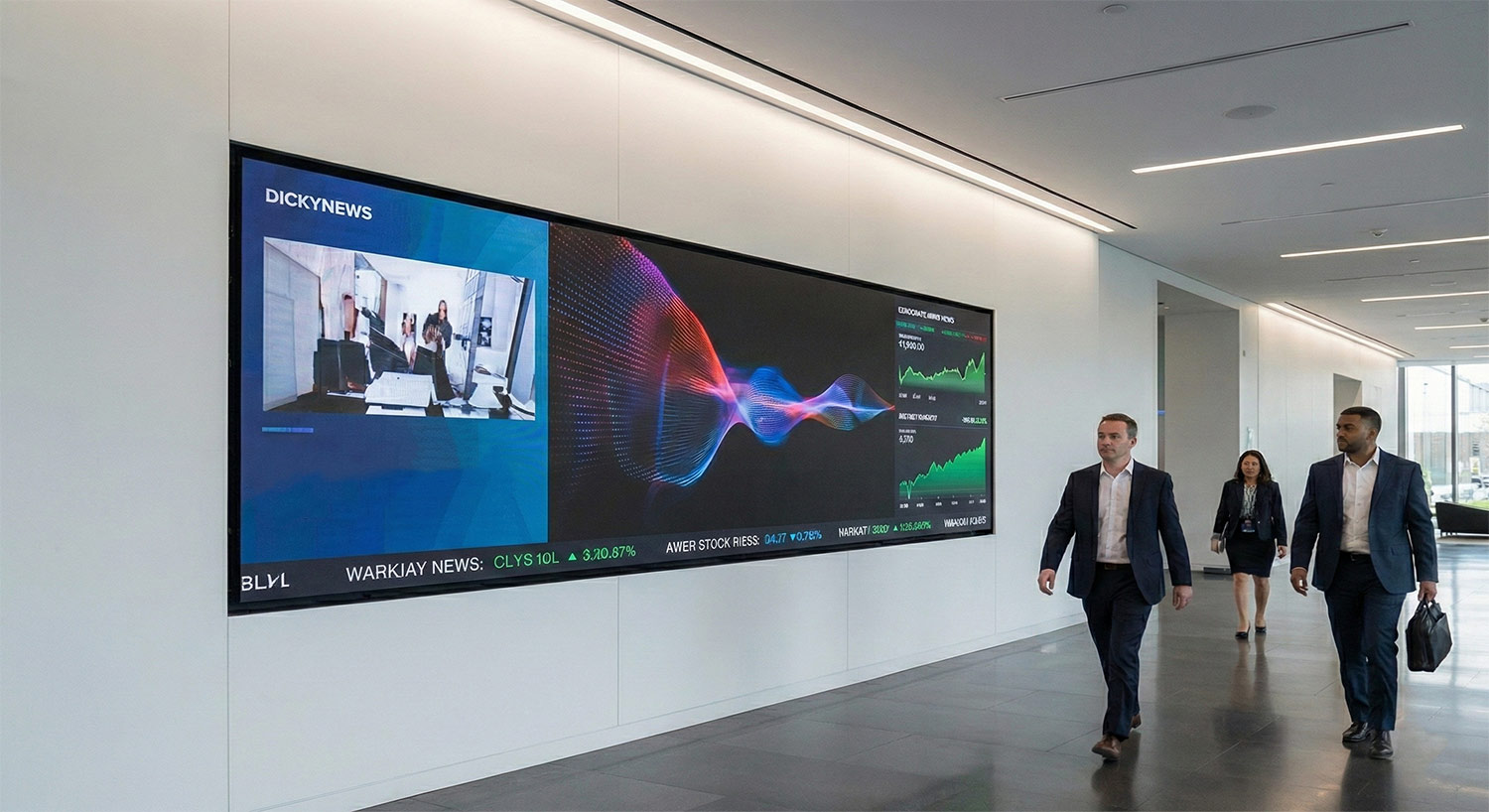
Wall mounting delivers a clean, architectural finish. The LED display becomes integrated into the building itself, making this method ideal for long-term installations.
Precision alignment is critical to avoid visible seams. Ventilation must be carefully planned to prevent overheating. If mounted flush, front service access is mandatory.
Wall-mounted systems are widely used in luxury retail, corporate lobbies, control rooms, museums, airports, and educational facilities.
Flown method
The flown method suspends LED screens using motors or certified rigging systems. This configuration saves floor space and provides visibility across large venues.
Because safety is paramount, flown installations require:
- Certified hardware
- Structural load calculations
- Often, structural engineering oversight
This method is commonly used in concerts, touring productions, theaters, megachurches, stadiums, and keynote events.
How to Match Mounting Methods to Industry Needs
The success of LED display panels depends not only on pixel performance but on how well the system adapts to each environment. Mounting and technical configuration must align with daily operational demands.
Retail & Showrooms: Clean Look, All-Day Visibility, Easy Updates
LED displays for retail environments extend brand identity. Installations must be slim, seamless, and architecturally integrated.
High resolution ensures product details are crisp, while asynchronous playback systems allow continuous promotional content. Auto-adjustable brightness sensors maintain visibility without glare throughout the day.
Houses of Worship: Flexible Stages and Volunteer-Friendly Reliability
Churches require dependable LED walls that are easy to operate and maintain.
Because stage layouts frequently change, lightweight LED panels for churches with full front-service capabilities are preferred; especially where rear access is limited.
Stable video processing and secure mounting ensure uninterrupted services, allowing the message (not the technology) to take center stage.
Houses of Worship: Flexible Stages and Volunteer-Friendly Reliability
In rental environments, ROI is measured in setup speed and durability.
LED screens for trade shows and events must withstand frequent transport. Magnetic modules enable quick replacements without dismantling entire LED display panels.
Modular ground-supported systems allow rapid assembly and teardown, minimizing downtime and labor costs.
Sports & Outdoor Venues: Weather, Brightness, and Durability First
Outdoor LED video walls must perform under environmental stress.
Protection ratings such as IP65 (full exposure) or IP45 (semi-protected) are critical. Structures must withstand wind loads and environmental pressure.
High brightness levels ensure LED displays remain legible in direct sunlight, whether used for scoreboards or advertising.
Corporate & Education: Predictable Use, Clean Installs, Easy Control
LED screens for corporate environments, boardrooms and lecture halls must be reliable and intuitive.
Synchronous systems ensure latency-free presentations and video conferencing. Mounting systems should integrate seamlessly with existing infrastructure and control hardware.
The goal is simple: technology that works flawlessly without drawing attention to itself.
Serviceability and Maintenance for LED Screens
The true value of a mounting system becomes clear during servicing. Failing to plan for access during the design phase is one of the most expensive mistakes in the audiovisual industry.
Front Service vs. Rear Service
Front service is essential when LED walls are flush-mounted with no rear access. Modules are removed from the front using specialized tools, allowing slimmer installations.
Rear service is common in large-scale or ground-supported LED screens. It requires a service corridor behind the structure but can be more economical for expansive outdoor systems.
Magnetic Modules and Swap Speed
Imagine discovering a module issue minutes before a major presentation.
With magnetic LED panels, technicians can remove and replace a faulty module quickly; without shutting down the entire LED display. This minimizes downtime and protects brand perception.
ROI Beyond Initial CostWarranty and Support Expectations
Professional installations demand professional support.
A comprehensive 5-year warranty reflects confidence in both mounting structures and LED display panels. Equally important is access to expert technical support and spare parts to ensure long-term system reliability.
LED Market: The Perfect Provider
A high-impact LED video wall is only effective if it integrates seamlessly into its environment, operates reliably, and remains serviceable over time.
At LED Market, we approach every project as a complete ecosystem. We don’t just supply LED technology… We design integrated systems that align mounting, control systems, and structural requirements from the start.
Why choose us as your full-service partner:
- We analyze viewing distance, angles, and structural constraints before installation begins.
- We integrate LED panels, advanced control systems, and the most efficient mounting structure for your specific application.
- Our 5-year warranty and dedicated support team protect your investment long after installation.
Don’t leave your visual impact to chance. Whether you require permanent architectural LED walls or modular systems for dynamic events, we deliver mounting solutions engineered for performance, durability, and long-term ROI.
Schedule a free consultation to explore tailored LED solutions that fit your space, budget, and vision.