
Trade Show LED Video Walls: Configurations That Attract Crowds
Trade shows aren’t “nice to have” anymore; they’re one of the few places where attention, trust, and decision-makers show up in the same room. Cvent reports that 81% of attendees have buying authority, and 92% attend specifically to discover new products. In other words, the aisle traffic is full of people who can say “yes” (or at least move the conversation forward) right there on the floor.
That’s why experienced exhibitors treat visuals as a sales tool, not decoration.
The good news is that you don’t need a massive custom build to look professional. With the right LED video walls, brands can turn a standard 10×10 booth into a clear focal point; running sharp demos, rotating messages, and keeping visuals consistent throughout the day. Lighting changes, crowd flow shifts, and multiple offers come and go, but the screen stays in control.
The real advantage isn’t just “having a big display.” It’s guiding attention; what people notice first, what they remember, and where they instinctively stop.
In this guide, we’ll break down what actually works on the show floor, without turning this into a technical spec sheet.
Why Trade Shows Are One of the Biggest Opportunities for LED Screens
Trade shows remain one of the few marketing environments where attention, decision-makers, and real conversations happen at the same time. Unlike digital campaigns that fight endless distractions, exhibition floors create a physical moment where brands have only seconds to make an impression.
In that setting, visual presence stops being aesthetic; and starts becoming strategic.
Most exhibitors today aren’t asking whether visuals matter. They’re asking how to use them in a way that actually turns foot traffic into qualified leads.
The New Reality of Competitive Exhibition Floors
Modern trade show halls are visually dense. Hanging banners, lighting rigs, demos, and motion graphics compete for attention all at once. Attendees often scan an aisle while walking, making a decision in three to five seconds about whether something feels worth stopping for.
This is where LED video walls for trade shows shift the balance.
Movement, brightness control, and dynamic content naturally outperform static graphics; especially in crowded aisles where peripheral vision does most of the work. A well-placed LED wall acts like a visual anchor, helping visitors orient themselves and remember where they saw something interesting.
In many booths, people don’t approach the brand first; they approach the screen. Once attention is earned, the sales team steps in and turns that moment into a conversation.
That’s what makes LED displays so effective on the floor: they support human interaction rather than compete with it.
Industry Data That Supports Visual Investment
The numbers back up what exhibitors see in real life. According to Cvent, 81% of attendees have purchasing authority, and 92% attend events with the goal of discovering new products. These aren’t casual browsers… They’re already in evaluation mode.
Exhibitor studies consistently show that booths using animated or video-based content generate longer dwell times than static signage. And when people stay longer, conversations improve, product explanations land better, and lead quality rises.
That’s where LED display panels stop being a design expense and start behaving like a performance asset. Screens that attract attention, support demos, and adapt messaging throughout the day directly influence outcomes like engagement, recall, and post-show follow-ups.
Used correctly, LED screens don’t just decorate a booth… They help it perform.

5-Year
Warranty

In stock,
ready to ship



How LED Displays Transform the Trade Show Experience
A strong setup usually starts with one simple objective: become the booth people use as a reference point.
Turning Booths Into Visual Landmarks
For many exhibitors, the difference between an average booth and a busy one is the first ten feet. A smart LED setup can deliver motion graphics that read instantly, product videos that feel polished, and rotating messages that adapt to traffic patterns throughout the day.
Instead of relying on a single printed headline, teams can test what resonates; whether it’s a bold value statement, a demo countdown, or a short “three reasons to stop” loop.
This is where technical details quietly do their job. A tighter Pixel Pitch keeps smaller text readable at close distances. Higher Resolution preserves logo clarity and product detail for cameras. A strong Refresh Rate reduces flicker, which matters when visitors film your booth.
Creating Immersive Brand Moments
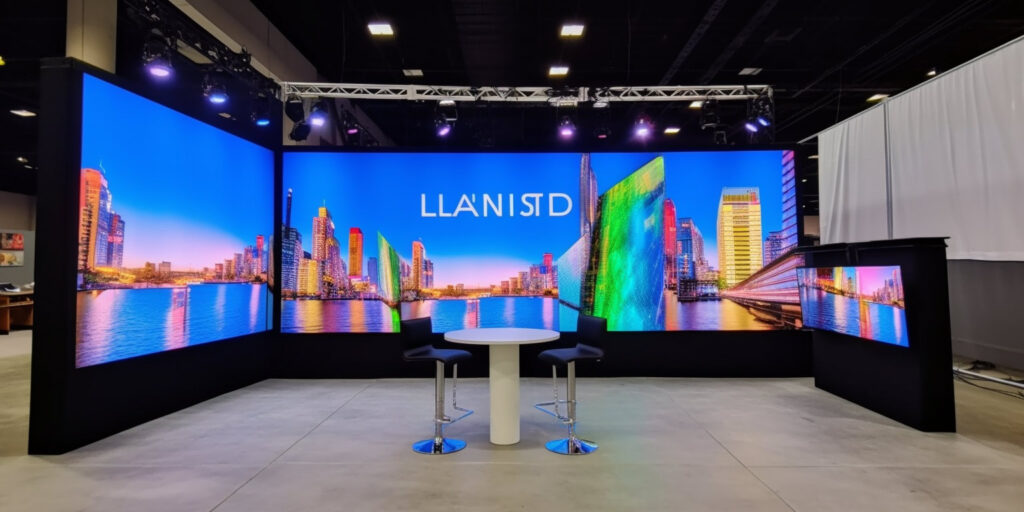
Immersion doesn’t require heavy truss or complex staging. Clean LED walls can frame product launches, live demos, or small presentation areas with consistent, controlled visuals.
The key is integration. Modern systems allow teams to connect laptops, cameras, presentation software, and streaming devices without friction. Control platforms (often built around NovaStar processors and sending cards) make it possible to switch sources, scale content correctly, and maintain stable output all day.
Both synchronous and asynchronous systems play a role. Synchronous playback keeps multiple screens perfectly timed for a single storytelling moment. Asynchronous setups allow different content zones; such as one area running feature loops while another displays QR codes or schedules.
Flexibility for Different Booth Sizes
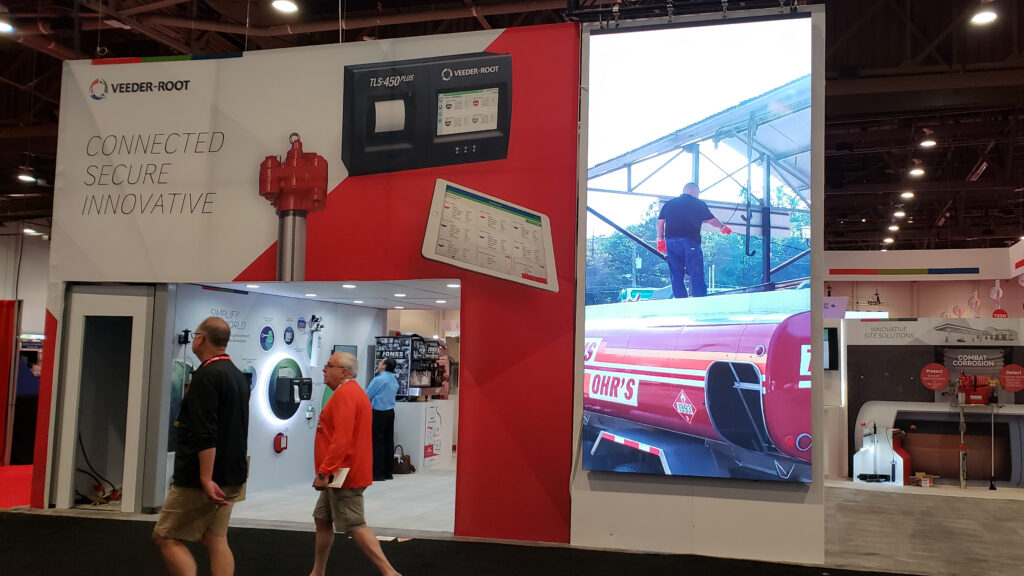
Every exhibitor works with a different footprint; and modular LED displays are designed for exactly that reason. A compact booth might benefit from a tall, vertical screen that functions like a digital totem. Larger island spaces can use wide walls to create a visual horizon visible from across the hall.
Here, practicality matters as much as impact. Lightweight cabinets simplify transport, while features like full front service and magnetic modules make on-site adjustments far easier.

Choosing the Right LED Configuration for Trade Shows
Before selecting equipment, it helps to clarify the real goal: visibility, clarity, and workflow… Not just screen size.
Matching Screen Size to Viewing Distance
Bigger isn’t always better. In close-range booths, a finer Pixel Pitch often matters more than physical scale, keeping text and interface elements readable. With longer sightlines, larger formats work well.
Viewing angles matter too. A wide angle range (around 140°–160°) keeps content visible even when attendees are passing along the edge of the aisle. That’s often where the best stop-and-talk moments begin.
Indoor vs Semi-Outdoor Exhibition Environments
Most trade shows take place indoors, but many brands also run outdoor LED screen entrances, covered pavilions, or hybrid activations. In those scenarios, Durability becomes part of the decision.
Indoor environments typically require standard protection, while semi-outdoor setups may benefit from IP45 or IP65 rated systems to handle dust, airflow, or moisture without compromising visual quality.
Brightness behavior is just as important. Convention lighting can change dramatically depending on venue and time of day, so Autoadjustable brightness helps maintain readability without constant manual intervention.
Content Strategy Matters More Than the Screen
Screens don’t close deals; messages do.
Effective trade show content is short, visual, and designed for silent playback. Assume nobody hears audio. Loops should communicate one clear idea at a time. A focused message almost always outperforms a crowded montage.
A useful way to explain systems internally is simple: synchronous setups support one perfectly timed story, while asynchronous setups support multiple micro-stories running at once. Both work; the choice depends on how your booth experience is structured.
Investing in Visibility That Delivers Results
This is where trade show spending becomes logical rather than emotional.
When LED Technology Becomes a Business Tool
Trade shows are built for discovery. With 92% of attendees actively looking for new products, your visual setup directly supports why people are there in the first place.
The strongest systems are reusable. The same LED screens used on the show floor can later support corporate events, showrooms, product launches, or internal presentations. That turns the investment into a multi-use asset instead of a one-time expense.
To protect that value, compatibility matters. LED devices for corporate events should integrate easily with existing hardware, common software platforms, and standard input sources. When setup is simple, usage increases… And that’s where ROI compounds.
Long-Term Reliability and Support
Trade shows are demanding environments: loading docks, tight schedules, and last-minute changes are normal. That’s why reliability features matter behind the scenes; solid LED panels construction, accessible servicing, and responsive technical support.
A 5-year warranty also changes the internal conversation. It frames the system as long-term infrastructure, not a seasonal gamble.
Installation planning plays a role as well. Depending on booth design and venue rules, teams may choose:
- Ground support for fast builds and flexible layouts
- Wall-mounted installations for clean backdrops
- Flown methods when height and open space matter
The right approach reduces labor stress and keeps your team focused on selling, not troubleshooting.
A Trusted Partner for Trade Show LED Solutions
At the end of the day, the best configuration is the one your team can deploy with confidence. That means balancing performance with practicality: stable control systems (including NovaStar-based processor and sending card paths), clear service access, reliable protection, and content that makes people stop.
If you’re looking for a partner that can spec, ship, and support complete trade show-ready systems (without unnecessary complexity) LED Market specializes in scalable LED walls needed to build setups that attract crowds and convert attention into leads.
Schedule a free consultation to explore tailored LED solutions that fit your space, budget, and vision.