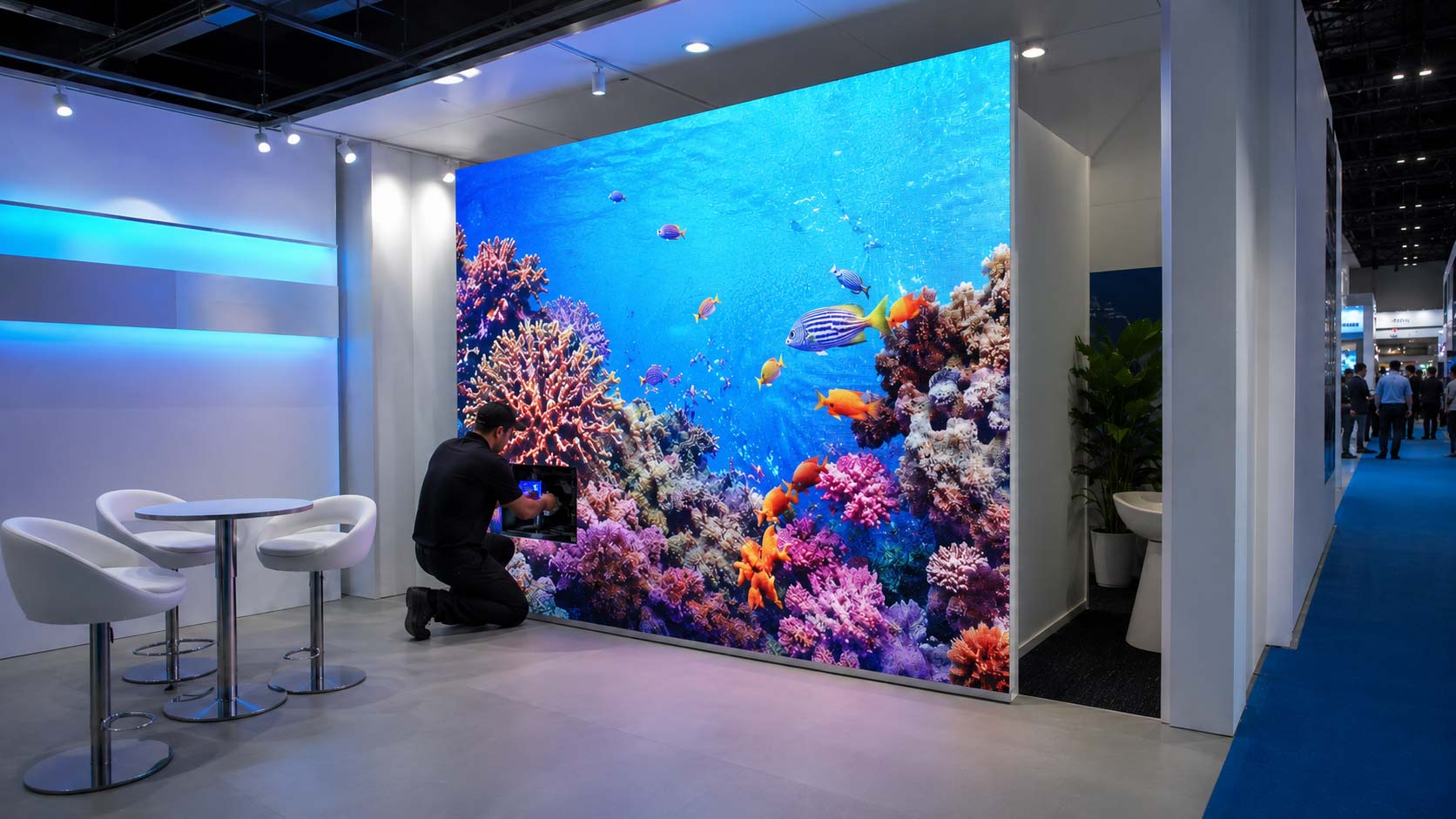

When Front-Service LED Screens Are Non-Negotiable
An entrepreneur invests in LED technology expecting a reliable system that fits the project. Installation day arrives, the system looks right, and daily use begins. Maintenance rarely feels urgent until a component fails.
That is when a practical question becomes unavoidable: how will a technician reach the part that needs service? Without rear access, a minor repair can require dismantling part of the structure, disturbing a finished wall, or interrupting normal operations. Access should be planned before installation, not after a failure.
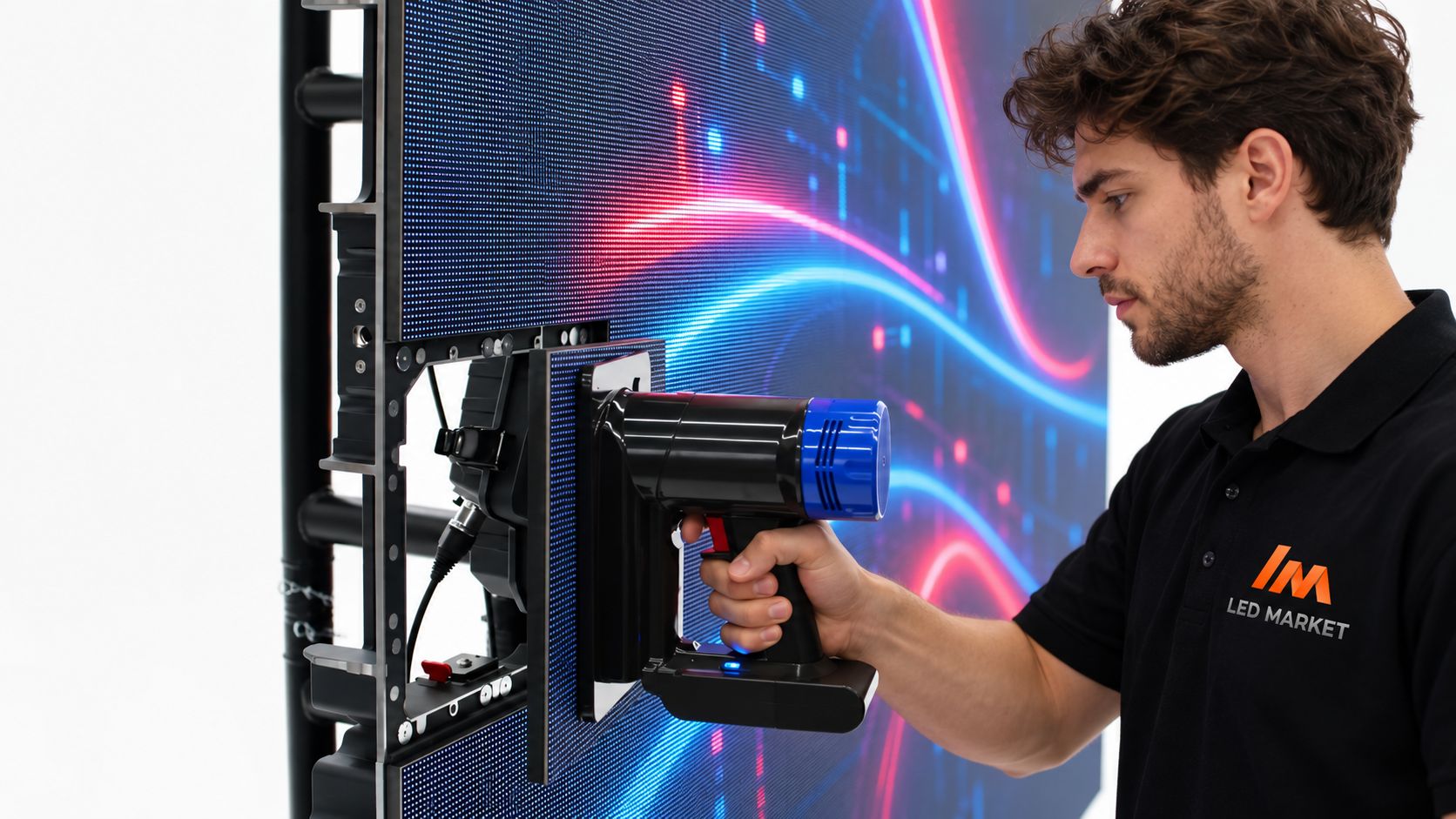
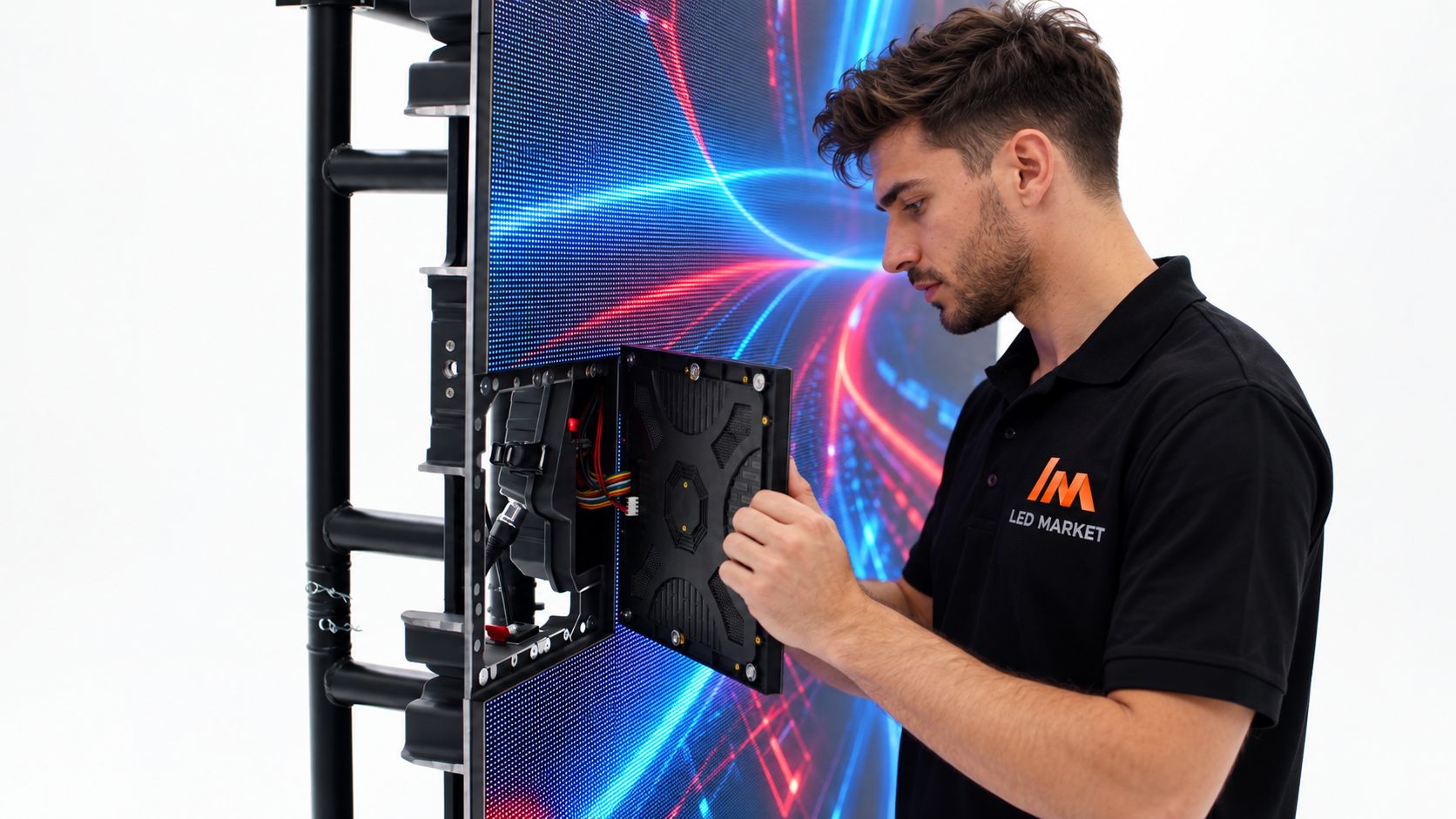
“Full front service” is more than a line on a specification sheet. It allows modules and key components to be reached from the front, often through magnetic systems, helping technicians work faster and with less disruption. The goal is not simply easier maintenance, but a more serviceable installation over its full lifecycle.
For LED video walls integrated into finished spaces, that distinction can protect both the display and the surrounding architecture. A system should be designed not only for opening day, but for the years that follow.

Where Front Service Becomes Essential
Flush-Mounted Architectural Installations
Many LED wall packages are designed to sit flush with a wall, fit inside millwork, or become part of an architectural feature rather than project into the room. In these installations, rear clearance may be limited or nonexistent.
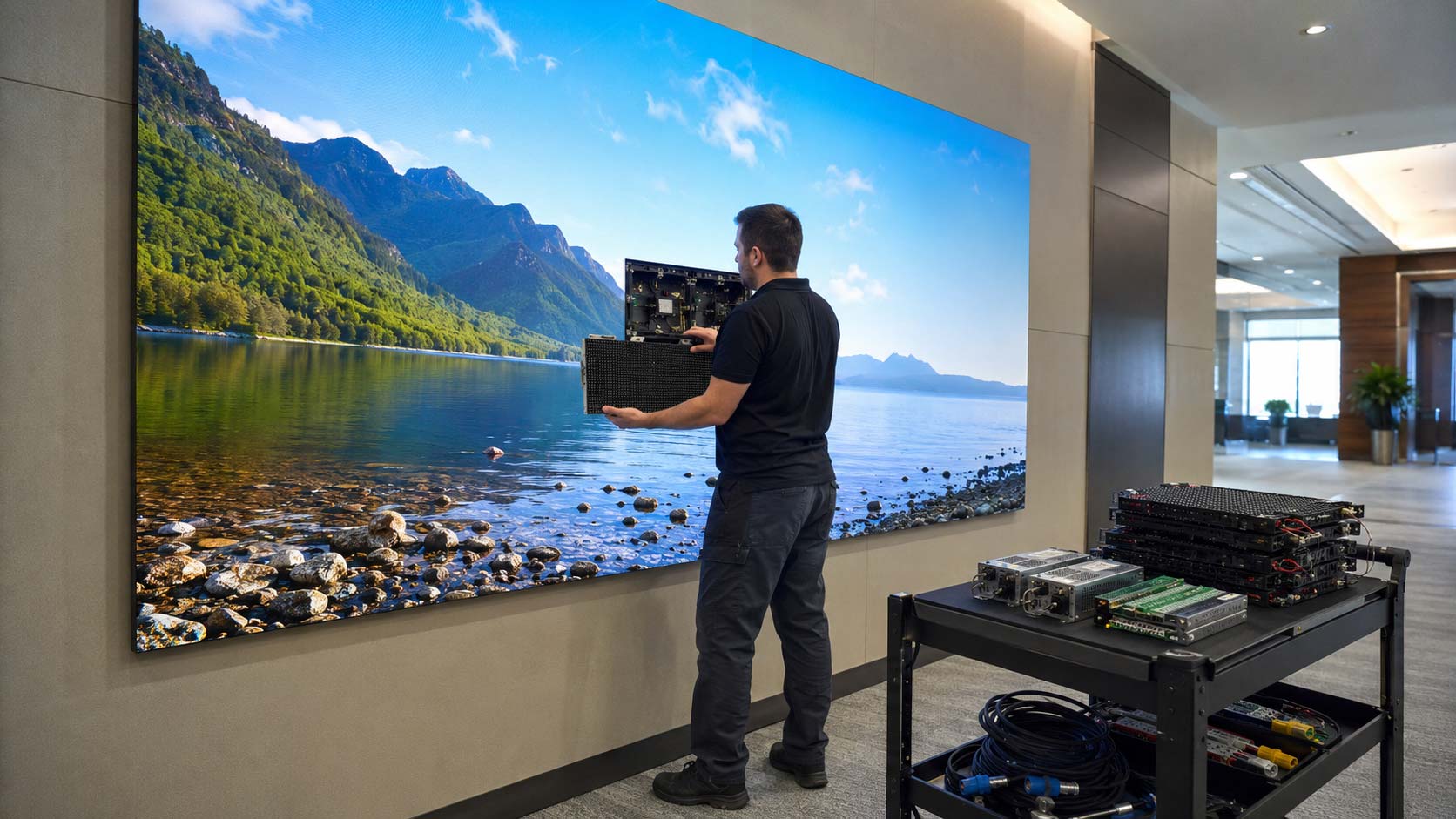
Front access allows technicians to remove modules and reach internal components without opening the wall or dismantling large sections of the installation. For lobbies, showrooms, offices, and other finished commercial spaces, this can keep a small repair from becoming a construction project.
Magnetic LED display panels can be especially useful in these environments because individual modules can be removed from the front with the proper tool. The surrounding surface stays largely undisturbed while the affected area is serviced.
Spaces That Cannot Stop Operating
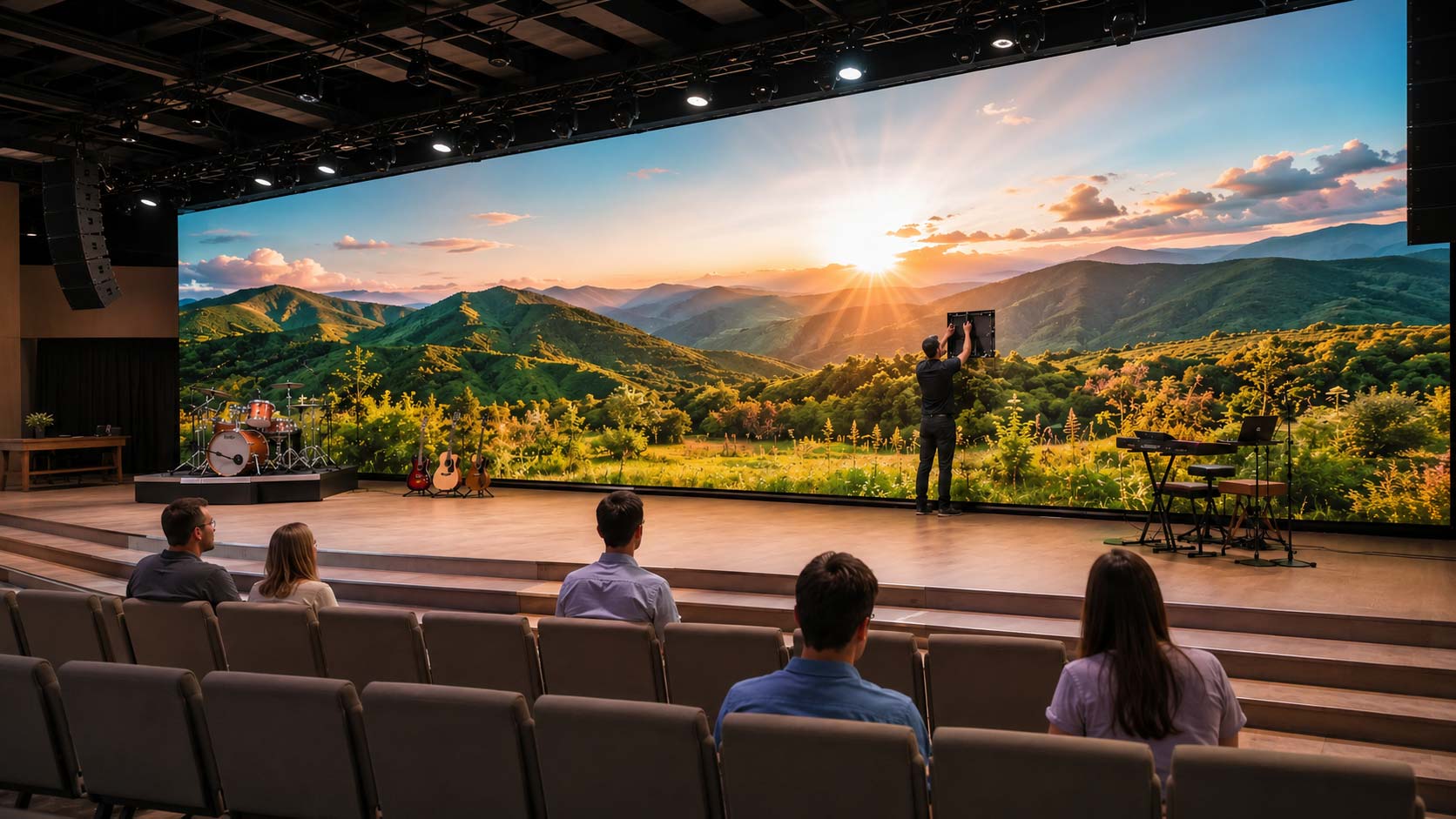
Some LED walls operate in spaces where extended downtime immediately affects customers, employees, or scheduled activity. A retailer may be running a promotion, a hotel may be serving guests around the clock, and a venue may be preparing for an event. Maintenance has to fit around the operation, not the other way around.
Front service narrows the work area. Instead of removing multiple cabinets to reach one component, a technician can focus on the section that actually needs attention. Less handling means less disruption to parts of the system that are already working correctly.
For businesses that rely on LED screens every day, this can reduce both service time and the operational cost of a repair. Downtime is not only a technical issue; it can affect revenue, customer experience, and brand presentation.
Installations With No Safe Rear Entry
Rear access may be standard for many systems, but that does not mean every rear-access installation is practical or safe. LED wall support systems, structural walls, wiring, fixed furniture, elevated mounting, or narrow clearances can make service difficult. A theoretical access path is useless if a technician cannot work there safely.
The maintenance method should reflect the actual site conditions. Before selecting LED panels, the project team should review clearances, working space, and the route technicians will use to reach critical components. LED displays installed in tight architectural spaces demand this kind of planning. Serviceability should be based on the real installation, not an assumption on a drawing.
When those constraints are clear, full front service may move from a convenience to a requirement. That decision is easier to make during planning than after the space is finished.
How Front Access Changes LED Wall Maintenance
Replacing a Module Without Rebuilding the Wall
The basic advantage of front access is straightforward: a localized issue should stay localized. In a front-service system, a technician can release the affected module, inspect its connections, and replace it if necessary while the rest of the LED wall remains in place. There is no reason to disturb a larger area when the problem is confined to one section.
This approach reduces the number of cabinets and modules handled during service. It also helps preserve alignment, which is especially important on LED video walls where even small surface variations can become visible. Maintaining the original plane of the display helps protect visual consistency.
The larger the installation, the more valuable this becomes. A localized repair should not require technicians to remove unaffected LED panels. One failed component should not create work across an entire section of the system.
Accessing More Than the Visible Pixels
The visible module is only one part of the system. Behind LED display panels are power supplies, receiving cards, signal cables, electrical connectors, hub boards, and mounting hardware. LED panels must be serviceable without turning access into a second project. True front service should account for the full service path, not only module removal.
That distinction matters during purchasing. A product may allow a module to come off from the front while leaving other critical components difficult to reach. Buyers should ask exactly what can be serviced from the front and what tools or procedures are required.
A fault that appears on the surface may originate deeper in the system. For that reason, LED solutions intended for front maintenance should be evaluated as complete assemblies. Easy access to one layer is not enough if the actual failure point remains blocked.
For digital signage, retail, and recurring advertising, asynchronous playback can be more convenient because scheduled content may run without a dedicated computer connected at all times. The right approach depends on the workflow, but LED devices should never be selected without considering who will update content and how often.
Faster Service Does Not Mean Careless Service
Faster access does not replace proper maintenance procedures. After service, the module must be reseated, connected, aligned, and tested. Image performance, brightness, color uniformity, and signal stability should all be verified. Efficiency comes from removing unnecessary steps, not from skipping essential checks.
Front access helps technicians focus on the affected area without dismantling unrelated LED screens or cabinets. That targeted approach can shorten service time while preserving the integrity of the surrounding installation.
For LED walls in high-use environments, this combination of accessibility and controlled servicing supports stronger operational continuity. The repair process becomes more predictable and easier to manage.
When Front Service Protects the LED System Investment
Downtime Has Different Costs in Every Venue
Downtime affects each venue differently. In retail, it can interrupt a campaign. In a boardroom, it can disrupt a presentation. At an event, LED displays may be central to the audience experience. The financial impact is not always visible on the repair invoice.
The same applies to restaurants and bars using LED displays for live sports, promotions, or high-traffic nights. When the screen is part of the experience, prolonged servicing can reduce its business value at the exact moment it is needed most.
Front-service LED walls do not eliminate failures, but they can limit how much of the system must be opened or removed to complete a repair. That matters for LED display panels used in high-visibility spaces, where even short disruptions are noticeable. Containing the work helps contain the disruption.
Less Disassembly Means Less Risk
Every additional part removed during a repair creates another opportunity for damage, misalignment, or connection errors. Fully functional LED panels may be exposed unnecessarily, cables may be disturbed, and finished surfaces can be scratched or damaged. Reducing disassembly reduces the number of things that can go wrong.
This matters even more when LED video walls are integrated into architectural finishes. A repair should not require technicians to disturb millwork, wall panels, or surrounding structures unless necessary. Front access keeps the intervention focused on the components that require attention.
That does not make maintenance automatic, but it makes the process more controlled. Fewer moving parts generally mean a cleaner, more efficient service procedure.
Serviceability Strengthens Long-Term ROI
ROI should not be measured only by purchase price or the content shown during the first few months. Maintenance labor, downtime, access requirements, and the risk of disturbing finished spaces all affect long-term operating costs. Serviceability is part of the investment, not an afterthought.
Well-designed LED display panels can reduce the labor involved in localized repairs and help the system remain available for longer periods. That is especially valuable in spaces where closing an area or opening a finished wall carries additional cost.
For heavily used LED screens, those savings can accumulate over time. Choosing full front service at the beginning can prevent a modest repair from becoming an oversized intervention later. That is why access deserves consideration alongside pixel pitch, brightness, resolution, and control systems.
The goal is a confident, practical decision. Below, LED Market explains where each option performs best.

Questions to Ask Before Choosing Front Service
Is Front Access Necessary or Simply Convenient?
Not every project has the same access requirements. A ground-supported event system may leave enough room behind the display for technicians to work comfortably. In that case, front service is useful but not essential. The installation itself should determine the priority.
The situation changes when LED walls are recessed or mounted directly against a wall. Without a service aisle or safe work zone behind the cabinets, rear-only access can create an avoidable limitation from day one. The right question is not whether front service is available, but how maintenance will actually be performed in that location.
This is also where LED technology choices should stay practical. The same principle applies to other LED devices: features only add value when they solve a real installation or maintenance constraint.
Can Every Critical Component Be Reached?
Before selecting LED displays, buyers should look beyond the visible surface and confirm how technicians will reach power supplies, receiving cards, hub boards, connectors, and mounting hardware. Partial access can still leave the most important repair point out of reach.
A system designed for full front service should provide a clear maintenance path to the components most likely to require inspection or replacement. That clarity reduces surprises after installation.
The same principle applies to LED solutions used in custom architectural projects: access must be considered at the system level. The easier it is to understand the service path before purchase, the easier it is to manage the installation later.
Does the Wall Still Meet the Visual Requirements?
Maintenance access matters, but LED displays still need to meet the project’s visual requirements. Pixel pitch must suit the viewing distance, resolution must match the screen size and content, and refresh rate should support the intended use—especially when cameras are involved. Brightness and viewing angles also need to match the environment.
Protection ratings should be evaluated in the same way. Some indoor LED display panels may use ratings such as IP45, while outdoor LED wall products exposed to rain, dust, and humidity may require IP65. Any service procedure must preserve the enclosure and protection level after the work is completed.
The best LED panels combine visual performance with practical maintenance. A strong specification should work for the audience and for the technician who will eventually service the system.
Has the Service Plan Been Tested Before Installation?
Before LED video walls are permanently installed, the team should walk through a maintenance scenario. Who will reach the component? What has to be removed? Is there enough workspace? Can the module be reinstalled without disturbing nearby finishes or normal activity? A simple service review can expose problems before they become expensive.
These questions are easier to solve in drawings and planning meetings than after construction is complete. A few decisions made early can prevent major access problems later.
LED Market can help evaluate these conditions before the system is selected. As a provider of products, packages, and services for LED screens and LED video walls, the company can help buyers review specifications, installation conditions, accessibility, maintenance requirements, and project compatibility. A sound purchasing decision should account for both performance and long-term service.
The final question is simple: when service is eventually required, can the system be reached without creating a larger problem around it? If the answer is unclear, the maintenance plan needs more work before installation begins.