P1.99 vs. P2.5 vs. P2.97 LED Panels: Which Pixel Pitch Fits Your Viewing Distance?

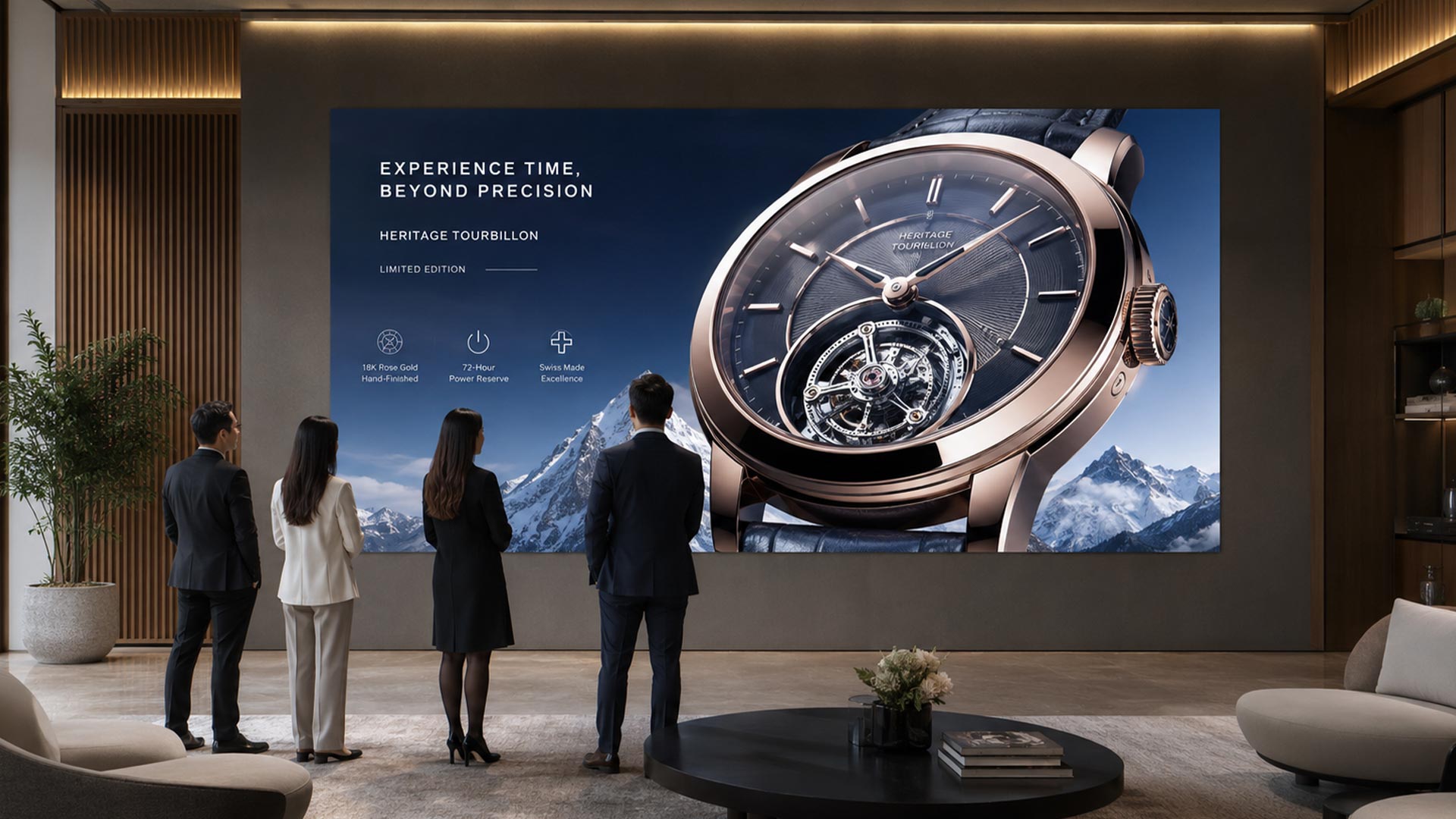
When designing an LED system for a house of worship, auditorium, or conference room, the audience may range from people seated six feet from the stage to viewers more than 60 feet away. The closest planned viewing distance should be the starting point, because it determines how easily individual pixels can be seen.
Viewers farther away naturally perceive the image as a continuous surface. Up close, however, a pitch that is too wide can reveal pixel structure and reduce clarity. That is why pixel pitch should be selected around the most demanding viewing position, not simply the overall size of the room.
P1.99, P2.5, and P2.97 are not simply three quality tiers. They represent different pixel densities, each balancing close-range detail, screen size, and budget. For LED video walls, the right choice depends on viewing distance, content, lighting, and the scale of the installation.
Resolution and viewing distance solve different problems. Overall resolution determines how much information the system can display, while pixel pitch affects how that information looks from a given seat. A well-matched pitch keeps the image clean without paying for density the audience cannot appreciate.
P1.99, P2.5, and P2.97: Different Approaches to Pixel Distribution
P1.99 — When Close-Up Detail Matters
P1.99 LED display panels provide high pixel density for spaces where viewers sit close to the screen and content depends on fine detail. At around six feet, text, gradients, lines, and interface elements remain crisp and easy to read without drawing attention to the pixel structure.
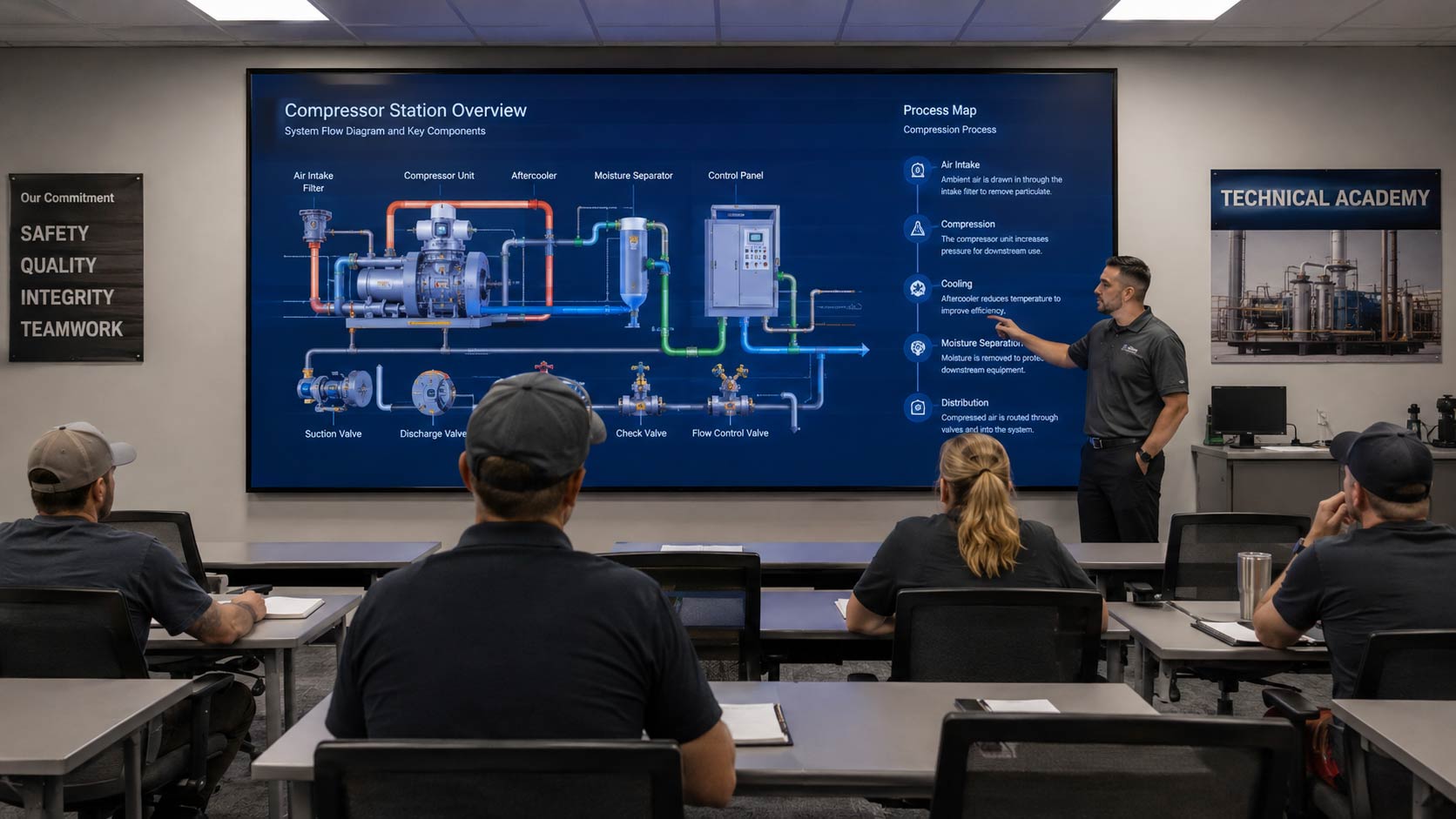
That makes P1.99 a strong fit for boardrooms, executive spaces, lobbies, and control rooms. Small text, charts, maps, dashboards, and detailed presentations benefit from the added clarity at short viewing distances, especially when people need to interpret information quickly.
P2.5 — The Middle Ground Is Popular for a Reason
P2.5 offers a practical balance between image quality, physical scale, and cost. For LED screen packages viewed from roughly eight feet or more, it delivers strong detail without pushing a project into unnecessary pixel density, making it a versatile option for commercial and institutional spaces.
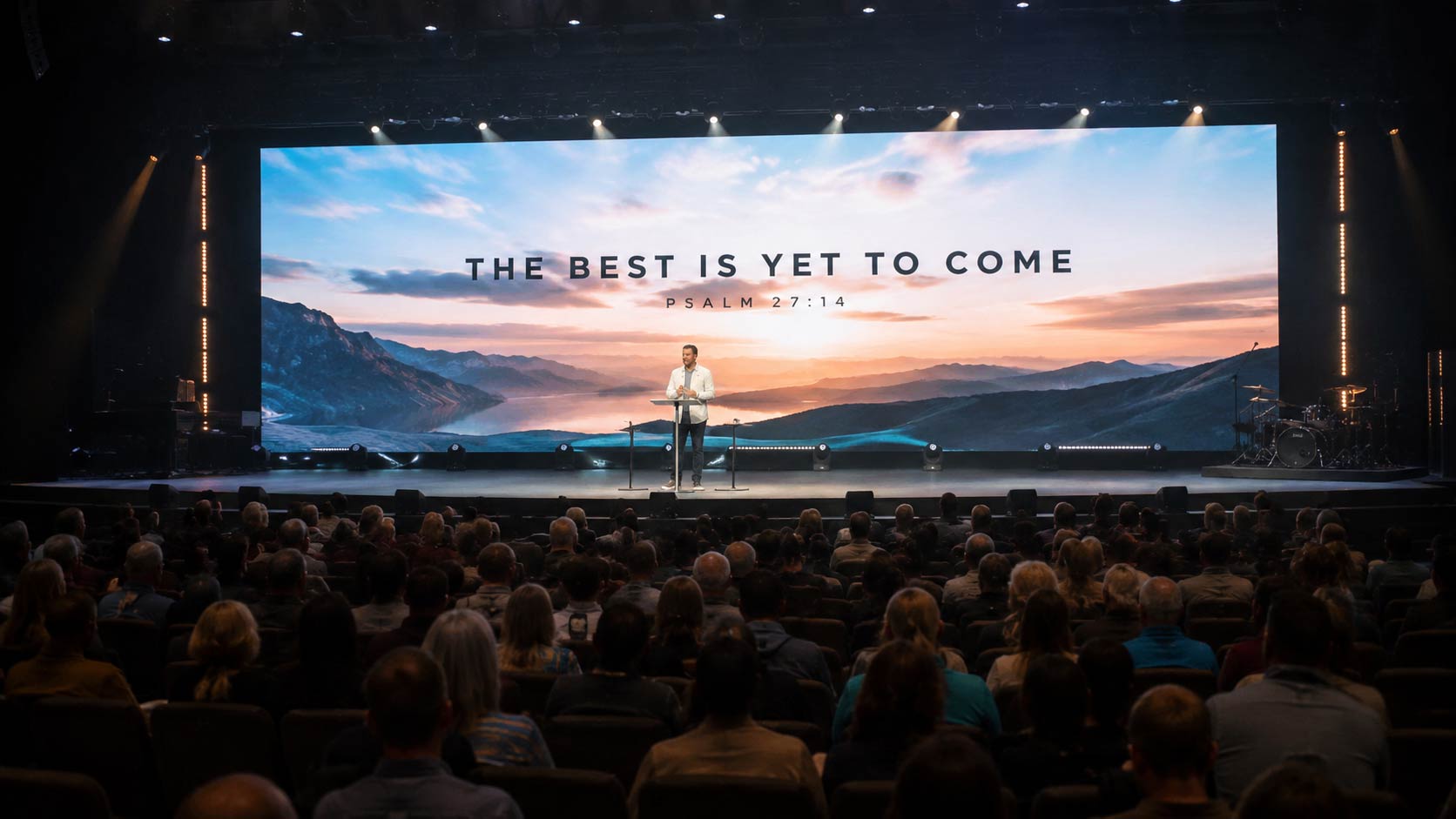
P2.5 LED walls for churches and houses of worship can support lyrics, scripture, presentations, and live camera feeds. In auditoriums, lecture halls, showrooms, and multi-use venues, it handles both text-based content and full-motion video effectively, making LED walls flexible across different events.
P2.97 — Let Distance Do Some of the Work
At viewing distances of roughly 10 feet or more, the eye blends individual diodes more easily. In those settings, P2.97 LED displays can provide a convincing continuous image while allowing more of the budget to go toward overall display size.
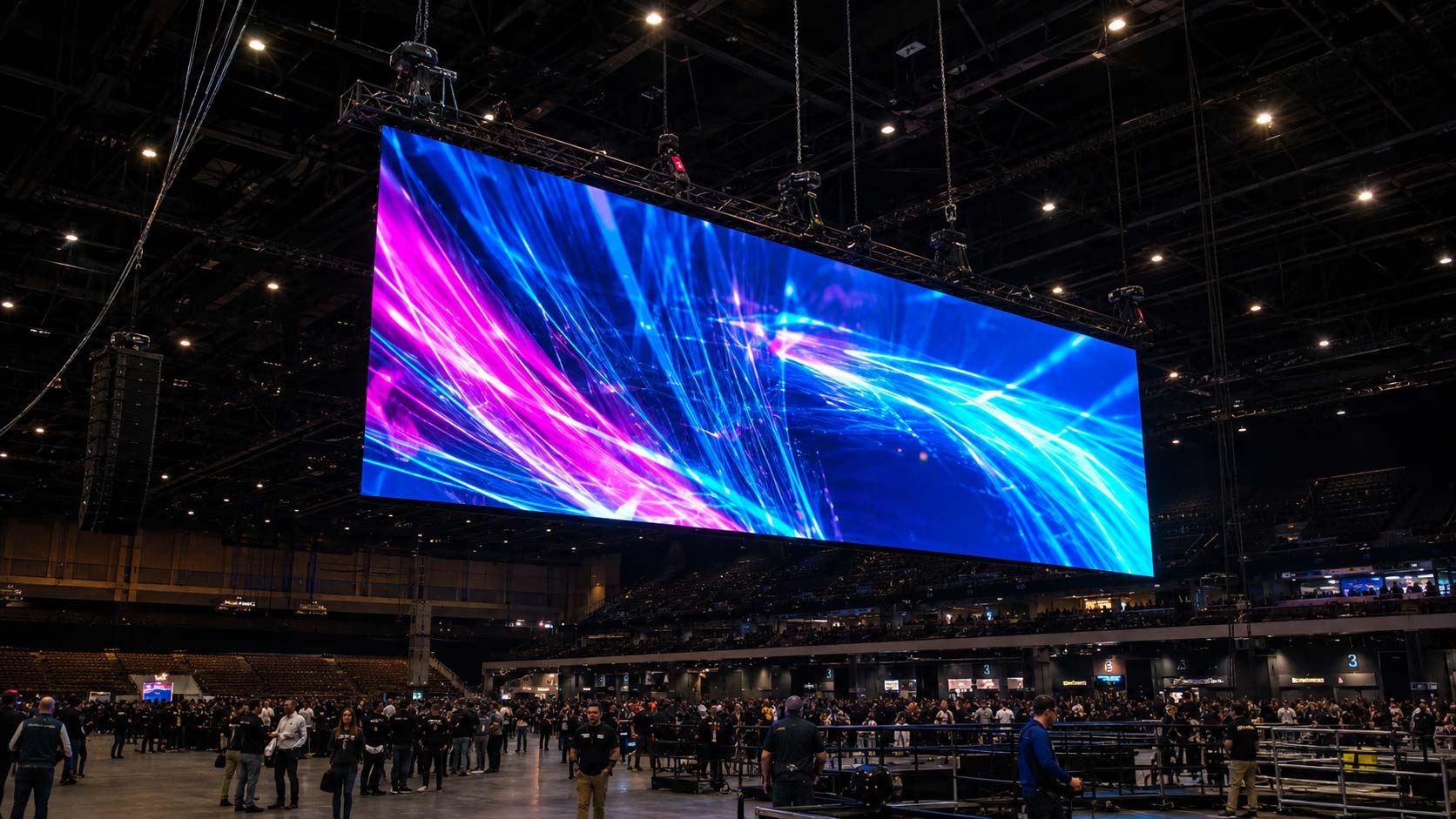
This makes P2.97 especially useful for large auditoriums, stages, deep sanctuaries, and large-format digital signage. Where close-up inspection is not a priority, a larger visual surface can create more impact than a tighter pitch that offers little visible benefit.
The Content of the LED Wall Can Change the Right Answer
Tiny Text Is Harder Than Full-Screen Video
Two spaces with the same viewing distance may still require different LED walls because content changes what the audience needs to see. Full-screen video and motion graphics are more forgiving, while small text, thin lines, charts, and data-heavy interfaces demand greater pixel density.
On LED screens, spreadsheets, detailed diagrams, monitoring dashboards, presentation slides, and song lyrics are more sensitive to pixel spacing. If fine information must remain readable from the closest seats, tighter spacing can be worth the added cost.
Motion Brings Different Specifications Into Play
Pixel pitch controls spatial detail, but motion performance depends on other specifications as well. With LED technology used for live video, animation, or broadcast environments, refresh rate, grayscale performance, and diode response all influence perceived quality.
A refresh rate of 3,840 Hz or higher can help reduce visible flicker on camera. Strong grayscale processing preserves detail in darker scenes, while fast response helps keep motion and scrolling text clean. For video-heavy applications, these factors matter just as much as static sharpness.
Pixels Still Need the Right Signal
Even premium LED panels cannot compensate for a weak source signal. Image quality depends on the entire signal chain: the source provides the content, the video processor scales it to the display resolution, and the control system maps and distributes that signal across the modules.
If the source is overly compressed or the processor is configured incorrectly, the final image will suffer regardless of pixel pitch. Professional control platforms such as NovaStar help manage signal distribution, but the system performs only as well as its weakest stage.
The Room Can Override the Viewing-Distance Calculator
Daylight Can Matter More Than Another Fraction of a Millimeter
A pitch that looks ideal on paper can underperform when lighting conditions are ignored. Windows, direct sunlight, reflections, and changing ambient light all affect perceived image quality. For LED display panels, brightness and contrast must be considered alongside pixel density.
A tighter pitch offers little benefit if the content looks washed out. In bright interiors, LED displays need enough luminance and contrast for comfortable visibility without creating excessive glare.
People Rarely Watch From One Perfect Seat
Real audiences do not all sit directly in front of LED video walls. Wide rooms, side seating, and off-axis viewing make viewing angles important, particularly in churches, auditoriums, restaurants, and lobbies.
Quality packaging and consistent module performance help maintain color and brightness across wider angles. The goal is a stable image from the seats people actually use, not just from the center of the room.
Indoor and Outdoor Projects Ask Different Questions
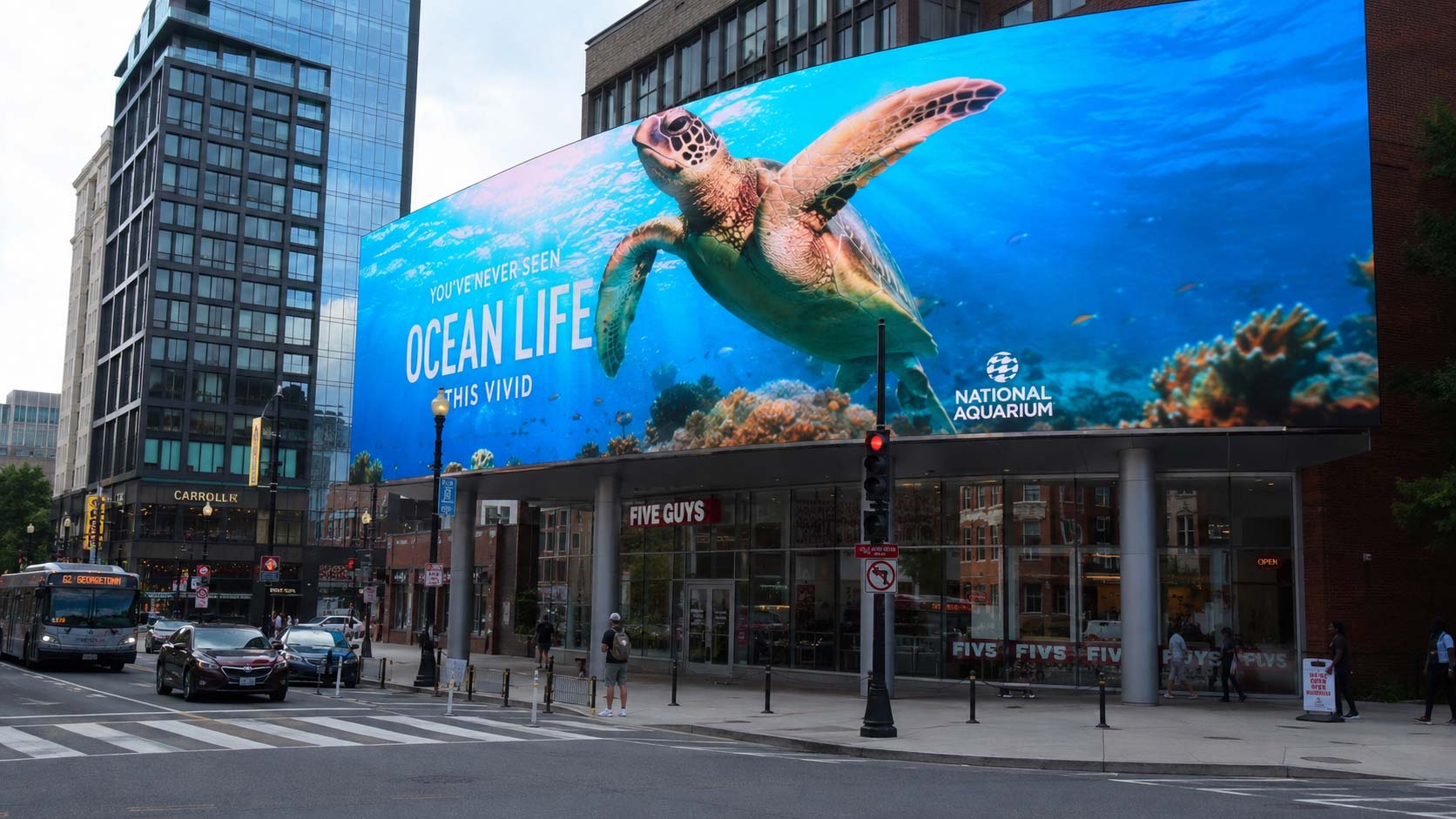
Outdoor and indoor LED solutions face different priorities. Indoors, designers typically focus on controlled brightness, low noise, service access, and a clean finish. Outdoors, weather resistance, higher brightness, structural engineering, and temperature tolerance become much more important.
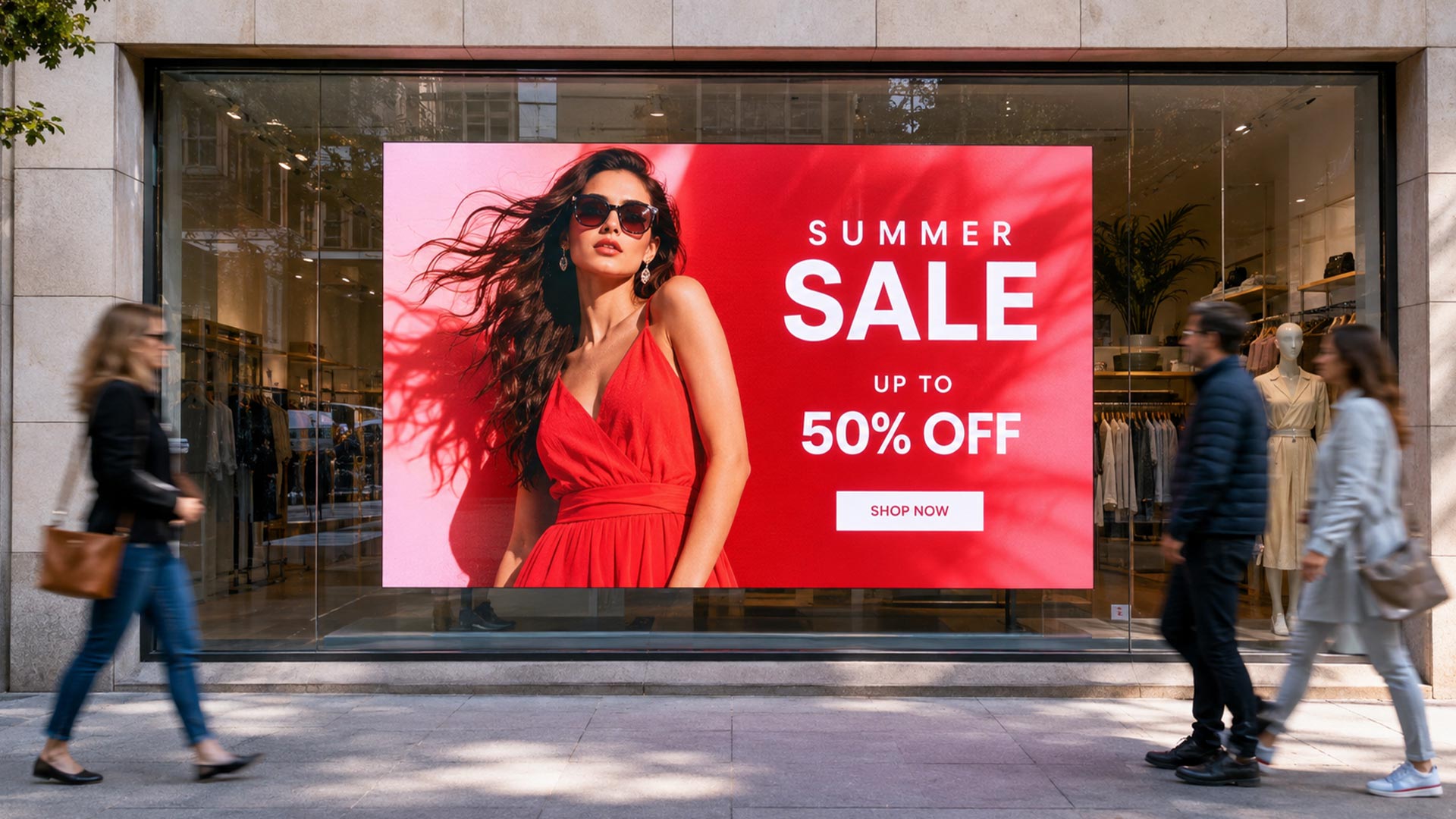
Because outdoor audiences are often farther away, outdoor LED screens can frequently use a wider pitch without sacrificing the intended viewing experience. The environment may therefore influence the specification as much as distance itself.
Choose the Pitch That Pays for Itself
For boardrooms, houses of worship, auditoriums, and event spaces, the best choice is not automatically the product with the highest pixel density. The strongest ROI comes from spending where the audience can actually see the difference.
P1.99 LED displays are best suited to close-range viewing and detail-heavy content. P2.5 works well when a project needs a balanced mix of definition, size, and cost. P2.97 is often the better value when viewers are farther away and a larger visual canvas matters more than ultra-fine density.
The same principle applies to LED devices throughout the system: specifications should support the use case rather than inflate the project. A properly matched configuration can improve visual impact while keeping installation and ownership costs under control.
Mounting also affects long-term value. LED walls can be integrated through wall-mounted, floor-standing, or suspended systems, depending on the venue and service requirements. Choosing the right structure improves safety, access, and visual integration without adding unnecessary complexity.
LED panels from LED Market use a lightweight, low-profile design with magnetic modules and front-service access. This allows technicians to reach key components from the front of the installation, reducing the need for rear service space and simplifying routine maintenance.
Backed by a 5-year warranty, LED Market systems are designed for dependable long-term use. Whether the project calls for LED video walls, LED display panels, or another display configuration, the right pixel pitch should support both the viewing experience and the financial goals of the project.
Transform your storefront and drive more foot traffic. Get a custom quote for your LED display project today.