
Maintenance Best Practices for LED Video Walls: From Cleaning to Firmware Updates
LED video walls are engineered for long-term performance, often reaching 80,000 to 100,000 hours of operation when cared for correctly. Still, even the most advanced displays benefit from simple, consistent upkeep. Basic routines (cleaning, calibration, environmental checks, and periodic firmware updates) help preserve clarity, stabilize brightness, and keep colors accurate as the system ages.
While LED screens and display panels are built for durability, their lifespan is closely tied to how they’re maintained day to day. Whether it’s a high-resolution indoor setup or a rugged outdoor screen with IP45 or IP65 protection, regular care keeps modules uniform, reduces unexpected issues, and ensures the entire system continues looking sharp.
For any installation, retail, corporate, events, control rooms, or entertainment venues, understanding the fundamentals of maintenance can dramatically improve long-term performance. Basic habits like surface cleaning, firmware management, and checking environmental conditions not only protect image quality but also strengthen ROI by reducing repairs and extending the overall life of the display.
Why Maintenance Matters for LED Display Panels
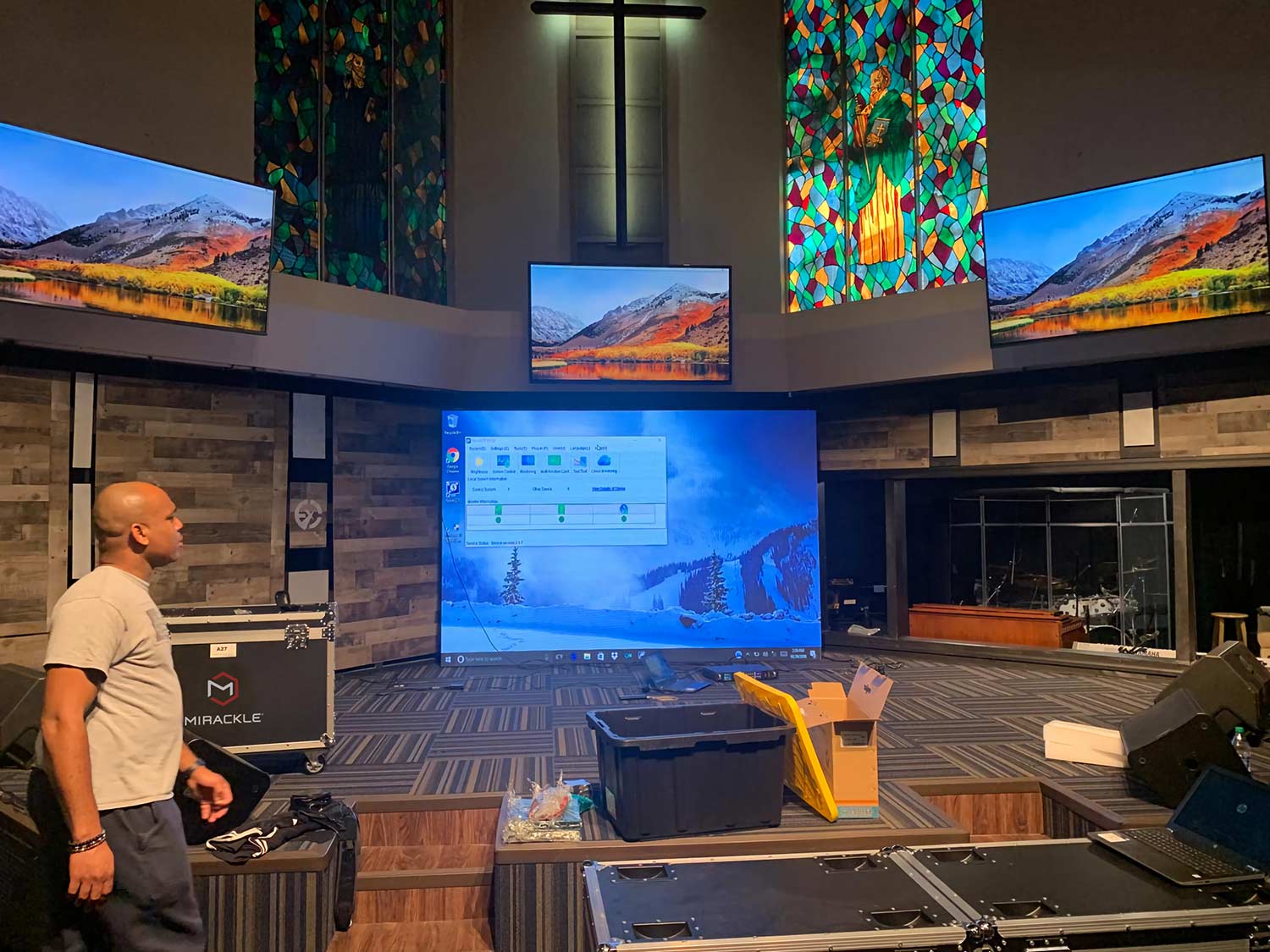
When investing in church technology, durability is essential. LED panels are designed for both indoor and outdoor use, with IP45 ratings for indoor environments and IP65 for outdoor installations; ensuring resistance to dust and moisture. Their robust build, combined with warranties of up to three years and an extended lifespan, guarantees long-term reliability and peace of mind. These LED displays are built to perform consistently, service after service.
LED Technology Is Durable… But Not Indestructible
Maintaining LED walls is essential. They are designed for longevity, but it still responds to heat, dust, poor ventilation, and handling habits. When modules stay clean and well-ventilated, pixel pitch, resolution, and brightness uniformity remain more stable over time. Outdoor screens do have protection (IP45 or IP65 depending on the model) but that doesn’t eliminate the need for routine checks. The way the screen is used, including how often it runs at peak brightness, also affects long-term performance.
Preventive Care Is More Effective Than Repairs
Preventive maintenance helps avoid early wear on internal components and reduces the odds of sudden failures. It’s far more cost-effective to keep the system clean and calibrated than to replace modules or troubleshoot damaged processors or sending cards. Regular inspections also lighten the workload on the power system and control hardware, reducing the likelihood of expensive repairs later on.

5-Year
Warranty
In stock,
ready to ship


Cleaning and Physical Care: The Foundation of LED Technology Maintenance
Clean surfaces and controlled physical conditions directly influence how each diode emits light; affecting clarity and perceived resolution.
Safe Cleaning Techniques for LED Modules
Durable LED panels should be cleaned gently using a dry microfiber cloth, brushing the surface without pressing on the diodes. Liquids or solvents should only be used if the manufacturer approves them. This simple routine helps maintain brightness uniformity and prevents scratches that could disrupt panel consistency.
Managing Dust, Debris, and Environmental Exposure
Indoor LED walls near kitchens, HVAC systems, or production equipment tend to collect airborne residue that dims brightness and shifts color over time. Outdoor panels deal with harsher conditions, but even with IP45 or IP65 protection, periodic cleaning supports thermal efficiency and stable illumination. Keeping the surrounding environment clean is an easy, often overlooked way to extend lifespan.
Protecting the Video Wall During Transport or Events
Screens used for rentals, tours, or temporary installations need added protection. Proper flight cases, shock-absorbing padding, and careful stacking prevent damage from vibration or movement. These precautions help preserve module alignment and safeguard magnetic modules that rely on precision to function correctly during full front service.
Keeping Your LED Screen Performance-Stable Through Calibration
Calibration keeps the entire LED wall functioning as a unified surface. Over time, brightness drift or color variation may appear, especially in systems that run for long hours.
Regular Brightness and Color Calibration
Routine calibration restores even brightness and accurate color values across all panels, especially when auto-adjustable brightness settings respond to shifting ambient light. These adjustments help preserve the display’s original resolution and visual balance.
Checking for Dead Pixels and Minor Module Issues
Spotting small defects early makes them easier to address. With full front service and magnetic modules, operators can replace affected areas quickly without dismantling the entire structure. Regular checks prevent minor inconsistencies from becoming larger visual interruptions.
Proper Refresh Rate and Processor Settings
A stable refresh rate ensures smoother motion and reduces flicker; important both to the naked eye and on camera. Monitoring processor and sending-card settings, particularly in NovaStar systems, helps keep playback smooth and protects image quality. These adjustments also support wide viewing angles, typically between 140° and 160°, ensuring consistent visuals across the audience.
Firmware Updates and Software Upkeep
Routine calibration restores even brightness and accurate color values across all panels, especially when auto-adjustable brightness settings respond to shifting ambient light. These adjustments help preserve the display’s original resolution and visual balance.
Why Firmware Updates Matter for Stability and Lifespan
Firmware updates improve stability, resolve bugs, and fine-tune how color and brightness are processed. Even though LED panels themselves are durable, up-to-date firmware keeps the entire system running smoothly and efficiently.
When and How Often to Update
Updates don’t need to be constant. Many operators review firmware options a few times per year or coordinate updates with their integrator. Updating only when relevant helps avoid unnecessary stress or compatibility issues.
Ensuring Compatibility With Control Systems and Inputs
LED video walls often integrate with new processors or external media sources over time. Keeping firmware current helps maintain compatibility with HDMI, SDI, NDI, and other inputs as formats evolve. This simple step helps prevent signal issues and futureproofs the system.
LED Market supports clients with advanced LED displays, and complete LED video wall systems backed by professional service, reliable hardware, and a comprehensive 5-year warranty; helping every installation achieve long-term performance and value.
Installation & Environment: The Conditions That Extend or Reduce Lifespan
Even a perfectly maintained LED panel can struggle if the installation environment works against it.
Proper Ventilation and Temperature Management
LED walls perform best when airflow is unobstructed. Excess heat reduces diode lifespan and strains power supplies. Lightweight cabinet designs and thoughtful ventilation help keep temperatures within safe ranges.
Humidity and Weather Protection for Outdoor LED Walls
Weatherproofing protects outdoor systems, but seals and coatings still require periodic checks to ensure they’re doing their job. IP65-rated screens resist dust and rain, yet humidity or long-term exposure can still affect internal components if not monitored.
Choosing Safe Mounting and Installation Methods
The chosen mounting style (wall-mounted, ground support, or flown) affects long-term structural health. Proper installation reduces vibration, prevents stress on the frame, and keeps internal wiring secure. Good installation is as important as good equipment when it comes to longevity.
Protecting the Value of Your LED Video Wall
Consistent care keeps the system performing well and protects your investment over time.
Signs That Your LED Wall Needs Expert Attention
Flickering, uneven brightness, color shifts, or recurring module problems usually indicate that a professional inspection is needed. Addressing these signs early helps prevent more serious issues.
Long-Term Care = Long-Term ROI
Regular cleaning, proper calibration, environmental checks, and timely firmware updates all help reduce repairs and extend the service life of LED screens. With fewer replacements and less downtime, the system maintains its value far longer.
Why Working With a Knowledgeable Provider Helps
Expert providers guide you through installation, processor configuration, firmware management, and long-term service needs. Their support ensures the system stays reliable throughout its life cycle.
Schedule a free consultation to explore tailored LED solutions that fit your space, budget, and vision.