
LED Video Wall vs LCD Video Wall: Which Technology Is Better in 2026?
Video walls are no longer reserved for command centers or expensive, high-end venues. Nowadays, they are everywhere: retail stores, churches, trade show booths, stadiums, broadcast studios, and corporate spaces looking for a cleaner, more modern visual setup. As large-format displays become more common, the comparison between LED video walls and LCD video walls keeps coming up for a simple reason: buyers want to know which option makes more sense in 2026.

For some, the conversation starts with the budget. For others, it is more about image quality, maintenance, brightness, or long-term flexibility. A system that looks more affordable at the start can end up costing more to maintain, while a higher upfront investment may deliver better value over time. That is why the choice between LED video walls and LCD video walls is not just about specs. It is also about durability, installation goals, visual experience, and how the system will hold up as needs change.
In this guide, we break down the differences in a practical way. We will look at how each system works, where each one performs best, what kind of ROI businesses can realistically expect, and why so many companies are moving away from older display formats in favor of more modern visual solutions.
Understanding the Core Difference Between LED and LCD Screens
At a glance, both technologies may seem to do the same job: show content on a larger scale. But once you look at how they are built, installed, maintained, and used, the differences become much clearer. Those differences affect everything from image continuity to long-term operating costs.
How LCD Video Walls Work
LCD video walls are created by combining multiple flat-panel screens into a grid. Each panel functions as its own display, and together they form one larger image. This setup is still common in control rooms, security centers, and certain corporate environments where dashboards, camera feeds, and segmented content matter more than visual immersion.
Because each screen has its own frame, bezels remain visible between panels. Even though manufacturers have made those borders thinner over the years, they still break up the image. Resolution is based on the native resolution of each individual panel, which can work well in environments where data clarity matters more than a seamless presentation.
How LED Video Walls Work
Unlike LCD, LED displays are made up of smaller LED modules that connect together to create one continuous surface. There are no bezels cutting through the image, so the final result feels cleaner, more immersive, and much better suited for spaces where content needs to catch attention quickly.
One of the most important factors here is pixel pitch, which affects how sharp the image appears at different viewing distances. A finer pixel pitch delivers better visual detail up close, while wider pitch options can work beautifully in larger venues where people are standing farther back. That is one reason LED display panels work well across such a wide range of applications, from indoor retail environments to outdoor branding.
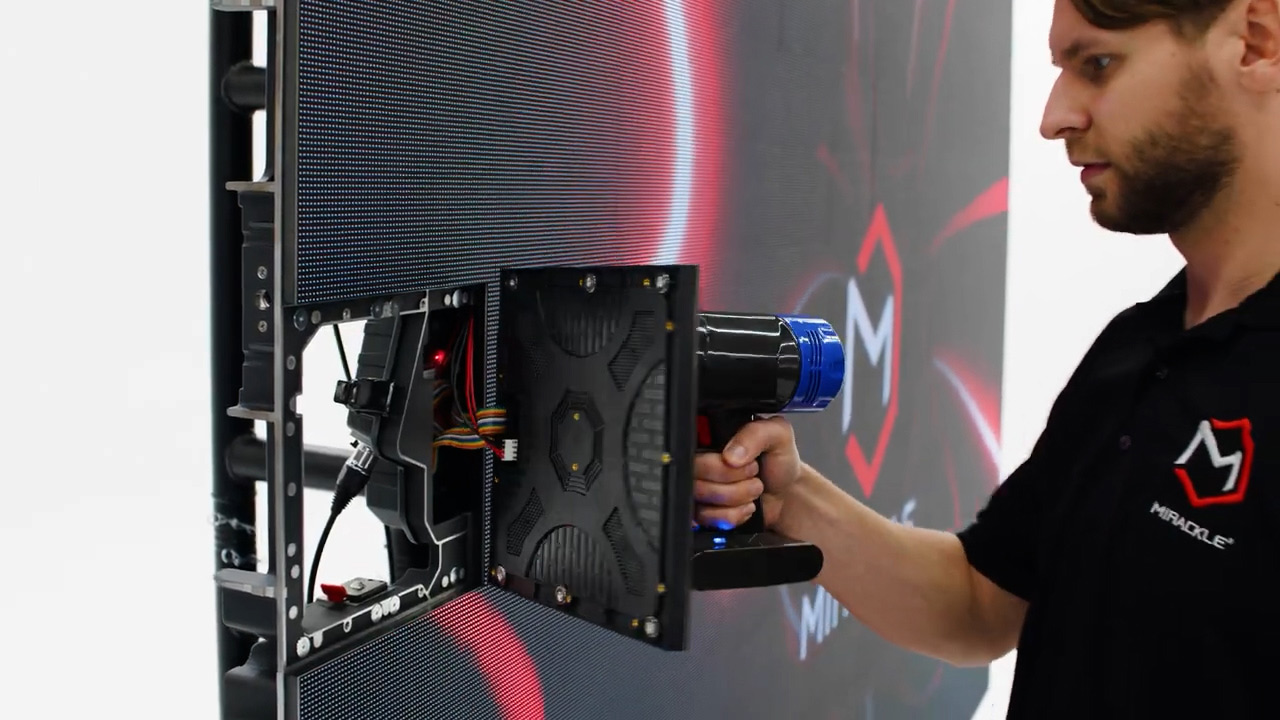
Maintenance is often easier as well. Features like magnetic modules and full front service make it possible to access components without taking apart the whole display. That can reduce downtime and simplify repairs, especially compared with replacing an entire LCD screen in a multi-panel setup.
Quick Comparison at a Glance
Here is the simplest way to understand the difference before getting into project-specific decisions:
Category | LED Video Walls | LCD Video Walls |
Visual continuity | Seamless image with no bezels | Visible bezels between screens |
Brightness | Stronger performance in bright indoor and outdoor settings, often with autoadjustable brightness | Better suited to controlled indoor lighting |
Flexibility | Modular, scalable, and adaptable to custom shapes | Usually limited to standard rectangular layouts |
Durability | Can include IP45 or IP65 protection for more demanding environments | Better for protected indoor spaces |
Maintenance | Easier module-level servicing with front access | Often requires full panel replacement |
Control | Advanced video processor and sending card systems, often with Novastar integration | Uses wall controllers, usually in more fixed layouts |
Best fit | Events, retail, churches, broadcast, large venues | Control rooms, offices, monitoring spaces |
Cost vs Value: The Real ROI of Video Wall Technology
Price is usually the first question, but it should not be the only one guiding the decision. A lower purchase cost may look appealing at first, yet the real value of a video wall becomes clear over time through performance, maintenance, and how well the system continues to serve the business.
Initial Investment Considerations
LCD systems often enter the conversation with one obvious advantage: lower upfront cost. For businesses with tighter budgets and straightforward indoor applications, that can make them appealing. If the goal is to build a monitoring wall in an office or control room where bezels are not a major issue, LCD may cover the need without pushing the investment too far.
Still, the first invoice is only part of the story. LCD setups come with size limitations based on fixed panel dimensions, and maintenance can become more frustrating over time. If one unit fails, replacing the full monitor is often the only option.
Why Many Businesses Choose LED for Long-Term ROI
This is where LED screens often start to stand out. The initial investment is usually higher, but many businesses look at that cost differently once they factor in durability, lower maintenance needs, stronger visual impact, and longer service life. A system that still looks modern after years of use can be a better investment than one that starts feeling dated too quickly.
Modern LED platforms are also designed with serviceability in mind. Lightweight cabinet construction, magnetic access, and front-service maintenance can make repairs faster and far less disruptive. In outdoor or high-traffic environments, durability becomes even more important, especially when indoor or outdoor LED panels offer protection levels such as IP45 or IP65.
Another important piece of the ROI conversation is warranty coverage. A 5-year warranty gives buyers more confidence and makes the investment easier to justify, especially when the display is expected to support branding, advertising, communication, or live production for years.
Why ROI Is Bigger Than the Purchase Price
Return on investment comes from more than how long the hardware lasts. It also comes from visibility, attention, flexibility, and how well the system supports the business itself. A brighter, more seamless display can improve customer experience, strengthen communication, and leave a better impression in spaces where presentation directly affects engagement or sales.
That is why many buyers now look beyond the purchase price and weigh factors like refresh rate, viewing angles in the 140° to 160° range, autoadjustable brightness, and compatibility with multiple content sources. In real terms, better ROI often comes from choosing the system that stays useful, flexible, and visually competitive for much longer.
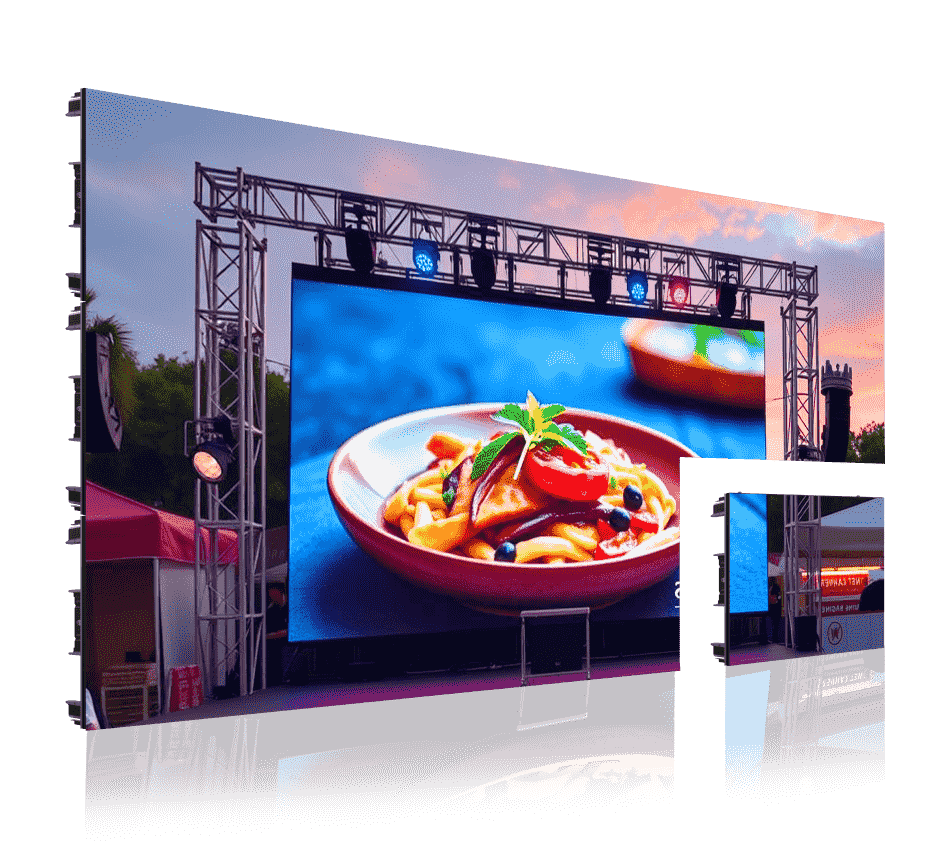
Our professional installation team ensures that your LED display is properly integrated and optimized for maximum performance.
Which Technology Is Better for Your Project?
There is no single answer that fits every buyer. The better choice depends on the environment, the type of content being shown, the level of visual impact needed, and whether the installation may need to evolve over time.
Situations Where LCD Video Walls Make Sense
LCD still has a place, especially in settings where function matters more than spectacle. In control rooms, monitoring centers, and some corporate spaces, the main goal is often to show dashboards, reports, camera feeds, or segmented information continuously. In those cases, bezels may not be a serious drawback because the content is meant to be read, not to feel immersive.
These installations are usually built around permanent walls, predictable indoor lighting, and standard aspect ratios. If the project does not require custom shapes, weather resistance, or a bold visual presence, LCD can still be a practical solution.
When LED Video Walls Are the Better Choice
For spaces where image continuity and visual impact matter, LED wall packages usually pull ahead quickly. Events, retail stores, large venues, churches, broadcast studios, and branded public environments benefit much more from a seamless presentation and modular scale. These are the kinds of places where content should feel dynamic and unified, not broken up by monitor borders.
That is also why LED displays are so often selected for modern installations that need flexibility. They can be configured through ground support, wall-mounted, or flown method installation strategies, depending on the space and the goal of the project.
The Importance of Environment and Viewing Experience
The environment matters just as much as the content. If the display will face changing light conditions, larger audiences, or physical exposure, LED display panels offer clear advantages. Their brightness, viewing angles, and weather-resistant construction make them far more adaptable for both indoor and outdoor use.
Beyond that, LED screens tend to feel more future-ready because they support stronger visual storytelling. Higher refresh rate, smoother motion handling, and better compatibility with professional control systems, including video processor and sending card architecture such as Novastar, give them an advantage in spaces where content needs to look polished and responsive at all times.
The Future of Video Wall Technology
The video wall market is clearly moving toward systems that are more immersive, more flexible, and easier to integrate into larger digital ecosystems. That shift says a lot about where the industry is heading in 2026.
Why LED Is Leading the Next Generation of Displays
The momentum behind LED video walls is not accidental. Ongoing innovation has improved resolution, refined cabinet design, expanded installation possibilities, and made control systems more advanced without sacrificing practicality.
The rise of virtual production, live-content environments, immersive retail, digital signage networks, and hybrid events has pushed that shift even further. Businesses want LED devices that can work with modern processors, content platforms, and production workflows while maintaining visual consistency across different inputs and content formats. In that context, LED solutions continue to align more naturally with where audiovisual communication is going.
Finding the Right Partner for Your LED Video Wall Project
The technology matters, but the supplier behind it matters just as much. The right partner helps clients choose the proper pixel pitch, layout, maintenance approach, and installation method without turning the process into guesswork. Just as importantly, they help connect the screen to the larger ecosystem of processors, content management tools, and hardware that will shape the day-to-day experience after installation.
That is where LED Market comes in. The company provides LED video walls, technical guidance, modern control and processing systems, and tailored support for different industries and project types. Whether the goal is a retail installation, a church setup, a broadcast environment, or a large commercial display, working with an experienced supplier makes it much easier to choose technology that performs well now and stays relevant well into the future.
Schedule a free consultation to explore tailored LED solutions that fit your space, budget, and vision.