
LED Video Wall Power Consumption: What Businesses Should Know Before Buying
Imagine installing a spectacular LED video wall in your business: dynamic content, vibrant colors, and a visual presence that is impossible to ignore. At first, the biggest investment may seem to be the purchase itself. But months later, many companies realize that the real long-term cost is keeping the system running every day.
When investing in an LED screen, most buyers focus on size, resolution, or price. Energy consumption is often overlooked until the system is already installed and operating.
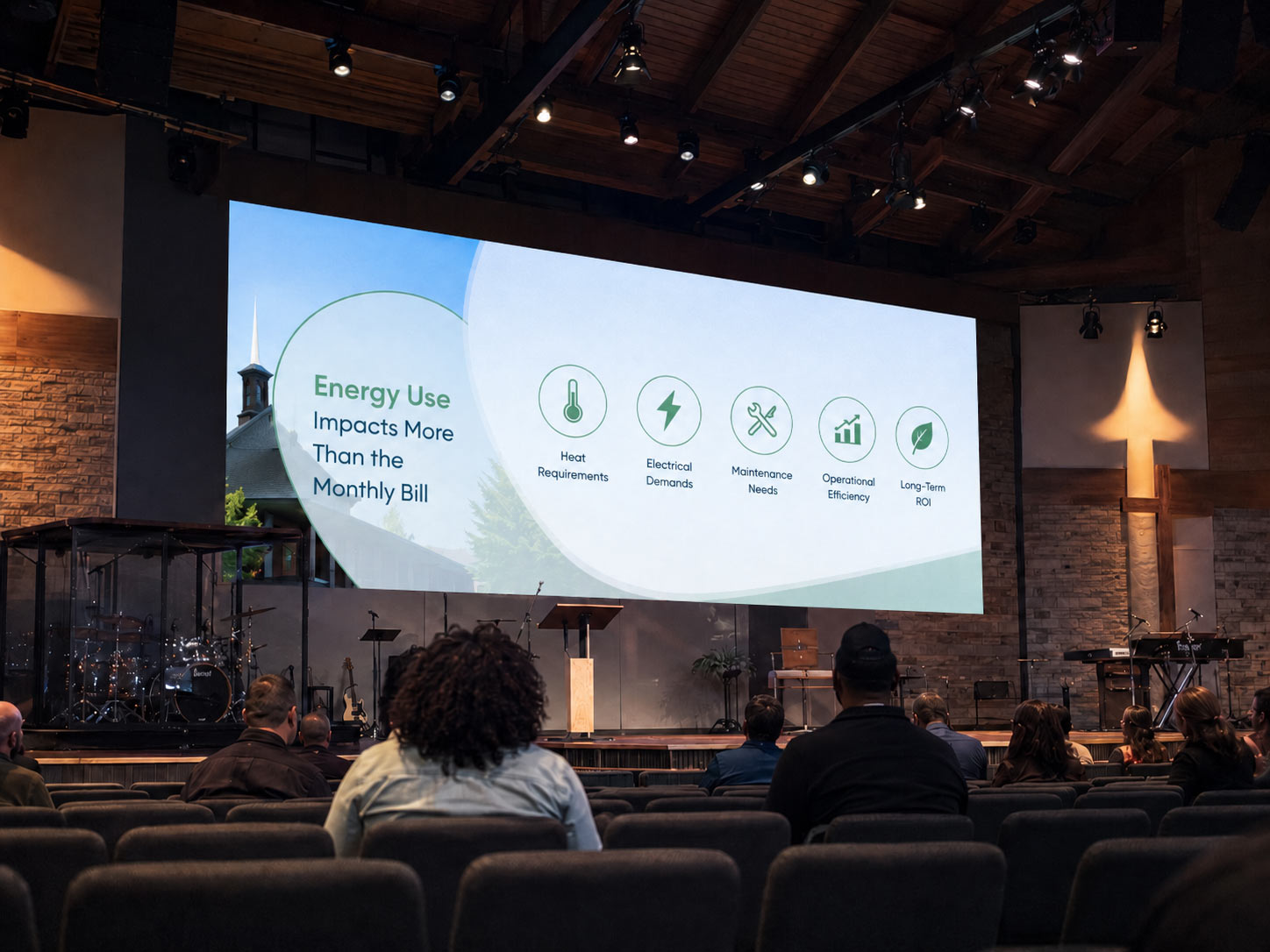
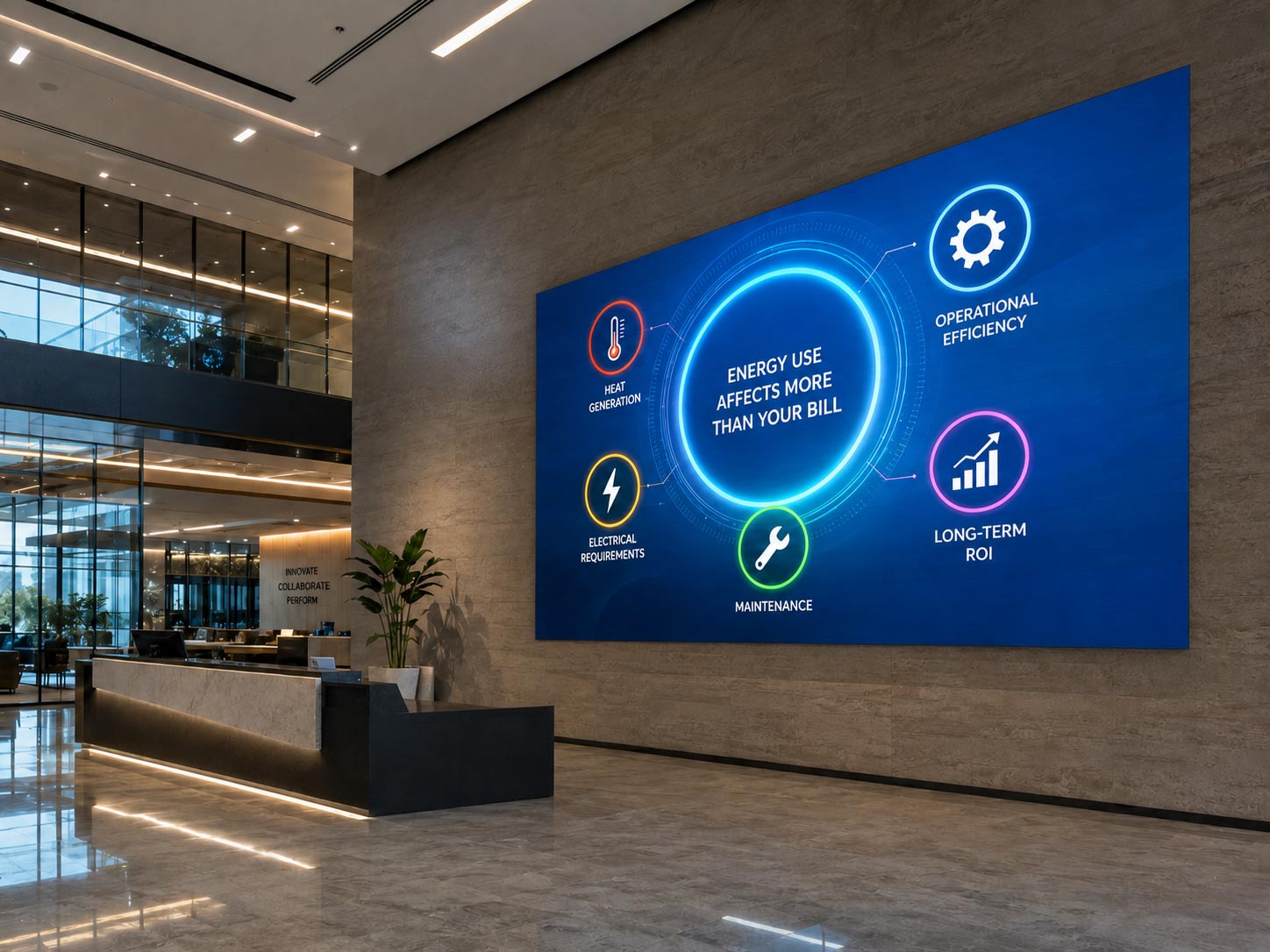
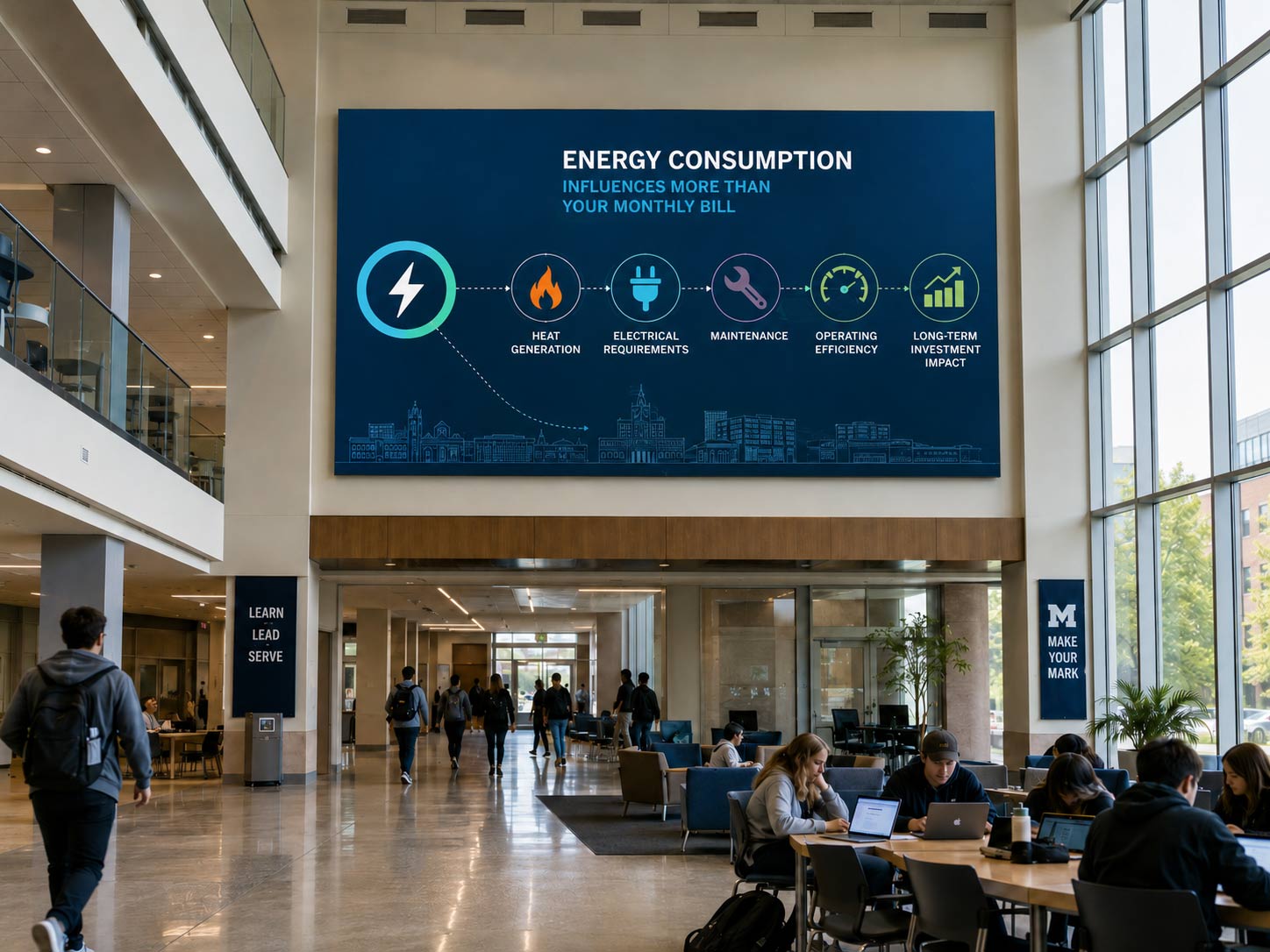
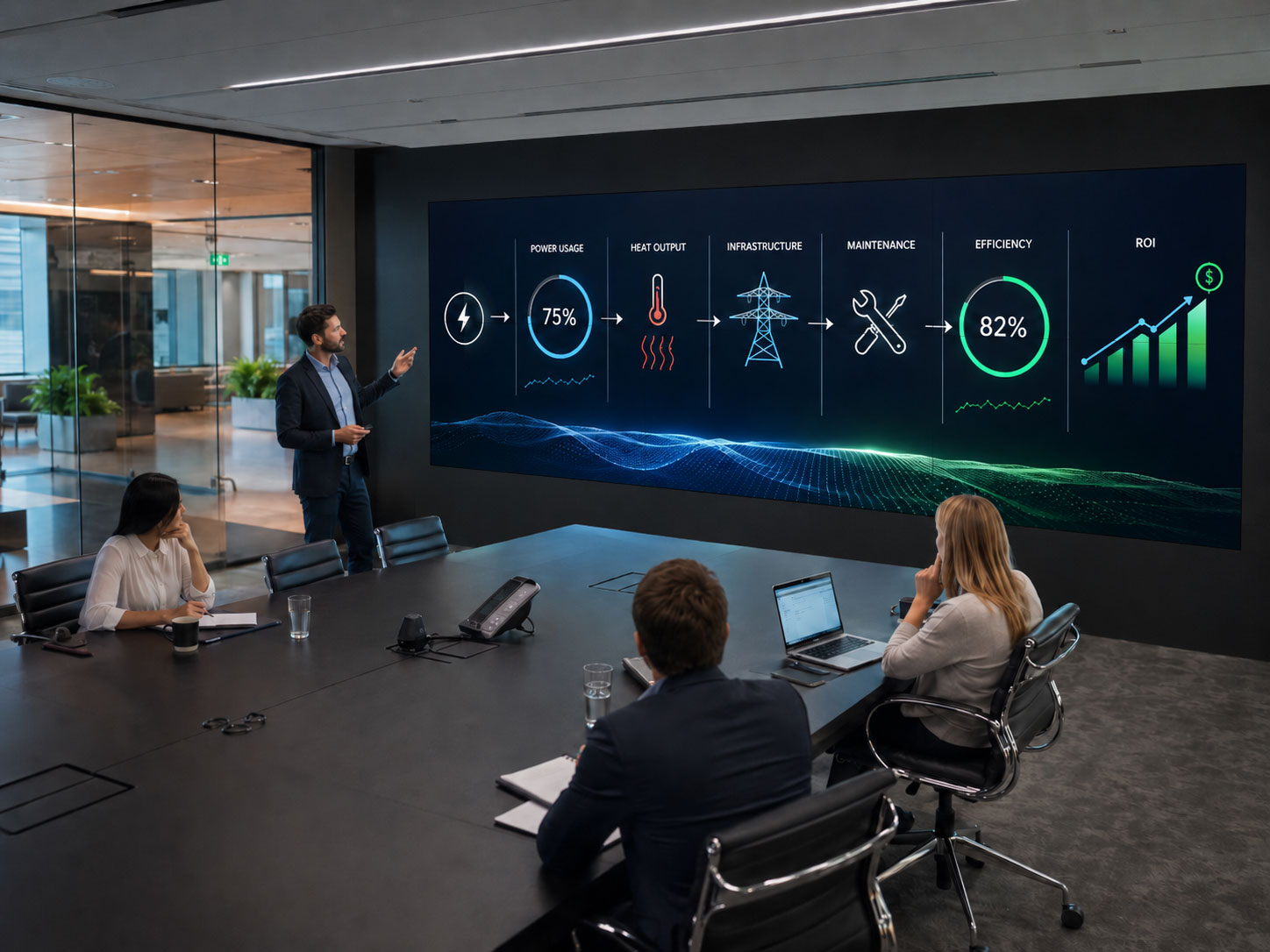
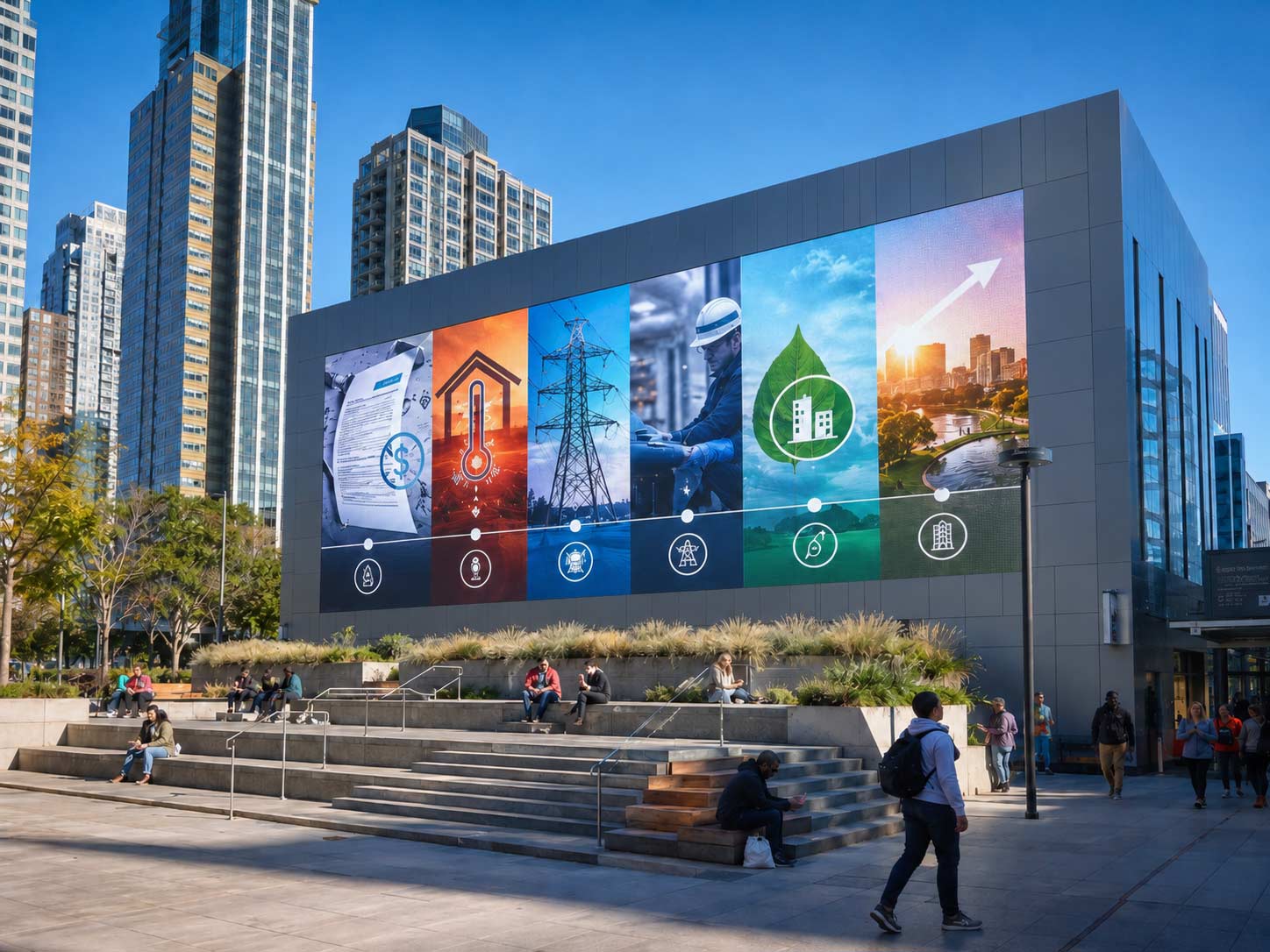
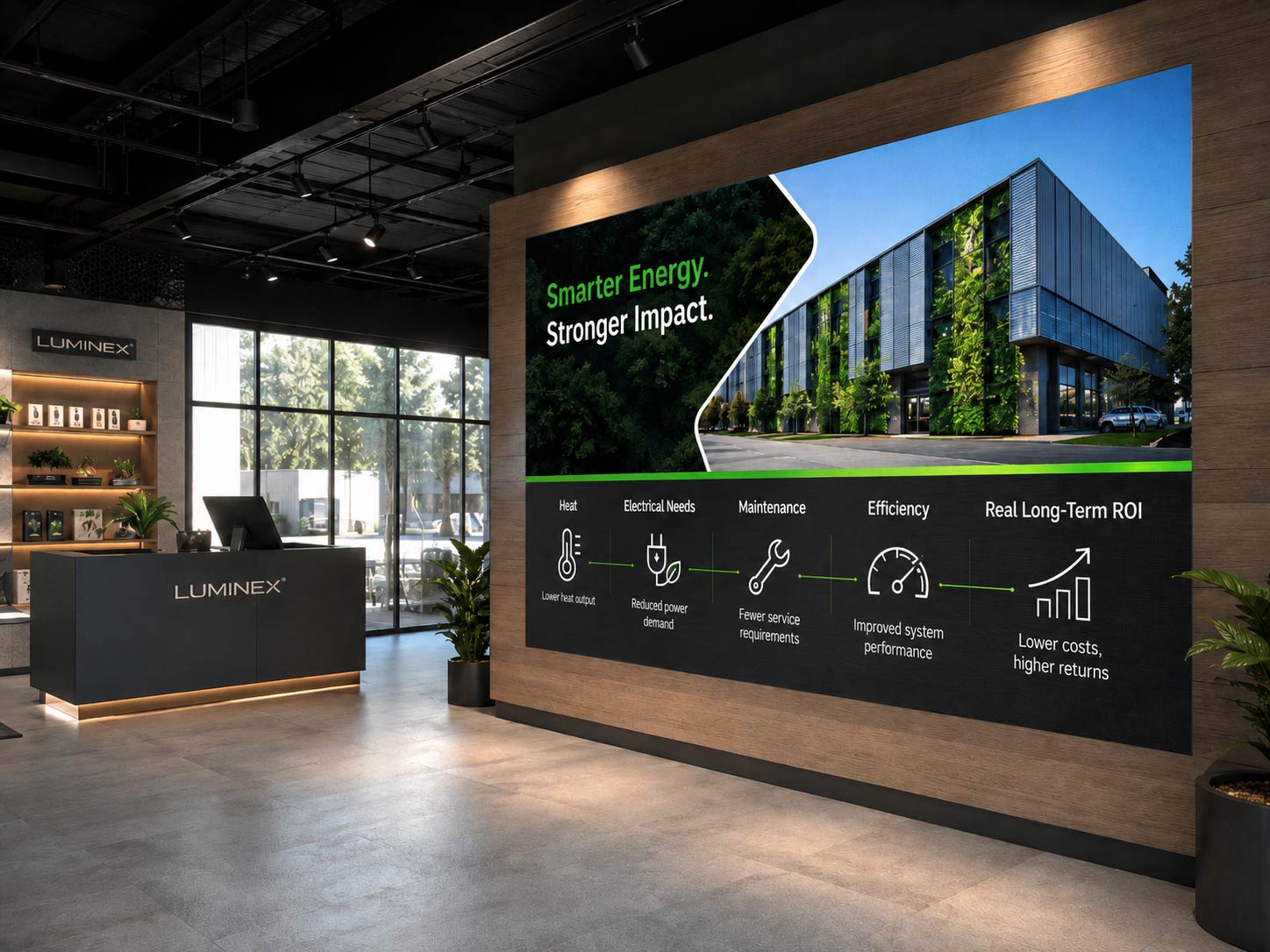
Electricity use affects more than the monthly bill. It can influence heat generation, electrical requirements, maintenance, operational efficiency, and the real return on investment over time.
That is why modern businesses are not just looking for bigger or brighter LED video walls. They want visual performance, energy efficiency, and predictable operating costs. Today’s LED technology supports that goal through auto-adjusting brightness, smarter processing, and more efficient system configurations.
In this article, we will review the factors that influence the energy use of an LED wall, how they affect ROI, and what businesses should evaluate before approving a system that will operate every day.
Why Power Consumption Matters Before Buying an LED Screen
Energy Use Is Part of the Real Cost of Ownership
When an LED display is treated as a strategic investment, the purchase price is only one part of the equation. A lower upfront cost can become expensive if the system consumes too much energy, requires frequent maintenance, or needs to be replaced too soon.
Electricity consumption is part of the total cost of ownership. It is not only about turning the screen on; it is about how that usage affects daily operations year after year.
Less efficient systems often generate more heat, place greater demand on electrical infrastructure, and may require additional ventilation or service. By contrast, modern LED screen packages are designed to reduce operating costs while maintaining strong visual performance.
Not Every LED Display Uses Energy the Same Way
Not all LED displays consume energy at the same rate. Usage can vary depending on screen size, brightness level, content type, pixel pitch, resolution, panel technology, and whether the installation is indoors or outdoors.
The number of daily operating hours also matters. A corporate display used a few hours per day does not require the same energy strategy as an outdoor system running continuously in a public space.
In the industry, consumption is often measured in watts per square meter. Many indoor LED display panels operate around 200 to 500 W/m², while outdoor systems, which require higher brightness, may range from 300 to 800 W/m². These numbers can vary by product, so buyers should always review the technical specifications of each system.
Maximum Power Is Not the Same as Average Power
A common mistake is assuming that maximum power consumption represents everyday usage. In reality, that number usually reflects an extreme scenario, such as 100% brightness with completely white content across the entire display.
Daily consumption depends much more on brightness settings, content design, ambient light, and operating conditions. Darker videos, balanced visuals, and automatic brightness adjustments can significantly reduce energy use compared to the theoretical maximum.
For that reason, businesses should look beyond one isolated number in the quote and understand how the system will actually perform in its real environment.
The Factors That Increase or Reduce LED Display Energy Use
Brightness, Environment, and Daily Operation
The installation environment has a direct impact on energy consumption. Outdoor LED walls must compete with sunlight, so they usually operate at higher brightness levels than indoor systems.
In controlled spaces such as lobbies, offices, retail stores, or hospitality venues, LED screens can run at lower intensity while still remaining clear and visually effective. This is where auto-adjusting brightness becomes especially valuable.
This feature allows the system to adapt to real ambient conditions instead of operating at maximum output all day. It reduces unnecessary energy use, helps protect components, and improves the viewing experience.
Pixel Pitch, Resolution, and Viewing Distance
Pixel pitch is often discussed as a visual-quality factor, but it can also influence energy use. A finer pixel pitch includes more LEDs per area, which can increase the number of active components inside the system.
However, the goal is not always to choose the most advanced configuration. The best choice is the one that fits the viewing distance, content type, and space.
A corporate lobby, stadium, church, showroom, retail space, or live event will not require the same setup. When pixel pitch and resolution are selected correctly, LED panels can deliver strong image quality without using unnecessary resources.
Content Also Affects Consumption
Content design plays a bigger role than many businesses expect. Completely white backgrounds, extremely bright visuals, and content created at maximum intensity usually require more energy than balanced graphics or video.
That does not mean reducing visual impact. It means designing smarter content that looks professional without forcing the system to operate at its limit.
In many cases, optimized visuals combined with automatic brightness and intelligent settings can reduce consumption without the audience noticing any loss in image quality.
Energy efficiency depends not only on hardware. It also depends on how the screen is used every day.
Energy Efficiency and Sustainability Go Together
Efficient LED Technology Supports Greener Operations
Modern LED video walls are already more efficient than many traditional visual communication options. Compared to older projectors, printed signage, or temporary displays that require frequent replacement, LED technology allows businesses to update content dynamically with less waste.
Companies can centralize promotions, branding, wayfinding, announcements, and corporate messaging without constantly producing new printed materials.
This helps reduce operating costs while supporting sustainability goals in corporate offices, retail stores, hospitality spaces, healthcare facilities, and public environments.
Less Waste, Fewer Replacements, Better Long-Term Value
Sustainability is not only about electricity. It is also about how long the system can remain useful without requiring a complete replacement.
That is why durability, spare parts, modular maintenance, and service access matter. Systems with full front service and magnetic modules make it easier to replace specific components without dismantling the entire screen.
A lightweight design can also simplify installation, transportation, and future service work, especially for projects that may need to be reconfigured or moved.
In practical terms, LED devices that can be maintained, repaired, and updated are usually more sustainable than systems that are difficult or costly to service.
Smart Brightness Control Protects Both Energy and Image Quality
Reducing consumption does not mean sacrificing visual impact. Much of the efficiency in modern LED technology comes from adapting performance to the actual environment.
Smart brightness control adjusts intensity based on the lighting conditions of the space. This helps maintain visibility, color balance, and professional image quality without unnecessary energy use.
This feature becomes even more useful in large spaces where viewers are spread across different positions. Wide viewing angles of 140° to 160° help preserve visibility without forcing the system to increase brightness.
The result is a screen that remains visually impressive while operating more efficiently over time.
What Businesses Should Ask Before Approving a Quote
Ask for both maximum and Average Power Consumption
Many companies compare quotes by looking only at screen size or final price. That can be misleading. Two systems may appear similar on paper but perform very differently once installed.
Before approving a proposal, buyers should understand how the system will operate and what is included beyond the visible display.
One of the most important details is actual energy consumption. A quote that only shows maximum power does not provide enough information to estimate daily operating costs.
Businesses should request both maximum and average power consumption. Maximum power helps plan the electrical installation, while average consumption gives a more realistic view of monthly costs.
It is also useful to request power details per panel or per square meter. This makes it easier to compare LED display panels and understand how consumption changes as the screen size increases.
Check the Control System and Power Management
The system behind the screen also affects efficiency, stability, and long-term performance. A strong configuration depends on more than the modules themselves.
The control system, video processor, and sending card all need to work together properly. Platforms such as NovaStar can help manage content, inputs, and performance more reliably, especially when the screen is connected to different software or hardware technologies.
A well-planned configuration can improve efficiency, reduce technical issues, and support smoother daily operation.
Buyers should evaluate not only image quality, but also how the system is managed, powered, and maintained over time.
Consider Installation and Operating Conditions
Installation method also affects energy performance, ventilation, accessibility, and maintenance. The physical setup should match the way the screen will be used.
Wall-mounted systems are often ideal for permanent corporate or commercial spaces. Ground-supported installations offer more flexibility for events and temporary setups. Flown methods require more planning, especially when rigging, structures, or work at height are involved.
Before approving a purchase, businesses should ask: How many hours per day will the screen be on? Will it be indoors or outdoors? What brightness level does the space require? Does the system include auto-adjusting brightness? What are the maximum and average power numbers? What support, spare parts, and warranty are included?
Often, the biggest differences between proposals are found in these answers, not in the initial price.
The Perfect Partner
An LED screen should not be purchased as an isolated product. It should be selected as a complete solution that can remain efficient, reliable, and profitable for years.
That is why initial configuration, technical guidance, after-sales support, and installation planning are just as important as visual quality. A 5-year warranty, spare parts availability, and responsive technical assistance can help reduce risk and protect the investment.
For businesses comparing LED video walls, LED Market helps evaluate not only image performance, but also energy consumption, installation needs, long-term reliability, and ROI. The goal is not simply to sell a display, but to help each company choose a system that works efficiently within the real demands of its space.
Schedule a free consultation to explore tailored LED solutions that fit your space, budget, and vision.