
LED Video Wall Calculator: What Buyers Should Estimate Before Requesting a Quote
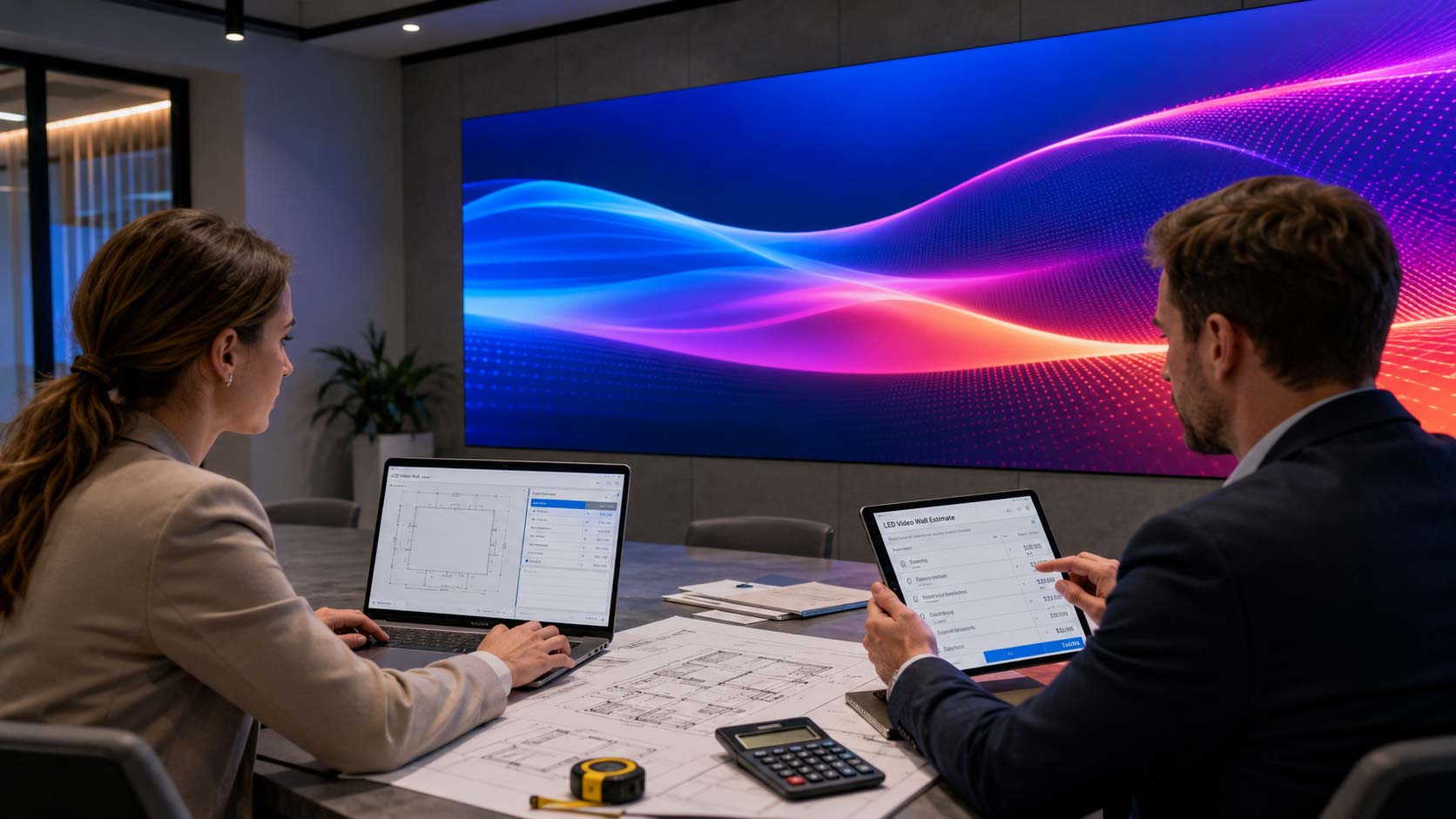
When planning a large visual project, buyers usually want one immediate answer: What will it cost? An LED video wall calculator can provide a useful starting point, but it cannot produce a complete quote based only on price per square foot.
A calculator is most valuable when it helps you set realistic expectations before contacting a supplier. Investing in LED technology requires a clear understanding of:
- Size and aspect ratio
- Location and environment
- Viewing distance
- Installation and maintenance
- Expected return on investment
The goal is not to replace professional guidance. It is to help you compare proposals, avoid costly assumptions, and ask better questions about your space, audience, content, and budget.
What an LED Screen Calculator Should Really Help You Estimate
More Than Screen Size
Measuring the available wall is only the beginning. Unlike a television, a modular system must account for cabinet dimensions, aspect ratio, resolution, and viewing conditions. The final size should support the content without overwhelming the room or losing impact from a distance.
Well-planned LED video walls consider audience position, traffic flow, and architectural limits. Dimensions alone do not determine performance. LED wall packages built simply to fill an empty surface may be uncomfortable up close or ineffective across a large venue.
Indoor vs. Outdoor Expectations
The installation environment affects brightness, durability, ventilation, protection ratings, and service access. Indoor and outdoor projects may have similar dimensions, but they rarely need the same hardware.
Corporate spaces often need LED displays with fine pixel pitches, accurate color, and quiet operation. LED screens for churches may prioritize flexible aspect ratios and balanced brightness under stage lighting. LED display panels for trade shows are designed for fast assembly, repeated transport, and dependable performance.
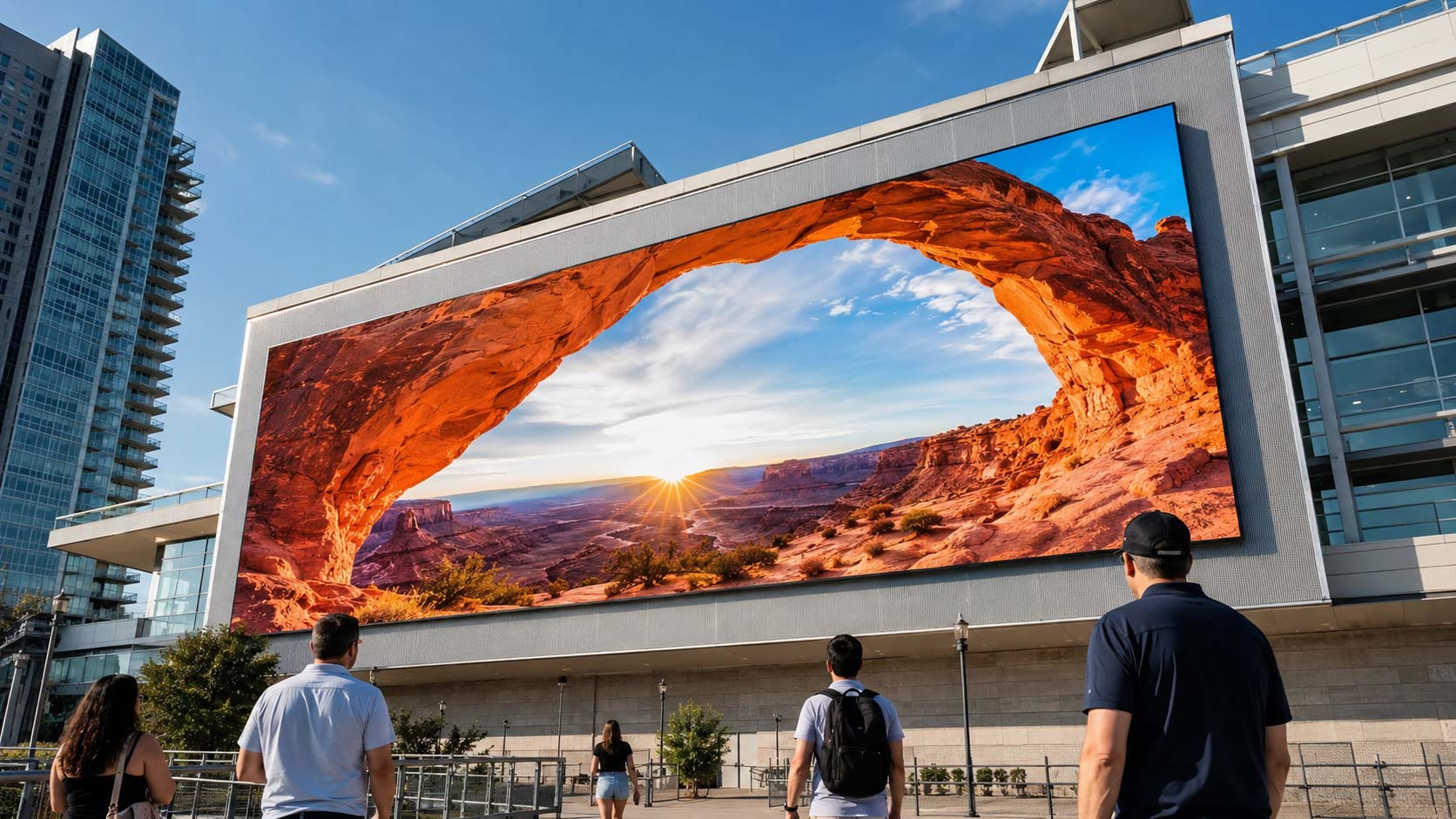
Outdoor LED screens face direct sunlight, rain, dust, heat, and changing weather. They need higher brightness, weather-resistant construction, and suitable ventilation. Outdoor LED panels should also be selected according to viewing distance, operating hours, and local installation requirements.
Content, Visibility, and Viewer Experience
The correct specification depends on what people need to see and how close they will be. Detailed text, menus, logos, and presentations usually require a finer pixel pitch than large-format video viewed from farther away.
LED video walls used for live production or fast-moving content need strong refresh performance to reduce flicker and motion artifacts on camera. LED displays used mainly for static messaging may have different processing and operating requirements.
Every major specification should serve the application. Resolution, brightness, refresh rate, contrast, and color performance should solve a practical need, not simply increase the price.
The LED Technology Buyer’s First Questions: Where Will the Screen Be Installed?
Before discussing price, define the exact installation location. The LED wall supporting systems structures affect engineering, labor, safety, and future maintenance. A calculator cannot determine whether the site requires reinforcement, rigging, or custom fabrication.
Wall mounting:
Direct attachment to a load-bearing surface, usually after a structural review.
Floor mounting:
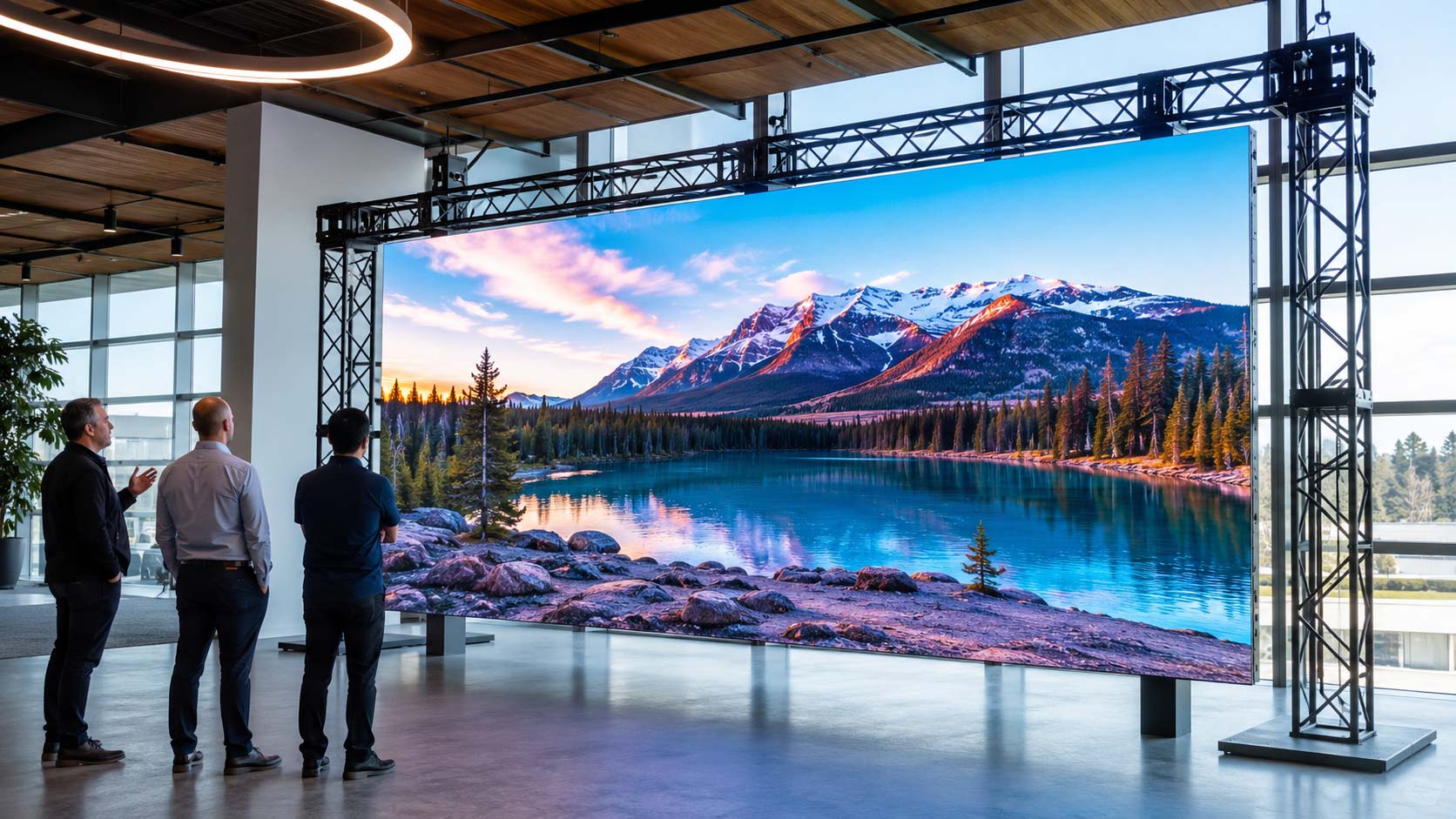
A self-supporting frame or truss, often used for stages, showrooms, and temporary events.
Suspended mounting:
Rigging from an approved ceiling structure or load-bearing grid by qualified professionals.
LED walls may also be recessed, curved, freestanding, or integrated into custom architecture. Each configuration changes the frame, wiring path, access method, and installation cost.
How Close Will People Be to the Display?
Viewing distance is one of the most important factors in pixel-pitch selection. A system that looks sharp across a venue may reveal visible pixel structure at close range. The closest regular viewer should guide the estimate.
LED display panels with a finer pitch are better suited to lobbies, conference rooms, retail spaces, and other close-viewing environments. Systems viewed from farther away can often use a wider pitch without sacrificing practical image quality.
The right choice protects both visual performance and budget. Paying for resolution the audience cannot perceive adds cost without improving the experience.
What Type of Content Will Run on It?
Content determines the required processing, contrast, color accuracy, and refresh rate. Each application places different demands on the system.
Retailers need accurate color and strong contrast. Boardrooms require legible text and data. Houses of worship often combine lyrics, live feeds, and background graphics. Sports and event venues need smooth motion and dependable camera performance.
LED panels used for menus, directories, or announcements may run for long hours with mostly static content. LED solutions for live events may instead prioritize low latency, flexible inputs, and rapid setup.
Your business deserves a professional web presence. Let’s discuss your project and make it happen.
Hidden Cost Factors Most Buyers Forget to Calculate
Installation Is Part of the Investment
The purchase price is only one part of the project. A realistic budget must include the work required to install, power, configure, and support the system safely.
- Structural support: Steel or aluminum framing designed for the equipment’s size and weight.
- Site access and preparation: Scaffolding, lifts, cranes, hoists, or temporary access equipment.
- Electrical infrastructure: Circuits, distribution, grounding, and wiring sized for the expected load.
- Permits and regulations: Engineering documents, inspections, building approvals, or municipal permits.
- Commissioning: Configuration, calibration, signal testing, and final performance checks.
Site conditions can change the budget substantially. Installations at ground level in an open interior will not carry the same labor requirements as LED display panels mounted high on an exterior facade.
Service Access Matters Later:
Maintenance planning should happen before installation. Front-service and rear-service designs require different clearances and access strategies.
Front-service designs allow technicians to remove modules and internal components from the viewing side. Rear-service LED devices need enough space behind the structure for safe maintenance. Mounting a rear-service system flush against a wall can turn a routine repair into an expensive dismantling project.
Service access directly affects downtime, labor costs, and repair speed, so it should never be treated as an afterthought.
Control, Signal, and Compatibility
A complete system also needs processors, receiving hardware, signal distribution, and content sources. These components keep the image synchronized and control how content reaches the display.
LED walls used for live feeds may require low-latency processing and camera-friendly refresh rates. LED displays managed across several locations may need a compatible cloud-based content management system. The quote should identify what is included and what must be purchased separately.
How to Think About Value Instead of Just Price
A Lower Price Is Not Always a Better Estimate
Two systems with the same dimensions can perform very differently. Pixel pitch, diode quality, brightness, refresh rate, color consistency, cabinet construction, and processing hardware all matter.
Lower-cost LED display panels may create higher long-term expenses through repairs, inconsistent color, poor visibility, or limited support. LED video walls should be evaluated by total value rather than dimensions alone.
The strongest purchase is the one that meets the application without unnecessary specifications or avoidable compromises.
ROI Depends on the Environment
The business case changes by industry. In retail, returns may come from stronger visibility, higher foot traffic, and more effective promotions. At trade shows, LED screens can help a booth stand out in a crowded hall.
In churches, the value may be clearer lyrics, stronger participation, and a better shared experience. On building facades, LED panels can create advertising value, long-distance visibility, and a more recognizable property.
For corporate and university campuses, LED solutions can improve communication, event messaging, wayfinding, and emergency alerts. ROI should reflect the purpose of the installation, not a generic formula.
Warranty and Support: Change the Long-Term Cost
The investment continues after installation. Warranty coverage, technical support, spare parts, and repair response all influence lifecycle cost.
When matching replacement modules are unavailable, LED screens may develop visible differences in color or brightness. Reliable support helps preserve image consistency and reduce downtime.
A strong supplier should explain warranty terms, parts availability, service procedures, and expected product life before the sale. These details are essential when comparing LED technology providers.
What to Prepare Before Talking to an LED Display Provider
Accurate project information helps the supplier create a faster, more realistic, and more complete proposal. Before requesting a quote, gather:
Available dimensions:
Width and height of the wall, stage, facade, or supporting structure.
Site photos or videos:
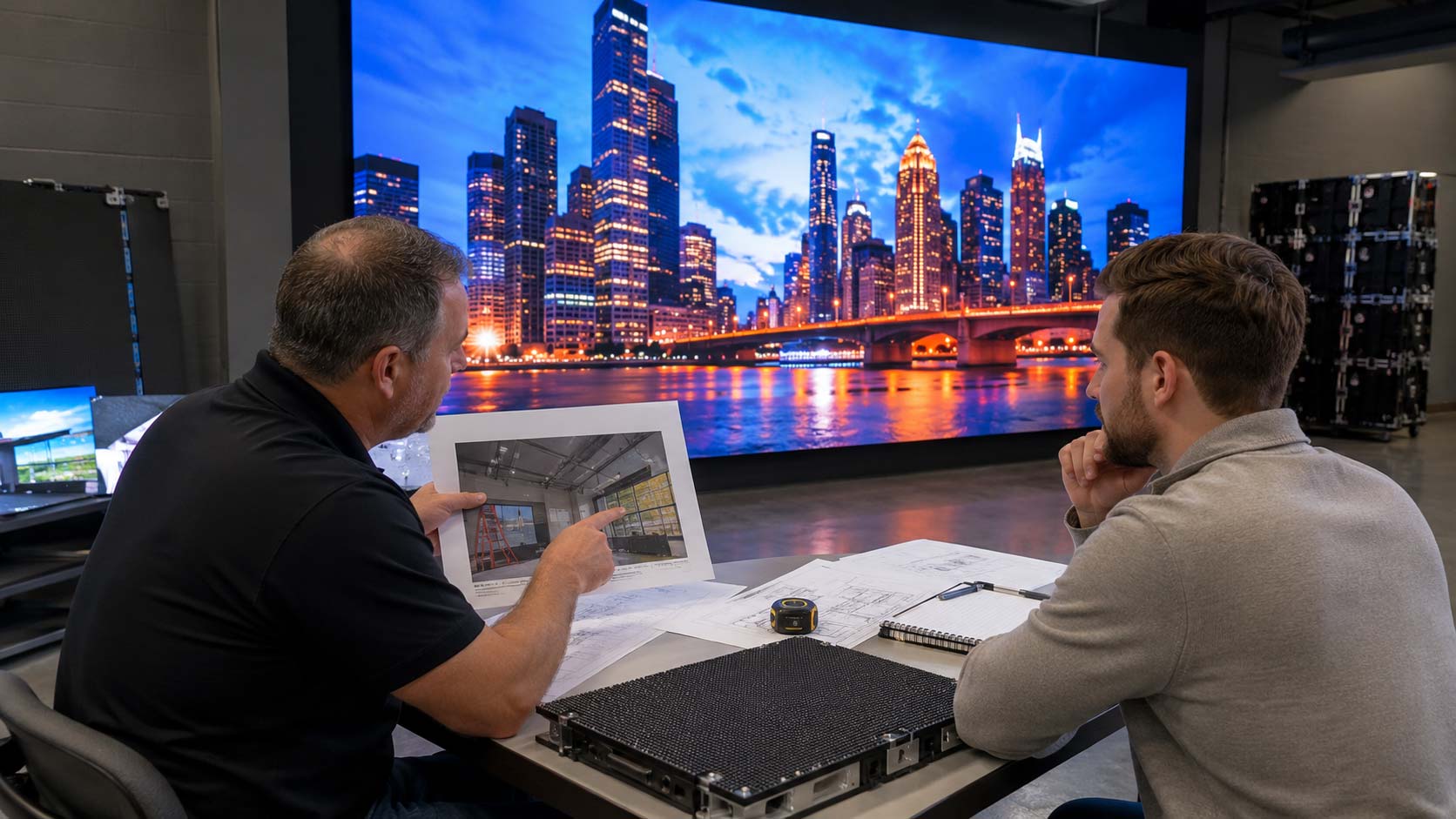
Multiple angles showing access points, obstacles, beams, and surrounding architecture.
Primary use:
Advertising, live events, worship, presentations, menus, wayfinding, or another application.
Viewing distance:
The approximate distance to the closest regular viewer.
Environment:
Indoor conditions or exposure to sunlight, rain, dust, heat, and humidity.
Mounting preference:
Wall-mounted, recessed, suspended, or floor-supported.
Signal sources:
Computers, cameras, media servers, cloud players, or other connected equipment.
Operating schedule:
Expected daily hours and frequency of use.
You should also ask the provider:
What maintenance does this model require?
How quickly can failed components be replaced?
Is the control system compatible with the planned CMS and signal sources?
Does the quote include framing, engineering, cabling, installation, and commissioning?
What warranty applies, and how are matching spare parts stocked?
At LED Market, we treat the purchase of LED video walls as a long-term business decision, not a simple hardware order. We evaluate the space, application, installation requirements, content, and project goals before recommending LED devices or LED solutions.
That process helps customers select LED displays that deliver the required performance without unnecessary features. The result is a clearer proposal, a more reliable installation, and stronger long-term value.
Contact LED Market today to discuss your project and turn your plans into a high-impact visual experience.
Before making a decision, contact LED Market for transparent guidance, professional support, and a solution tailored to your real budget, space, and business goals.