
Front Service vs. Rear Service LED Panels: Which Setup Is Better for Your Space?
When purchasing an LED video wall, buyers often focus on size, pixel pitch, and resolution. Yet one practical question can have an equally important impact: how will technicians access the internal components when service is required?
The choice between front and rear access affects installation, available space, architectural integration, and long-term operating costs. The best configuration for an LED wall is determined by the room and mounting structure, not by a universal rule or a single specification.

At LED Market, we evaluate the installation environment before recommending a display system. A well-planned service approach helps protect the equipment, simplify maintenance, and prevent avoidable construction changes later.
Why Service Access Matters Before Choosing LED Panels
The Screen Has to Fit the Room, Not Just the Wall
An LED screen should be evaluated as part of the entire space, not only by its visible dimensions. Clearance behind the system, surrounding finishes, and technician access can determine whether the installation remains practical after the initial setup.
Whether LED video walls are installed in hotel lobbies, churches, boardrooms, or retail environments, the site establishes the limits. A strong design accounts for both appearance and future service needs from the beginning.
Maintenance Is Part of the Buying Decision
An LED wall is a long-term investment, and maintenance will eventually be necessary. Modules, receiving cards, wiring, and power supplies may need inspection, calibration, or replacement. Access should therefore be treated as a purchasing requirement, not an afterthought.
Planning makes routine work faster and safer. It also reduces the risk of damaging finishes, removing surrounding structures, or taking LED display packages offline longer than necessary.
A Clean Installation Can Still Need Smart Access
A flush or recessed installation may look polished, but appearance alone does not make it functional. Poor service planning can turn a minor repair into an expensive construction project, especially when LED display panels are tightly integrated into millwork or custom walls.
The strongest designs preserve a clean finish while allowing technicians to reach critical hardware without disrupting the room.
What Front Service LED Panels Are Best For
When There Is No Space Behind the Screen
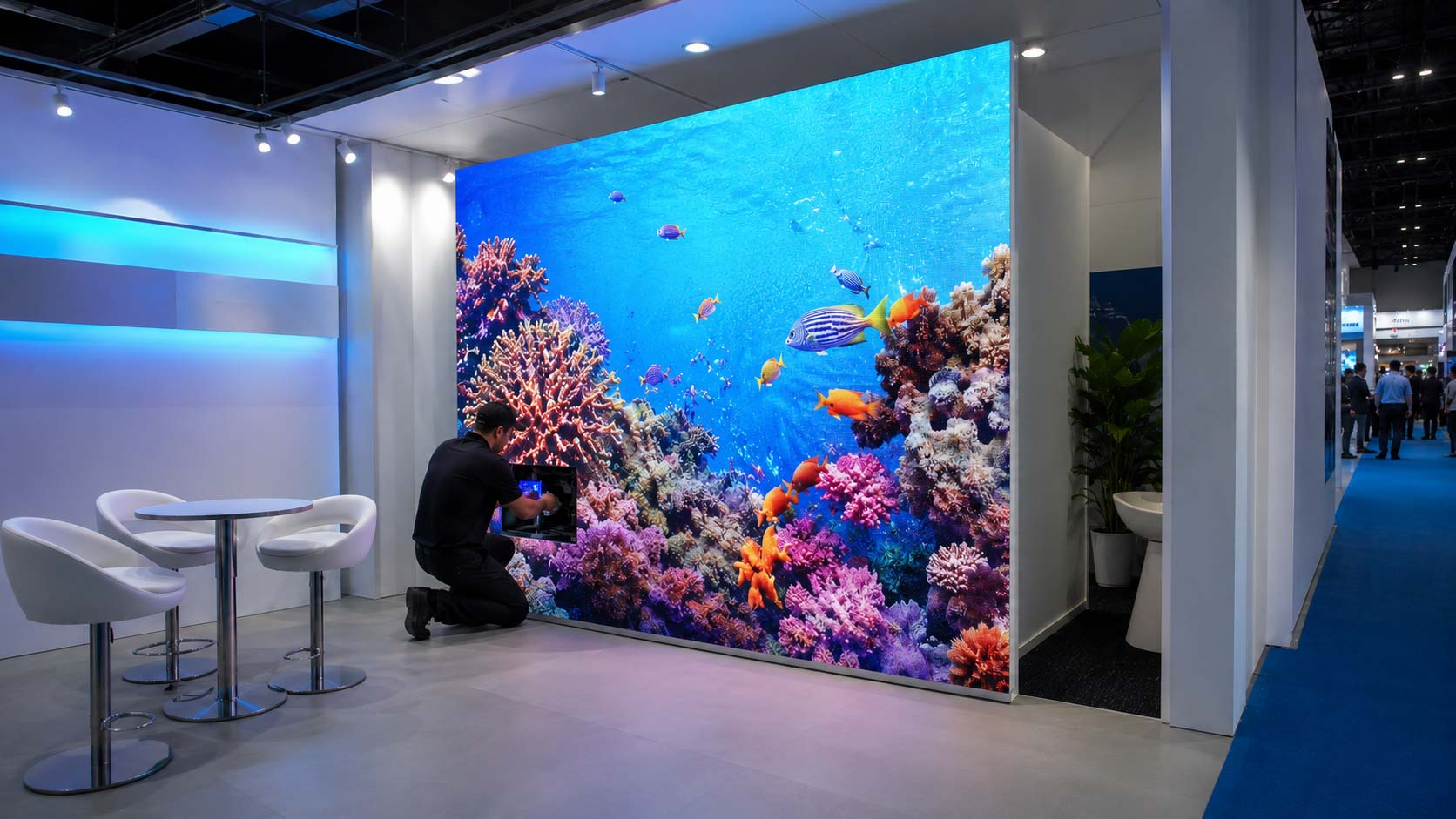
Front service is usually the best option when the system is mounted directly against a solid wall, recessed into a niche, or enclosed within a custom structure. It eliminates the need for a rear corridor and allows LED screens to fit into tighter architectural spaces.
This setup is particularly useful in LED walls for houses of worship, corporate interiors, showrooms, and hospitality environments where every inch of usable space matters.
Spaces That Need a Minimal, Finished Look
Modern interiors often require technology to blend naturally with the surrounding design. Front access supports a slim, built-in appearance without visible rear openings or oversized support structures.
Meeting rooms, auditoriums, hotel lobbies, studios, and retail spaces can use LED walls as integrated visual features rather than separate technical installations. The result is cleaner, more refined, and easier to coordinate with interior finishes.
Why Front Service Can Simplify Future Work
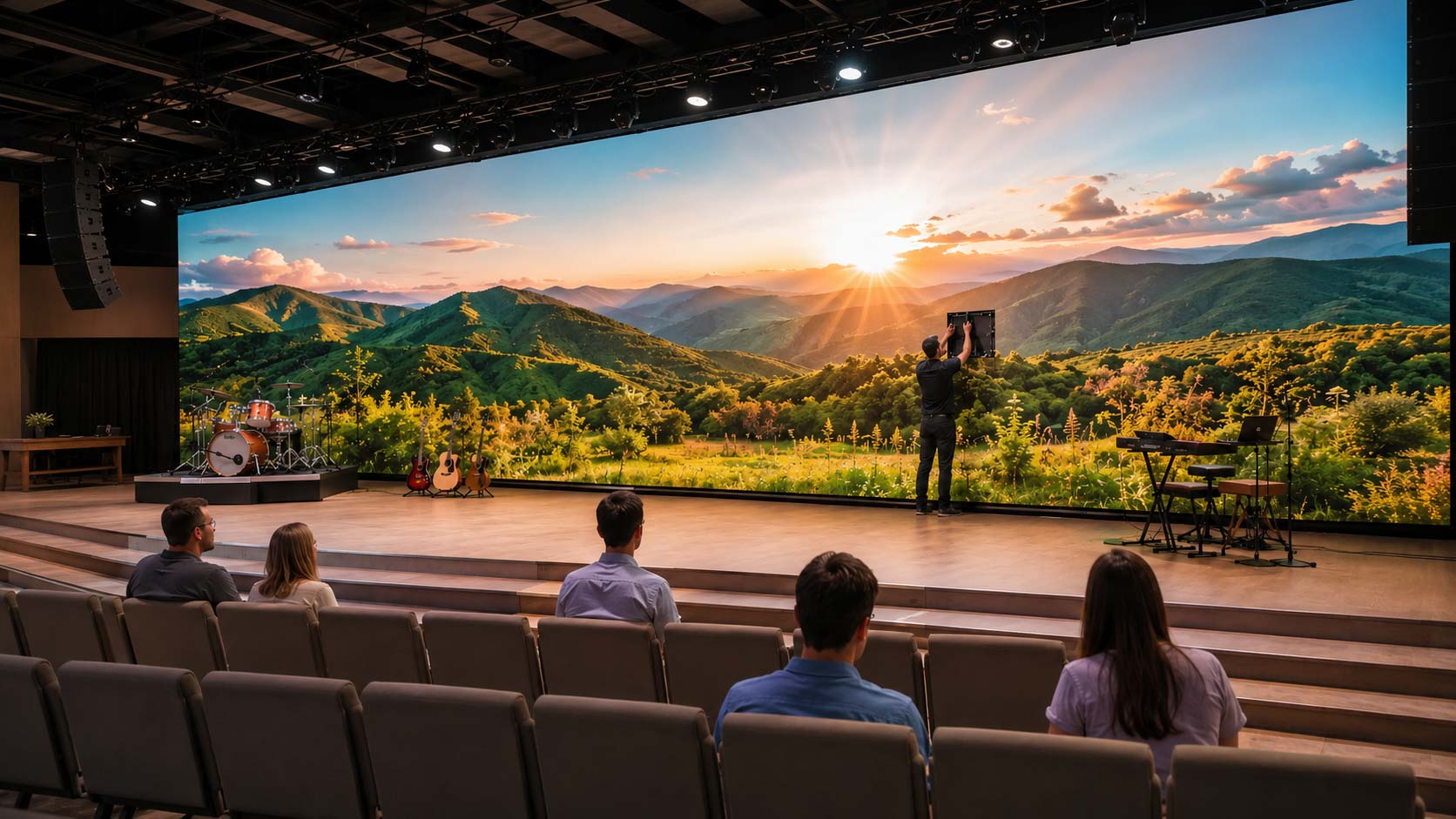
With front access, technicians can remove individual modules using magnetic tools or mechanical release systems. Most repairs can be completed without dismantling the full installation or entering a restricted area behind it.
That convenience can reduce downtime for LED video walls used in presentations, worship services, branded environments, or daily commercial communication. It is especially valuable in spaces that cannot easily close for maintenance.
When Rear Service LED Panels Make More Sense
Projects With Dedicated Back Access
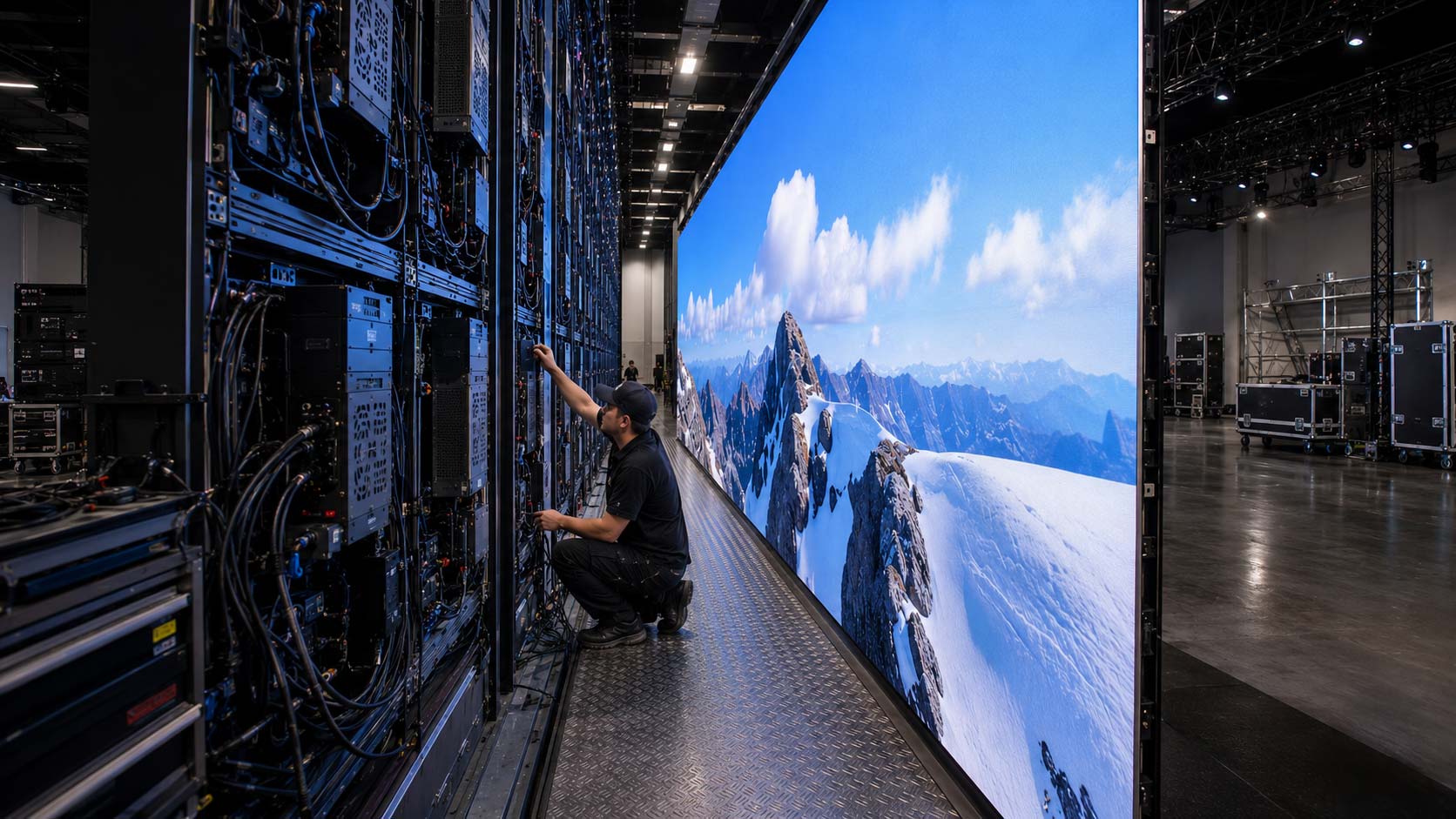
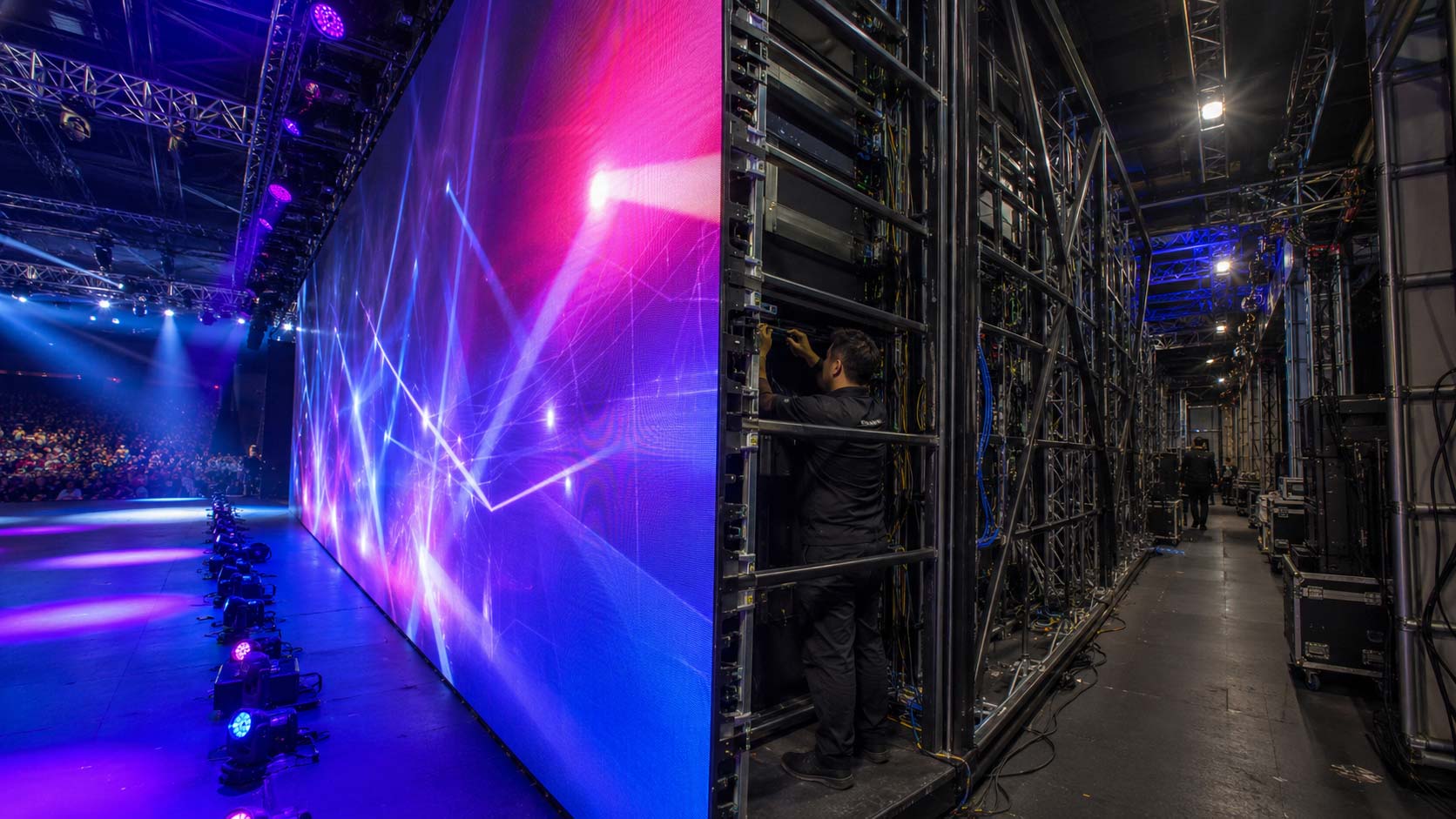
Rear service is often the most efficient choice when the design already includes open space or a dedicated technical corridor behind the system. Technicians can work comfortably without affecting the viewing area, making this setup common in theaters, concert venues, production studios, and control rooms.
For large LED displays, rear access can make inspection and component replacement more direct.
Large Screens and Technical Environments
Large-format systems involve more than visible modules. They may include extensive power and data cabling, receiving cards, processors, and signal distribution equipment. Rear access gives engineers a clearer view of the entire system, which can simplify installation, cable management, and diagnostics.
This approach is often practical for LED display panels connected to centralized racks or NovaStar control equipment. Well-organized LED displays are also easier to troubleshoot under pressure.
Outdoor and Structural Considerations
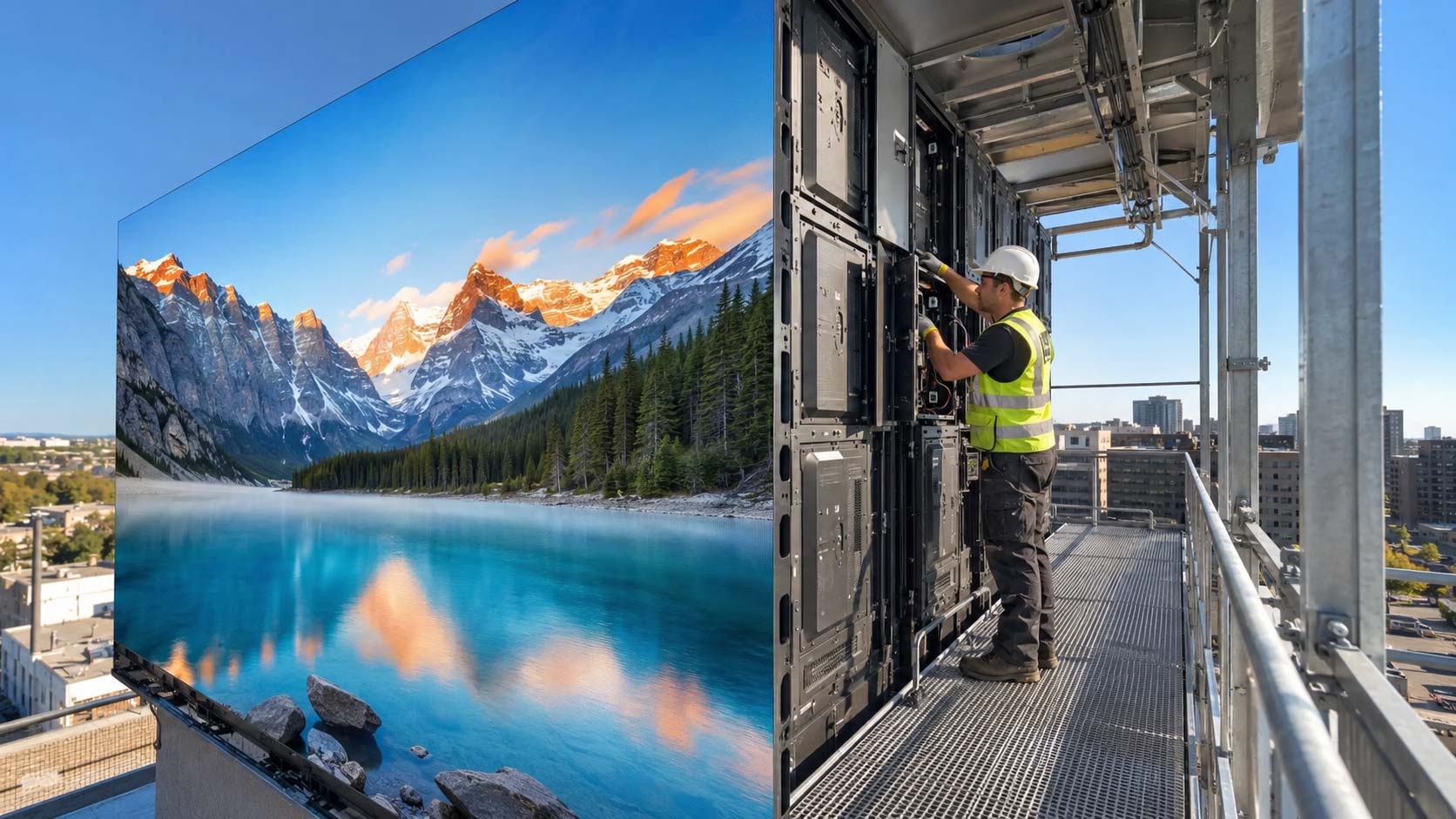
Outdoor LED wall projects must account for weather protection, structural strength, and safe technician access. Rear-service cabinets are often designed for sealed, heavy-duty applications and may include high IP ratings for resistance to rain and dust.
On building facades, freestanding structures, and digital billboards, maintenance platforms or ladders are often already part of the support system. In those cases, rear access can be the safest and most cost-effective choice for LED screens.
How Space Changes the Best LED Wall Choice
Wall-Mounted Displays
When LED walls are installed directly on a solid surface, front access is usually the most practical option. The system can remain slim while technicians reach components without opening the wall or removing the full structure.
For residential, corporate, and commercial interiors, the priority should be straightforward service, minimal depth, and protected surrounding finishes.
Ground Support or Stage Setups
Ground-supported systems can accommodate either service type. Rear access works well for LED walls when a clear technical corridor is available behind the stage, while front access is more suitable for booths or compact venues with limited backstage space.
The setup schedule and available circulation area should guide the decision, especially for temporary LED video walls that must be assembled and serviced quickly. For LED screens in compact booths, front access can also keep backstage areas clear.
Flown Installations
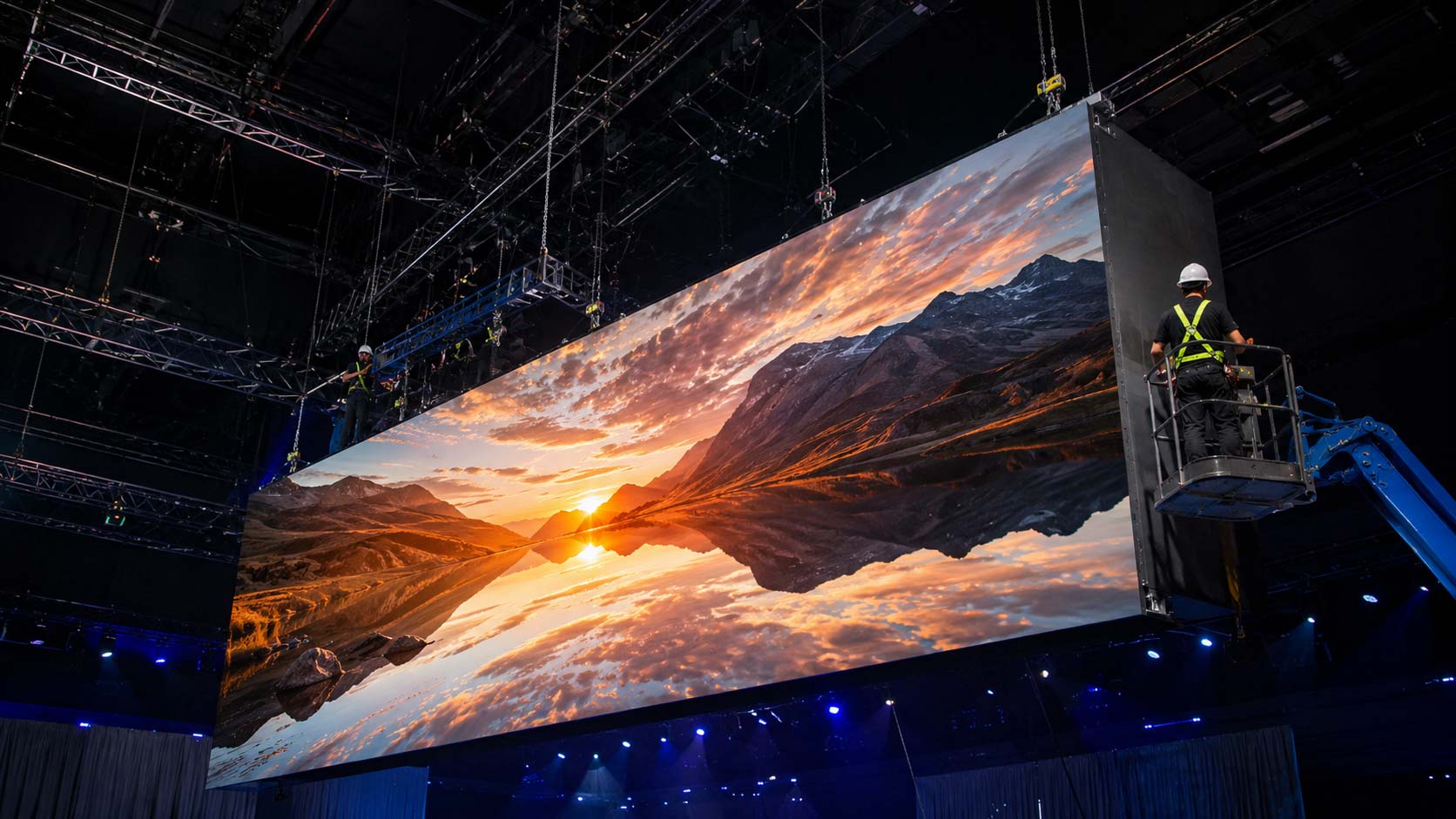
Suspended installations require careful planning because maintenance takes place at height. Cabinet weight, rigging limits, lift access, and technician safety must all be considered before installation.
The safest service direction depends on the rigging design and equipment access plan. For LED displays suspended from trusses or ceilings, that decision should be made with the installer and structural team before the system is approved.
Choosing the Right LED Wall Service Setup for Long-Term Value
Think About Daily Use, Not Only Installation Day
A display may perform perfectly when it is launched, but daily operation reveals whether the service plan was practical. Consider who will operate the system, how often it will run, and how quickly repairs must be completed.
When access matches the site, routine maintenance is less disruptive. This is especially important for LED display panels used continuously in public, commercial, or mission-critical environments.
The Better Setup Protects the Investment
The right access system reduces downtime, supports preventive maintenance, and helps extend equipment life. Long-term value depends on serviceability as much as visual performance.
Support coverage also matters. A 5-year warranty and qualified technical assistance can protect LED screens from avoidable delays and unexpected costs while keeping the installation operating consistently.
Every space presents different structural and operational demands. There is no one-size-fits-all service configuration for LED walls, LED devices, or other integrated display systems.
At LED Market, our team reviews the site, mounting method, access limitations, and maintenance expectations before recommending a configuration. The goal is a reliable installation that looks finished and remains practical to service.
From the initial technical evaluation through after-sales support, we help clients choose LED technology that balances appearance, performance, and maintenance access. That planning allows LED video walls, LED display panels, and LED solutions to deliver stronger long-term value with fewer operational complications.
Before making a decision, contact LED Market for transparent guidance, professional support, and a solution tailored to your real budget, space, and business goals.