
From Sermons to Stage: The Role of LED Walls in Modern Churches
In today’s evolving landscape of religious communication, technology has become a vital tool for connecting with congregations and delivering messages with clarity and impact.
According to recent data from DiviewDisplay, over half (52.9%) of religious organizations have already adopted digital signage—such as projectors—to support sermons and announcements.
This trend reflects growing recognition of the role that visual tools can play in worship spaces. But among the many options available, LED video walls for churches stand out for their unmatched clarity, versatility, and ability to transform the worship experience.
In this article, we’ll explore how LED technology is redefining church communications—from enhancing sermons to creating immersive environments that engage both long-time members and younger generations.
A New Kind of Sanctuary: The Rise of Visual Worship
Consider a modern church, steeped in tradition yet eager to evolve. By upgrading its communication systems and investing in LED displays, it discovered a powerful new way to connect with its congregation.
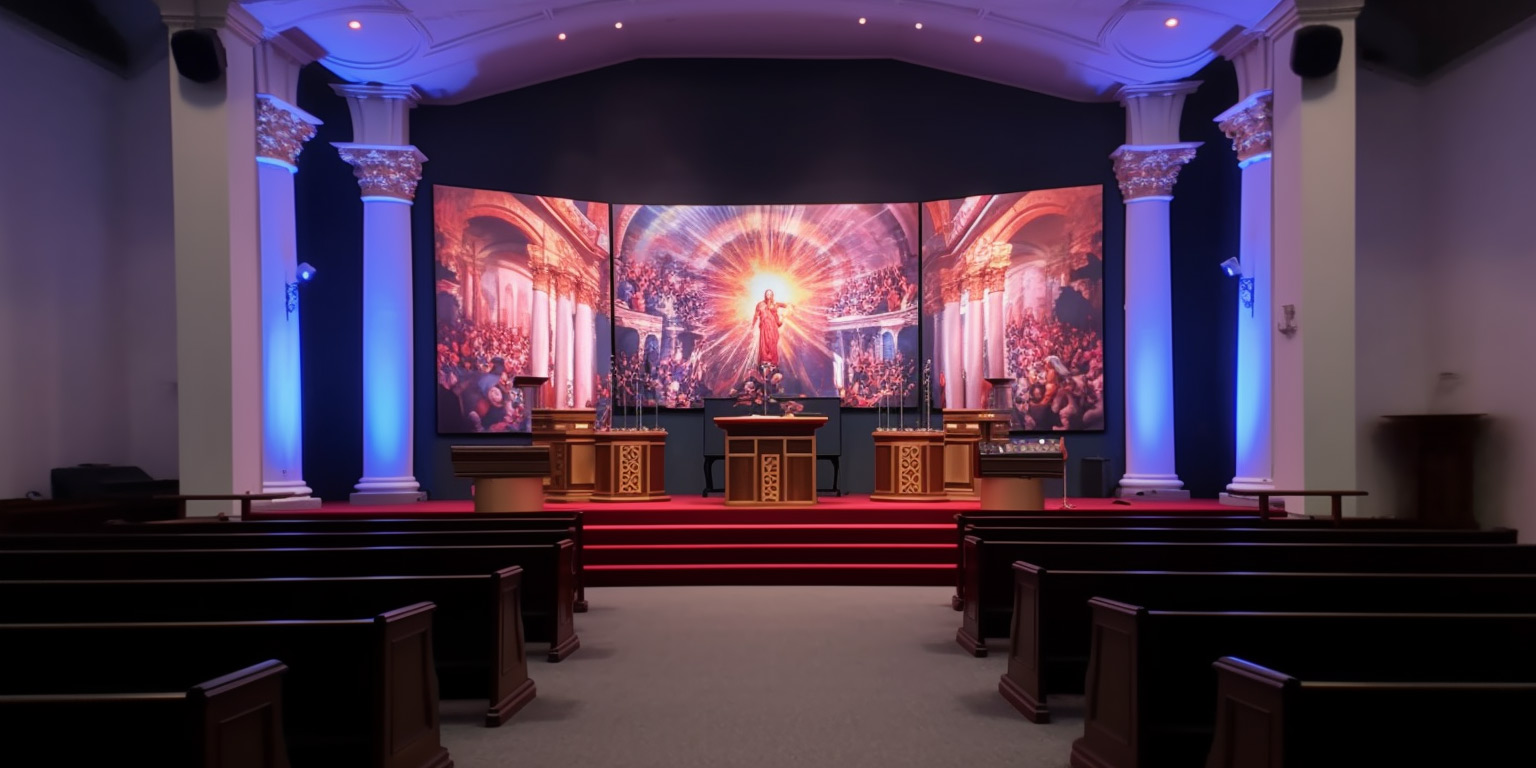
Today’s audiences—especially younger worshippers—are deeply attuned to visual media. LED screens for worship spaces make it possible to create immersive, emotionally resonant experiences that captivate and inspire.
In large sanctuaries, LEDs eliminate issues like pixelation, ensuring perfect visuals from any distance. High refresh rates eliminate flicker, delivering smooth video playback and motion graphics. Wide viewing angles ensure every seat in the house has a clear view.
And the benefits extend beyond aesthetics. Traditional printed materials can cost churches up to $6,500 annually. By replacing print with digital displays, churches can reduce these costs by up to 76%, according to DiviewDisplay.
Why Visuals Matter in Faith Spaces
Visual storytelling has always played a role in spiritual life. From stained glass windows to cathedral frescoes, imagery has long been used to communicate sacred messages.
LED tech is the modern evolution of that tradition. It provides an engaging way to share scripture, amplify sermons, and enhance the overall worship experience. A key technical component—pixel pitch—determines how sharp and detailed the image appears. The lower the pixel pitch, the more vivid the display.
Modern LED walls also feature robust content management systems. These allow churches to layer visuals like worship lyrics or Bible verses in real-time, aligning the visuals with the message.
Specialized software tailored for religious settings further expands these capabilities—managing content schedules, syncing with livestreams, and integrating with social media. This creates a powerful platform for sacred digital storytelling.
Beyond the Pulpit: Churches as Community Stages
LED walls do more than enhance worship—they can transform churches into dynamic community spaces.
Imagine a concert with synchronized lyrics on screen, a wedding with a visual tribute to the couple, or a seminar with live video and interactive slides. LED technology for temples makes it all possible.
To maximize impact, churches can choose from three main installation methods:
Fixed wall mounts
Ideal for permanent, seamless installations.
Suspended mounting
Great for high ceilings or flexible positioning.
Mobile carts or trusses
Offer full portability for multi-use spaces.
Features like front service access simplify maintenance by allowing quick repairs without dismantling the wall. Magnetic modules make setup and teardown fast and efficient.
LED systems support both synchronous (real-time) and asynchronous (pre-recorded) content, making them versatile tools for services, concerts, or scheduled media playback.
Thanks to their modular design, these walls can be customized to different sizes and shapes, adapting to any event or space requirement.
Adaptability Is the New Tradition
The growing adoption of LED panels reflects a shift toward a new kind of tradition—one rooted in flexibility and innovation.
Many churches now livestream their services on large in-house displays, keeping remote members connected. Others use LED displays in lobbies to share announcements, event calendars, and inspirational messages, creating a welcoming environment.
Some have transformed multipurpose rooms with mobile LEDs, hosting movie nights, youth presentations, and fundraisers. These dynamic uses reinforce the church’s role as a hub for both spiritual and community life.
Durability Meets Divinity
Church leaders should be focused on ministry—not managing fragile tech. That’s why durability and reliability are key considerations when investing in LED solutions.
Look for displays with IP45 or IP65 protection ratings, which shield against dust and water. These certifications ensure that LED walls can withstand both time and the elements.
Because modern LED systems require fewer repairs and replacements, they significantly lower long-term costs. Choosing a provider that stands behind their products is essential.
For example, LED Market offers a three-year warranty, reflecting confidence in their technology and commitment to their clients. This gives pastors and administrators peace of mind, knowing their investment is protected.
The Cost of Connection
While the upfront cost of LED equipment can seem high, its long-term value far outweighs the initial expense. A visually compelling worship experience not only deepens engagement but also attracts new visitors and fosters higher attendance. This can lead to increased donations and a stronger sense of community. The ability to use sanctuaries for weddings, conferences, and other events opens up new revenue streams, supporting the church’s sustainability and outreach efforts.
LED technology is also highly energy-efficient. According to TechLED, it uses 40% to 50% less power than traditional projectors—translating into real savings on utility bills. Modern systems integrate smoothly with existing AV setups, so the investment isn’t just in equipment—it’s in the church’s future.
Choosing the Right Technology Partner
Selecting the right technology partner is as important as choosing the technology itself.
Start by evaluating the reliability of the supplier. Look for a proven track record, verified testimonials, and product certifications. A good supplier provides high-quality, long-lasting equipment and dependable support.
Next, consider customer service. From pre-sale consultations to post-installation support, your partner should offer responsive, knowledgeable assistance every step of the way.
Comprehensive guidance is also essential. A reputable provider will help churches determine the ideal installation method, optimal screen placement, and system configuration tailored to their space.
According to Capterra, 54% of Christian millennials consume online faith-based video content, highlighting the critical need for churches to modernize their communication strategies and reach this growing demographic.
Why Churches Turn to LED Market
Many churches have turned to LED Market as their trusted partner in visual transformation—drawn by a history of successful installations and a commitment to excellence.
One of LED Market’s standout strengths is its strategic alliance with Novastar, a global leader in LED processing and control systems. This partnership ensures access to the most advanced technology available.
Novastar solutions enable smooth content delivery and real-time management, enhancing every service with a polished, professional visual presence.
Beyond products, LED Market offers end-to-end consulting—from vision planning to installation. Their experts work hand-in-hand with church leaders to assess spaces, define goals, and recommend the best LED solutions based on budget and needs.
Their systems are also designed for easy integration with existing AV infrastructure, ensuring a seamless upgrade without the need for a full system overhaul.
By choosing LED Market, churches not only invest in state-of-the-art technology—they gain a strategic partner committed to their mission, growth, and long-term success.
Get a free quote