
COB vs SMD LED Displays: Which One Makes More Sense in 2026?
By 2026, choosing an LED display is not about chasing the newest label on a spec sheet. The smarter question is which technology fits the space, the audience, the budget, and the way the screen will be used every day.

That matters because LED video wall packages are now part of how businesses communicate, sell, teach, worship, entertain, and create experiences. A retail brand may need close-up clarity, while a church may care more about visibility from every seat. A corporate lobby may want a refined look, and a rental company may need panels that are practical, durable, and easy to service. COB and SMD LED displays both have a place in 2026, but they do not solve every project the same way. They differ in more than image quality. Durability, maintenance, installation planning, scalability, and return on investment all play a role. The best LED wall is not always the one that sounds the most advanced. It is the one that performs reliably, fits the project’s goals, and continues to create value after the installation is complete.
Why COB vs SMD Is a Big Question
For years, many comparisons came down to one idea: which screen looks better? That still matters, but buyers now look further ahead. They want to know how the display will age, how much service it may need, and whether it can support future content, control systems, and business goals.
A sharp image is only part of the investment. The screen also needs to match the environment. A luxury showroom has different needs than a touring event. A broadcast studio is not the same as a school auditorium. A restaurant, church, retail store, corporate boardroom, and production space may all use LED technology, but each one demands something different.
That is why COB vs SMD has become such an important decision. Buyers are not only asking which option looks cleaner. They are asking whether the added investment makes sense, whether SMD still delivers enough value, and which option is better prepared for everyday use.
In many cases, the answer depends on long-term priorities. The right choice should reduce risk, support stronger content presentation, simplify ownership, and help the buyer get more value from the screen over time.
What COB and SMD LED Walls Really Mean
COB and SMD are often treated like rival technologies, but it is more useful to see them as two different approaches. Each has strengths, each has limits, and each can work well when matched with the right project.
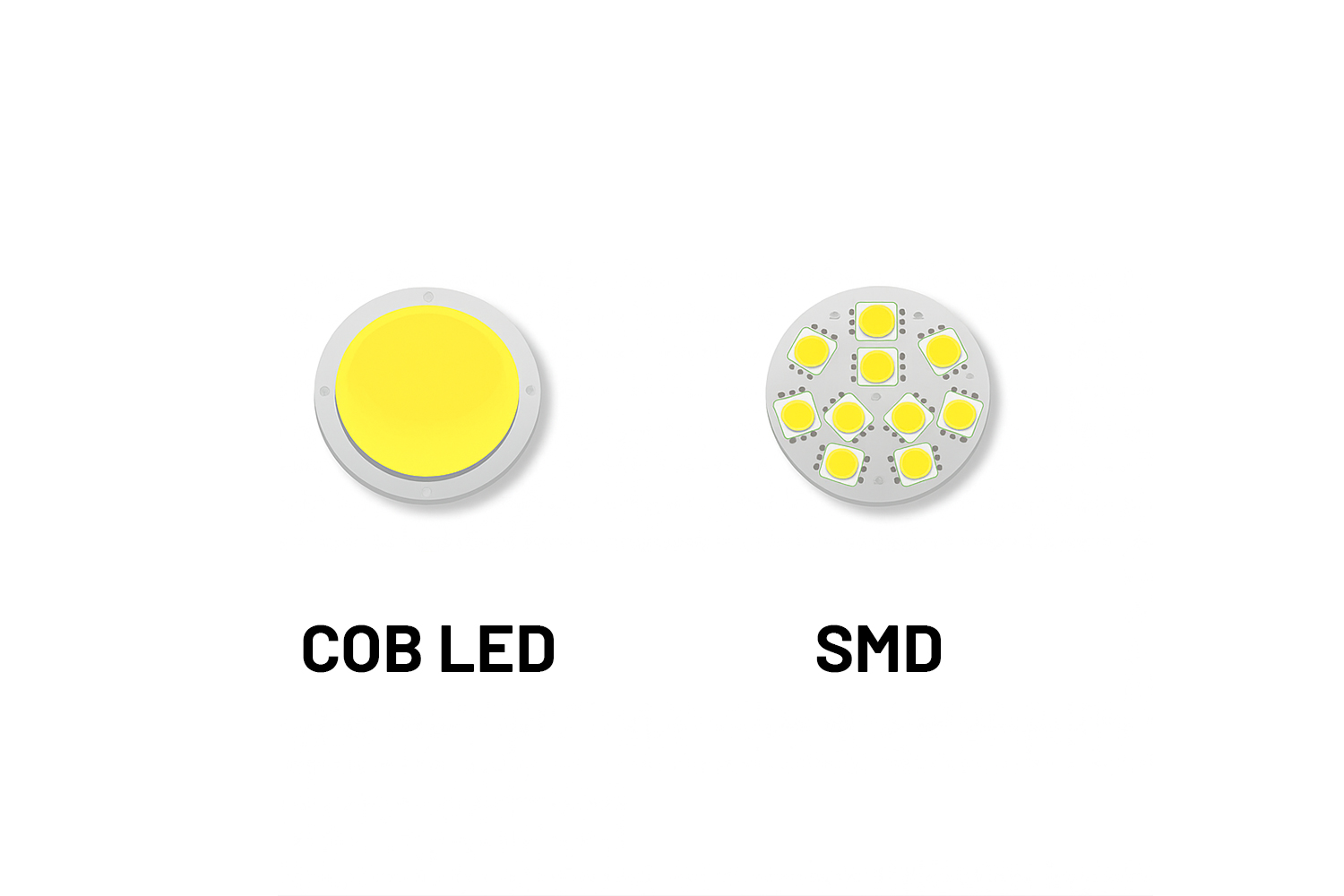
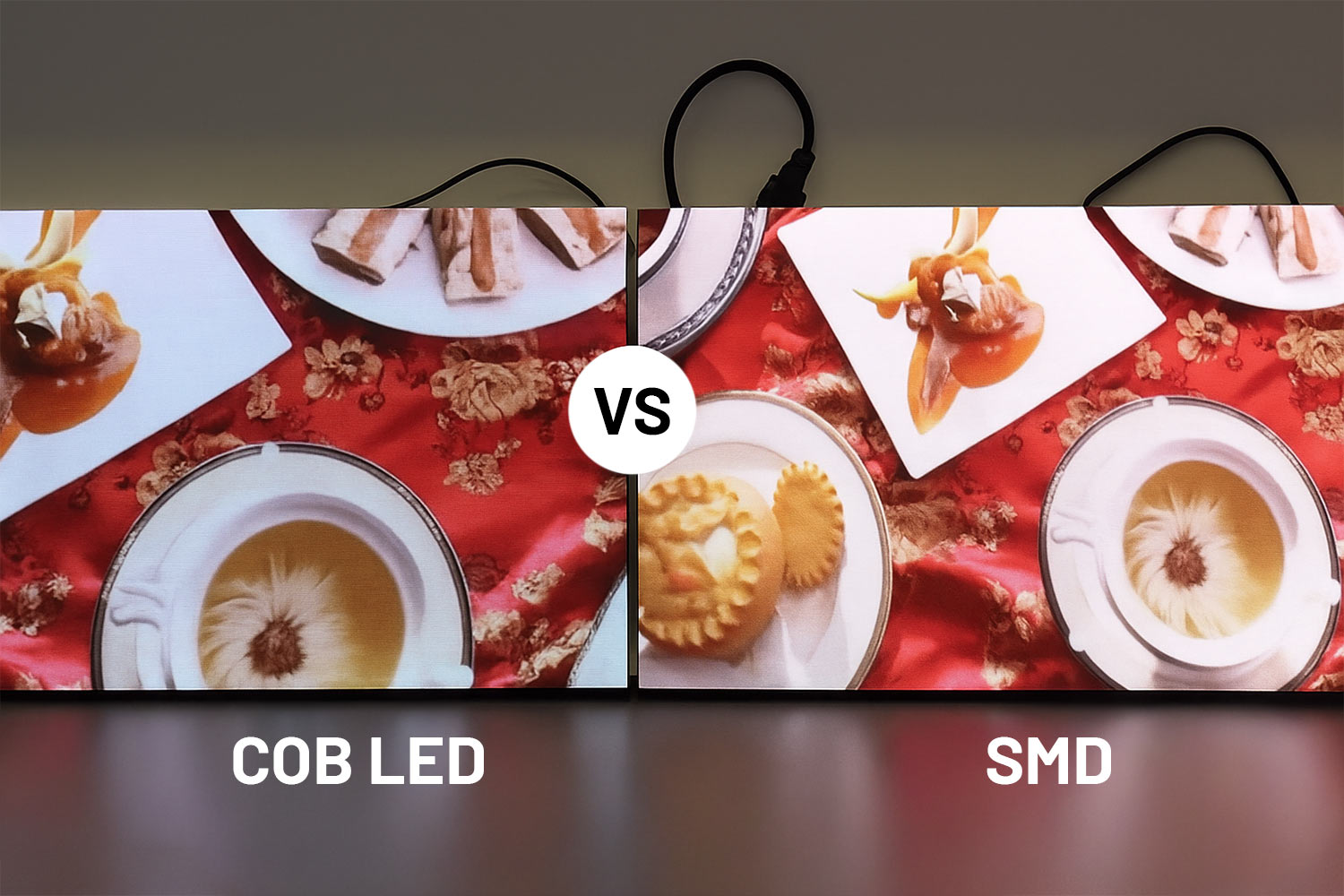
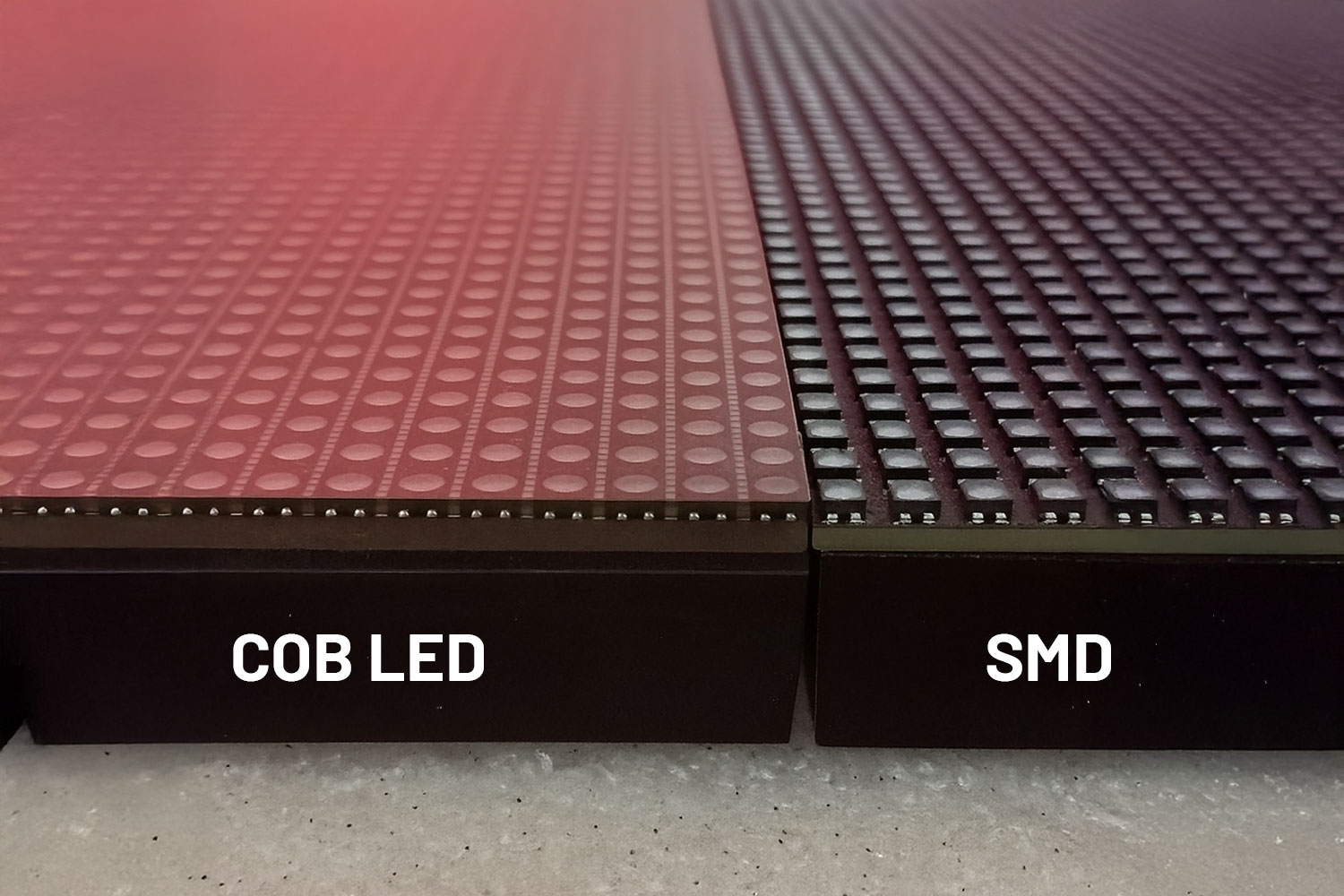
COB, or Chip-on-Board, is often associated with a more refined and protected surface. The LED chips are placed directly onto the board and typically covered with a protective layer. For buyers, that can mean a smoother finish, better resistance to minor bumps, and a more premium feel in close-viewing spaces.
That is why COB LED displays are especially appealing for fine-pitch indoor LED wall applications. In boardrooms, luxury retail spaces, command centers, museums, studios, and high-end presentation rooms, people may stand close to the screen. They may read small text or view detailed visuals, so the cleaner surface and polished look of COB can be a strong fit.
SMD, or Surface-Mounted Device, remains one of the most familiar technologies in the industry. It has been used successfully across commercial installations, events, houses of worship, retail spaces, rental systems, and outdoor LED screen environments. Its biggest advantage is practicality: it is proven, flexible, widely available, and adaptable.
For many projects, SMD still makes excellent business sense. It offers a strong balance of visual performance, budget control, serviceability, product availability, and installation options. When a project does not require ultra-close viewing or a premium protective surface, SMD LED panels can still deliver impressive results without pushing the budget too far.
The real difference is not “modern versus outdated.” COB does not automatically replace SMD, and SMD will not become irrelevant in 2026. The better question is what the project actually needs: premium close-up refinement, broader flexibility, easier service, stronger cost control, or a mix of those priorities.
A luxury showroom may lean toward COB. A live event venue may choose SMD. A corporate lobby could go either way depending on viewing distance, design expectations, and budget. A studio may look more closely at camera performance, refresh behavior, color consistency, and workflow integration.
That is where expert guidance matters. The technology is only one part of the decision. The real value comes from knowing how it will perform once it is installed, powered, managed, maintained, and used week after week.
Aspect | COB LED Screens | SMD LED Panels |
Best use cases | Premium corporate spaces, luxury retail, showrooms, boardrooms, and close-viewing interiors. | Multi-purpose venues, churches, auditoriums, hospitality spaces, restaurants, and general business use. |
Viewing experience | Better suited for short viewing distances, fine pixel pitch, wide viewing angles, and a more refined image. | Delivers strong visual performance for a wide range of commercial applications. |
Durability | Attractive for fixed installations where surface protection and long-term durability matter. | Practical for everyday commercial use with flexible maintenance and replacement options. |
Flexibility | Best for polished, design-driven interior projects. | Better for versatile, scalable, outdoor, rental, and larger-format applications. |
Brand perception | Supports a more premium, modern, and future-focused image. | Offers reliable performance and practical value without overcomplicating the investment. |
Budget | Often chosen for higher-end projects with a long-term premium focus. | Usually the better fit for buyers seeking a strong balance between cost and performance. |
Choosing the Right LED Wall Strategy for the Years Ahead
A strong LED investment should not only solve today’s problem. It should leave room for growth. By 2026, businesses are treating displays as long-term communication tools, not one-time equipment purchases.
That makes scalability important. A company may start with one display in a lobby and later expand into showrooms, training rooms, or event spaces. A worship place may begin with one central LED screen for churches and later add side displays. A retailer may use one screen for promotions today and more immersive brand storytelling tomorrow.
Visual consistency also matters. As content becomes more detailed, brands use displays for video, live feeds, announcements, data, and immersive graphics. The screen needs to keep a reliable look across different types of content. COB can be attractive where refined image quality and surface protection are priorities. SMD can be practical where the project needs larger formats, flexible installation, or a more budget-conscious path.
Future integration should be part of the conversation too. Modern LED solutions may need to connect with media players, processors, cameras, laptops, control software, audio systems, scheduling platforms, or other hardware. A good plan looks at the full setup, not just the panels.
There is also the risk of outgrowing the system too quickly. A display that cannot adapt to new content needs, updated controls, or future layout changes may become limiting sooner than expected. A better investment stays useful, serviceable, and visually relevant as the business grows.
In 2026, simply buying or renting LED panels is not enough. Buyers need the right configuration, industry-specific recommendations, technical support, sales guidance, warranty coverage, and a clear understanding of how the screen will perform in their actual space.
LED Market helps customers compare COB and SMD LED displays based on real project goals, not a one-size-fits-all recommendation. With product knowledge, installation insight, technical support, and practical business guidance, LED Market helps clients choose LED video walls that make sense today and continue to work strategically in 2026 and beyond.
Schedule a free consultation to explore tailored LED solutions that fit your space, budget, and vision.