
All-in-One LED Display vs Modular LED Wall: Which Is Better for Your Space?
Many businesses reach a point where their current screen no longer feels big enough, bright enough, or flexible enough. A church may need clearer worship visuals. A retail store may want a more engaging storefront. A corporate office may need a cleaner way to present data, branding, or events. A studio, showroom, hotel, school, restaurant, or venue may be ready for a visual upgrade, but the real question is not always “Should we invest in LED technology?” It is usually which type of system actually fits the space.

That is where the comparison between an all-in-one LED display and a modular LED wall becomes important. Both can deliver a strong visual experience, but they are built for different expectations. Some spaces need a streamlined setup that is easy to install, simple to manage, and ready for daily use. Others need scalable LED video walls that can adapt to unusual dimensions, larger audiences, high-impact branding, or future expansion.
The best choice depends on how the screen will be used, where it will be installed, how close viewers will stand, what type of content will appear, and how much flexibility the project may require later. Budget matters, of course, but so do maintenance, installation method, visual performance, and ROI.
In other words, this is not just a product comparison. It is a space-planning decision.
Understanding the Difference Between All-in-One and Modular LED Solutions
Before comparing industries, budgets, or installation methods, it helps to understand the basic difference between these two approaches. An all-in-one system is usually designed for simplicity and speed. A modular system is designed for flexibility, scale, and customization. Both can work beautifully, but they solve different problems.
What Is an All-in-One LED Display?
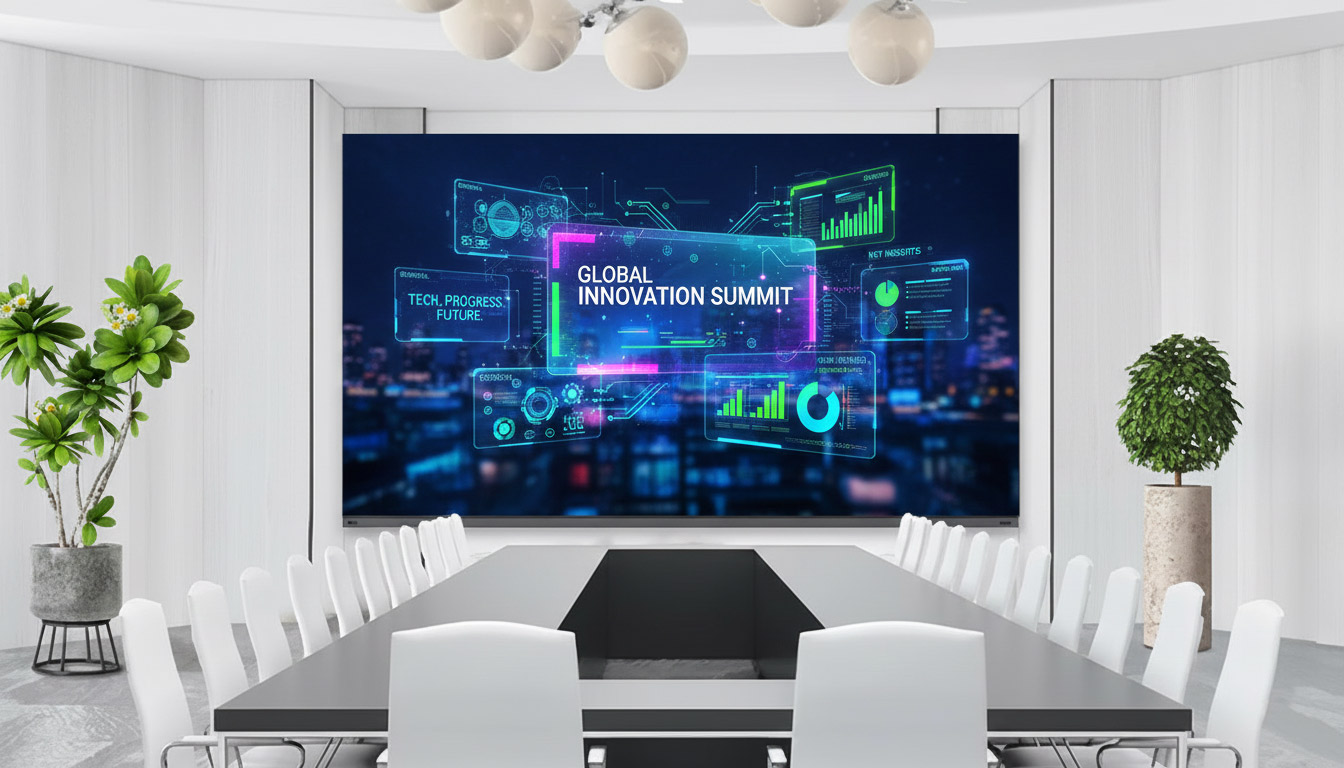
An all-in-one LED display is a self-contained visual solution that usually arrives as a complete, organized system. It is often chosen by businesses that want a professional LED screen without dealing with a more complex buildout. For conference rooms, training areas, executive spaces, classrooms, smaller retail environments, and certain hospitality settings, this kind of setup can feel practical from day one.
The appeal is not only image quality. It is simplicity. Many all-in-one LED displays are designed with integrated control, cleaner cabling, built-in software compatibility, and easy connection to inputs such as laptops, media players, cameras, or presentation systems. For daily users who need meetings, menus, announcements, brand videos, or live content to run smoothly, that lower learning curve matters.
These LED screen packages can also be a smart fit where the size is already defined and the installation does not need to change over time. If the wall, room, and viewing distance are predictable, an all-in-one system can offer a polished experience with less planning.
What a Modular LED Wall Offers
A modular LED wall takes a different approach. Instead of being limited to a fixed format, it is built from individual LED display panels that can be combined into different sizes, shapes, and configurations. This makes modular LED walls especially useful when the screen must adapt to the architecture, audience, or creative goal of the project.
For example, a church may need a wide backdrop behind the stage. A trade show booth may need a bold vertical format. A stadium entrance may need outdoor brightness and weather resistance. A broadcast studio may need precise Resolution, strong Refresh Rate performance, and compatibility with professional control systems such as a NovaStar video processor and sending card. In these cases, custom configuration becomes a real advantage.
The modular format also makes maintenance more practical over time. Features such as full front service and magnetic modules allow technicians to access specific sections without dismantling the entire structure. For permanent installations, touring productions, and commercial spaces with heavy use, that can make a meaningful difference.
Why the Right Choice Depends More on the Space Than on the Screen
The mistake many buyers make is asking which option is better in general. The better question is: better for what space?
A compact meeting room does not need the same LED solution as a 1,000-seat auditorium. A retail wall behind a checkout area does not have the same purpose as LED panels used in a concert venue. A screen for occasional presentations does not face the same demands as LED video walls running every day in a lobby, church, or control room.
Room size, viewing distance, content type, branding goals, installation conditions, and future growth should guide the decision. Pixel Pitch matters because people standing close to the screen need a tighter, cleaner image. View angle also matters, especially in wide rooms where audiences may see the screen from the sides; a range of 140°-160° can help maintain visibility across the space. Brightness, weight, mounting options, and control flexibility all become part of the same decision.
The best LED displays are not simply the most advanced ones. They are the ones that make sense for the environment.
All-in-One LED Display vs Modular LED Wall
Feature | All-in-One LED Display | Modular LED Wall |
Best for | Corporate meeting rooms, boardrooms, executive lobbies, and internal business spaces | Churches, stages, retail environments, studios, auditoriums, and large venues |
Main advantage | Simple setup and clean integration | Custom size, shape, and long-term flexibility |
Ease of installation | Faster and more straightforward | More customizable, but usually more complex |
Day-to-day operation | Easier for teams that want a plug-and-play experience | Better for projects that need more control and scalability |
Integration | Works well with laptops, video conferencing, and common AV systems | Supports more advanced system design and broader configuration options |
Visual performance | Strong image quality for close viewing and fixed indoor use | Better suited for demanding environments with higher performance expectations |
Customization | Limited compared to modular solutions | Highly customizable in size, format, and layout |
Scalability | Best for spaces with fixed needs | Ideal for projects that may expand over time |
Maintenance access | Convenient for simpler applications | Better serviceability with full front service and magnetic modules |
Long-term value | Great for users who want efficiency and simplicity | Stronger ROI for projects that need durability, flexibility, and future growth |
Choosing Your Ideal LED Screen Based on Industry, Application, and Installation Needs
Different spaces use visual content in very different ways. Some need clarity and elegance. Others need scale and energy. Some want a simple LED screen for everyday communication, while others need LED video walls that can become part of the architecture, the stage, or the customer experience.
Retail, Corporate, and Hospitality Applications
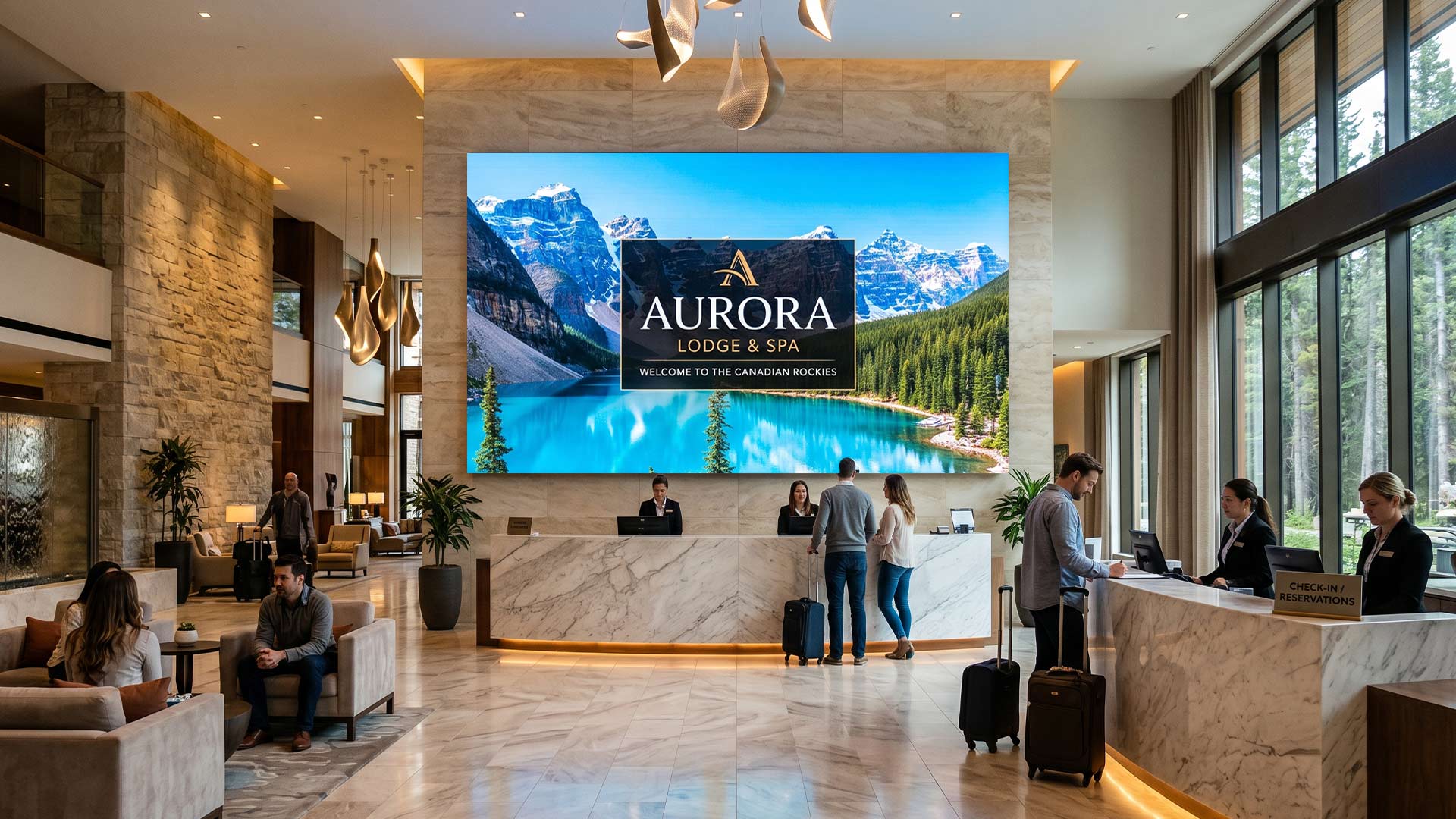
Retail stores, showrooms, hotel lobbies, restaurants, and corporate spaces often care about the same things: the screen must look clean, feel intentional, and improve the environment without overwhelming it. In these locations, the visual solution becomes part of the brand experience.
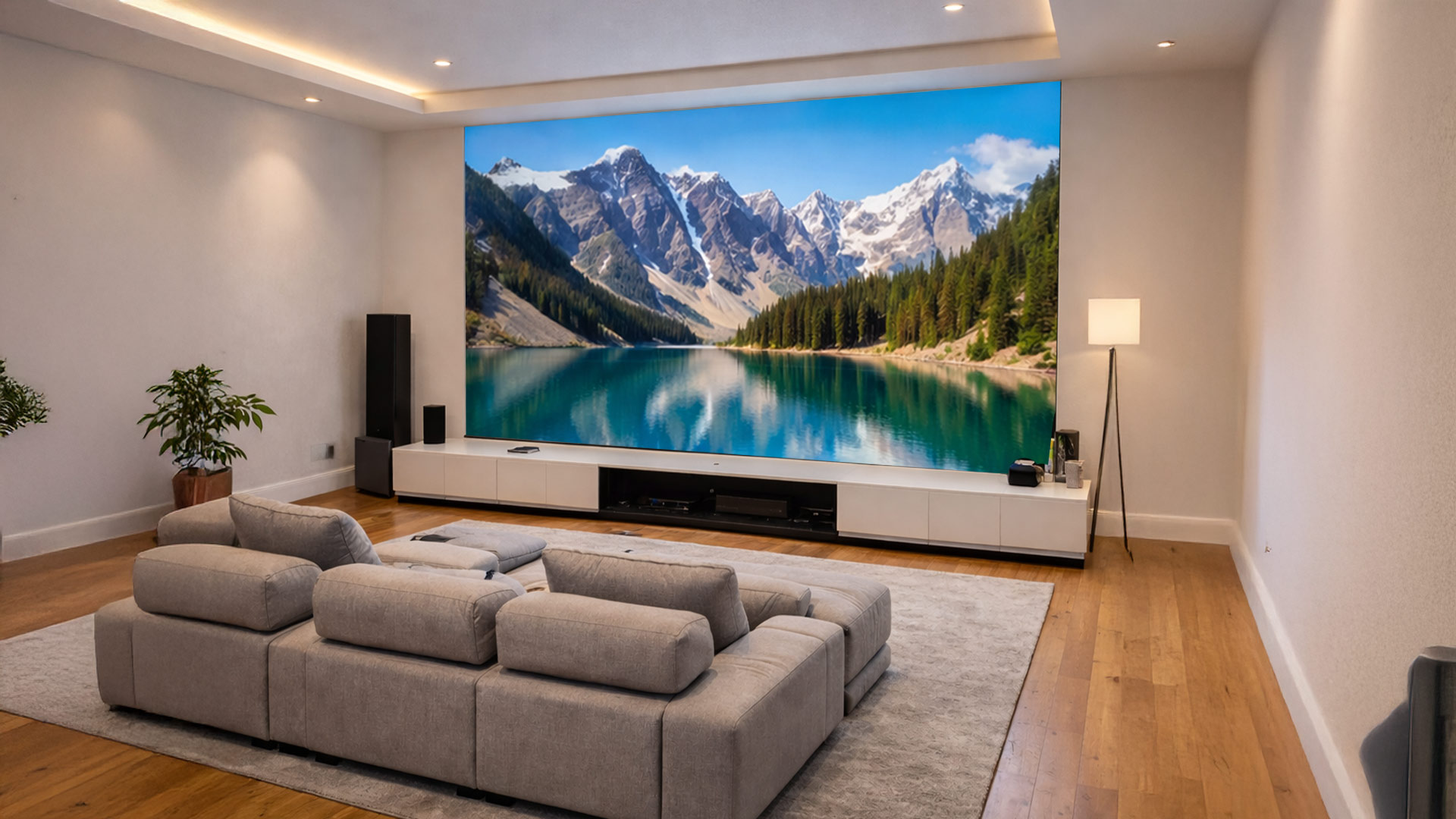
An all-in-one LED display for retail can work very well in enclosed corporate areas, meeting rooms, reception spaces, and hospitality settings where the use is clearly defined. It can be ideal for presentations, welcome messages, product videos, wayfinding, digital menus, and branded content. The setup feels controlled, the integration is usually simpler, and the screen does not require a large custom structure.
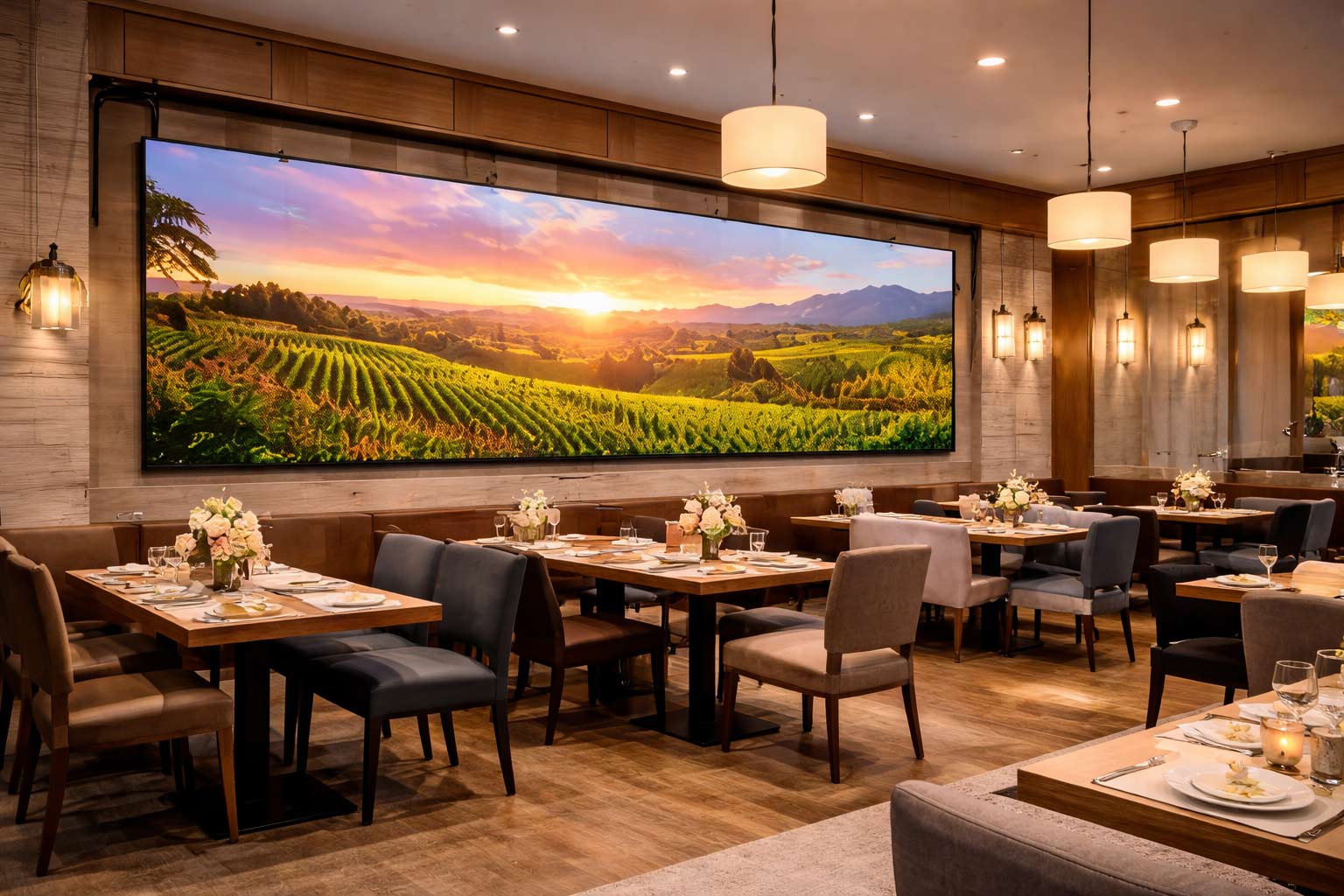
A modular LED wall becomes the stronger choice when the visual design needs more freedom. A fashion showroom may want an immersive floor-to-ceiling display. A hotel may want a dramatic lobby feature. A restaurant or bar may need a wide entertainment wall visible from several seating areas. In these cases, LED display panels allow the screen to match the space instead of forcing the space to match the screen.
Short viewing distances also matter. A fine Pixel Pitch can help LED displays look sharper up close, while strong Resolution and smooth Refresh Rate performance can make motion graphics, video loops, product visuals, and branded animations feel more refined. For businesses using content as part of the customer journey, those details support the experience without distracting from it.
Churches, Auditoriums, and Event Venues
Large gathering spaces usually bring a different challenge: visibility. In churches, auditoriums, event venues, performance halls, and school theaters, the screen must serve people sitting close, far away, and sometimes far off to the side. That means scale and sightlines matter from the beginning.
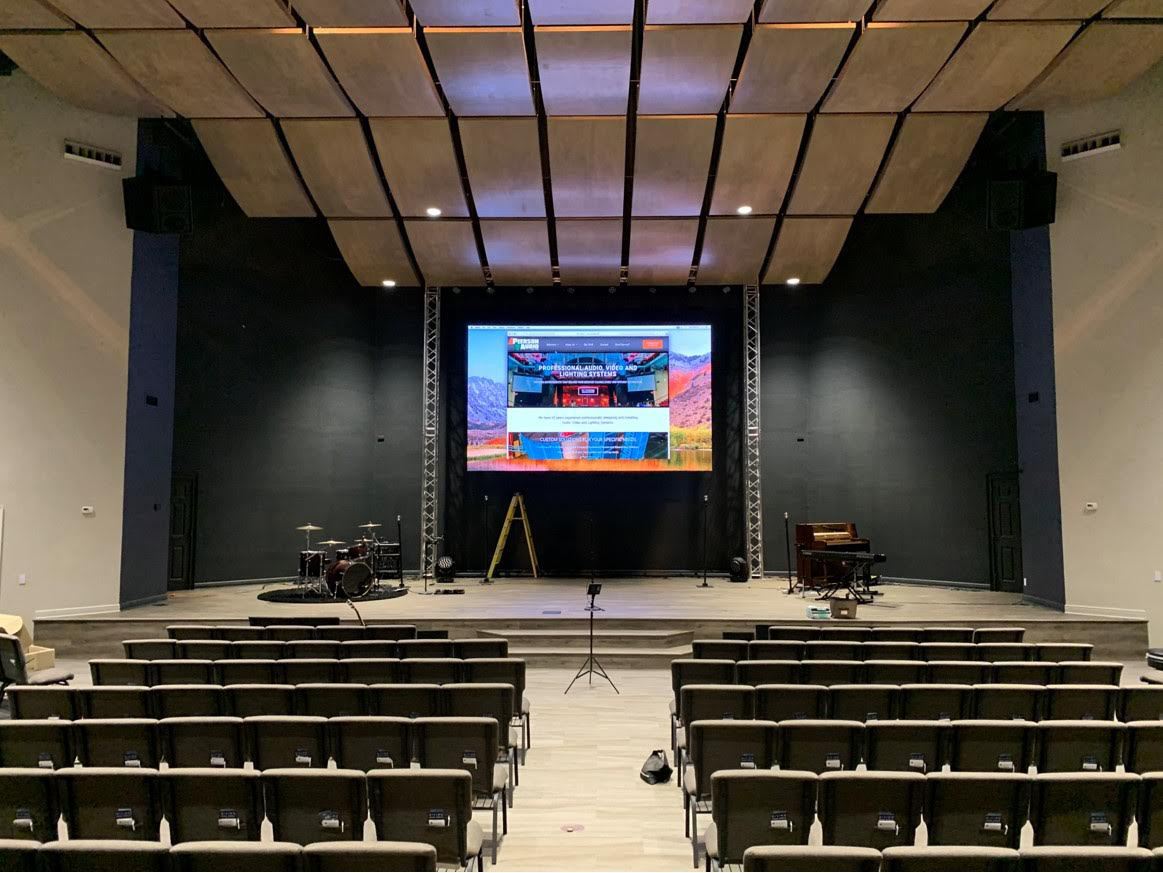
This is where modular LED walls for churches often have a clear advantage. They can be built wider, taller, or arranged around the stage design. They can also adapt to different installation methods, including wall-mounted setups, ground support structures, or a flown method when the screen needs to be suspended above a stage. That flexibility is difficult to match with a fixed all-in-one system.
Brightness is another key factor. In a church with stage lighting, an auditorium with spotlights, or a venue with changing ambient light, auto-adjustable brightness can help maintain visibility without washing out the image. For larger spaces, scalability also matters. If the audience grows or the stage design changes, modular LED panels can often support future expansion more easily.
Viewing angle is especially important in rooms with wide seating. LED screens with a broad 140°-160° view angle help people see the content more comfortably from different positions. That matters for lyrics, speaker close-ups, event branding, announcements, and live camera feeds.
For spaces built around shared attention, the screen is not decoration. It is part of how the audience connects with the moment.
Control Rooms, Studios, and Broadcast Environments
Control rooms, production studios, virtual production spaces, and broadcast environments need more than a large image. They need dependable performance, precise control, and technical compatibility.
In these settings, modular LED video walls are often preferred because they can be configured around the workflow. A studio may need specific dimensions for camera framing. A control room may need multiple data feeds shown at once. A broadcast set may need LED display panels that handle motion smoothly, reduce flicker on camera, and maintain consistent color over long sessions.
This is where control systems become part of the real-world value. A setup using a NovaStar video processor and sending card can help manage signal distribution, synchronization, and content performance across the display. Depending on the use case, synchronous and asynchronous systems may both have a role. Synchronous operation is useful when live content must appear in real time, while asynchronous playback can be practical for scheduled content, signage, or stored media.
Integration with various inputs, software platforms, media servers, cameras, and other hardware technologies also matters. A studio or control room cannot afford a screen that looks impressive but creates friction during daily operation. The better LED solutions are the ones that fit into the workflow instead of interrupting it.
What to Consider Before Deciding
Once the application is clear, the decision becomes much easier. The right choice is not based only on size or price. It depends on how people will experience the screen, how often it will be used, and how much flexibility the space may need over time.
Viewing Distance, Content Type, and Daily Use
The closer people stand to the screen, the more important image density becomes. A tighter Pixel Pitch can make text, faces, logos, and product visuals appear cleaner at short distances. This is especially important in boardrooms, retail environments, museums, studios, and hospitality spaces where viewers may be only a few feet away.
Content type also changes the decision. If the screen will mostly show slide decks, menus, announcements, or branded videos, an all-in-one LED display may be more than enough. If the content includes live video, stage visuals, multiple sources, immersive graphics, or changing layouts, modular LED walls usually offer more creative control.
Daily use is another factor. A screen used every day in a lobby, sanctuary, venue, or control room should be easy to manage and service. Lightweight construction can simplify installation, while full front service and magnetic modules can reduce downtime when maintenance is needed. The goal is not just to buy a screen that looks good on day one. The goal is to choose LED technology that remains practical after months and years of real use.
Indoor vs. Outdoor Conditions
Indoor and outdoor environments place very different demands on LED devices. An Indoor LED screen inside a corporate lobby does not face the same exposure as a display near a stadium entrance, shopping center, school campus, or outdoor event area. The environment should always shape the technical requirements.
For indoor projects, clean image quality, quiet operation, efficient installation, and elegant integration are often the priorities. For outdoor projects, Durability becomes more important. Ratings such as IP45 and IP65 help indicate how well the screen can handle dust, humidity, rain exposure, and environmental conditions. Brightness control is also essential outdoors, especially when the screen must remain visible during daylight and comfortable at night.
Auto-adjustable brightness can improve both performance and energy efficiency by responding to changing light conditions. That is useful in outdoor advertising, transportation areas, sports venues, and public-facing locations where content needs to stay readable without constant manual adjustment.
This is also where structure matters. Outdoor LED panels may require stronger mounting, weather-conscious planning, and hardware that can handle longer operating hours. Choosing the wrong type of screen for the environment can create avoidable maintenance issues later.
Budget, Maintenance, and ROI
The lowest initial price is not always the best investment. A simple all-in-one LED display may offer excellent ROI when the space needs a defined screen, simple operation, and fast implementation. It can reduce complexity, shorten setup time, and give the business a professional visual upgrade without overbuilding the project.
A modular LED wall may cost more upfront, but it can deliver better long-term value when the project demands scale, customization, or future flexibility. If the screen can grow with the venue, adapt to new content, support stronger visual impact, and be serviced more efficiently, the long-term ROI may be stronger.
Maintenance should also be part of the budget conversation. Full front service access, magnetic modules, available spare parts, reliable control systems, and a 5-year warranty can all reduce risk. For companies, churches, schools, venues, and studios that depend on visual communication, downtime is not just inconvenient. It can affect events, revenue, and audience experience.
A smart investment looks beyond the invoice. It considers performance, lifespan, ease of use, and the value the screen brings to the space every week.
Finding the Right LED Solution for Long-Term Value
The Best Choice Is the One That Fits Your Goals
A corporate training room may not need the same LED solution as a worship center. A boutique retail store may want a different screen than a stadium concourse. A hotel lobby, broadcast studio, restaurant, university, showroom, and live event venue all have different expectations for content, size, brightness, control, and audience experience.
That is why the decision should begin with the space itself. How close will people stand? Will the content be static, animated, live, or interactive? Will the screen run every day? Does the business need a fixed setup, or could the visual strategy grow over time?
For some spaces, all-in-one LED displays offer the right balance of convenience and professional quality. For others, modular LED screens deliver the impact and adaptability needed to turn a wall, stage, storefront, or venue into a stronger communication tool.
Why the Right Partner Matters as Much as the Technology
Comparing LED solutions is useful, but choosing the right supplier is just as important. A strong partner will look beyond the product and ask about the room, audience, content, installation method, maintenance expectations, budget, and long-term goals. That guidance can prevent overspending, underbuilding, or choosing a screen that looks good on paper but does not fit daily use.
LED Market helps customers evaluate whether an all-in-one LED display or a modular LED wall makes more sense for their industry, space, and objectives. With access to LED video walls, control systems, installation support, and professional LED solutions, the company can guide each project toward a smarter, more durable, and more profitable investment.
Before making a decision, contact LED Market for transparent guidance, professional support, and a solution tailored to your real budget, space, and business goals.